

Viruses as a Risk Factor for Dementia, and the Vaccines That May Lower It (new study)
 Dr. Christin Glorioso, MD PhD19 min read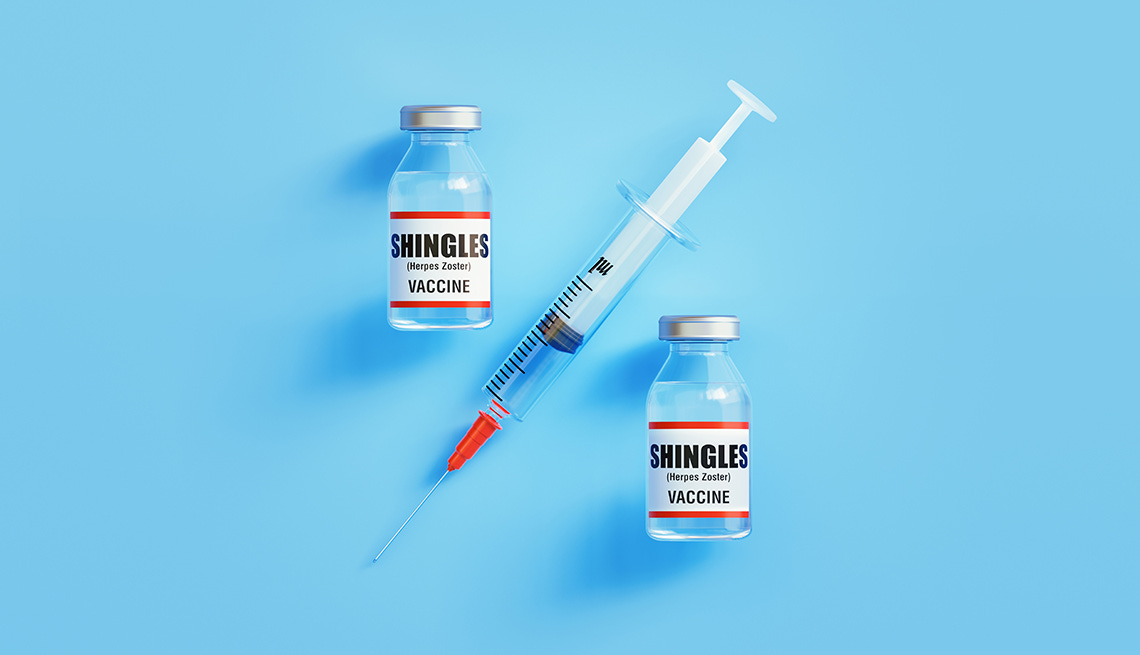
A study published last month in Alzheimer’s & Dementia by Dr. Susan dos Reis and colleagues at the University of Maryland School of Pharmacy looked at 1.5 million Medicare beneficiaries aged 65 and older. The researchers compared roughly half a million adults who received both doses of the recombinant shingles vaccine (Shingrix) with twice as many matched unvaccinated comparators. Over follow-up periods of three years or less, vaccinated adults had a 33% lower risk of any dementia. The reduction was 28% for Alzheimer’s disease specifically and 33% for vascular dementia (dos Reis et al., 2026).
This is the latest in a string of studies pointing in the same direction. A vaccine intended to prevent shingles also appears to lower the risk of cognitive decline. Shingles is one of several viral infections now implicated in brain disease, and the biology of why this connection exists is becoming clearer.
The infection hypothesis has been around for decades
The idea that infections might contribute to dementia goes back at least to the 1990s, when Dr. Ruth Itzhaki at the University of Manchester reported finding DNA from herpes simplex virus type 1, the cold sore virus, in the brains of older adults. The viral DNA was concentrated in the same regions that develop the protein clumps characteristic of Alzheimer’s disease, and it was much more common in carriers of the APOE4 gene variant, the strongest common genetic risk factor for late-onset Alzheimer’s (Itzhaki, 2014).
For years this work sat on the margins of the field. The dominant story focused on amyloid plaques and tau tangles forming for largely intrinsic reasons, with drug development directed at clearing these proteins after they accumulated. That picture has been steadily revised. The viral hypothesis has not replaced amyloid biology so much as reframed it. Mounting work suggests amyloid plaques and tau tangles in Alzheimer’s brains may be part of an ancient defense system reacting to infection or other stresses, with the response itself becoming damaging when it persists.
HSV-1 has the most extensive evidence base
Most adults carry HSV-1. After initial infection, often during childhood, the virus settles into a cluster of nerve cells near the base of the skull called the trigeminal ganglia and stays there for life, periodically reactivating, sometimes producing cold sores and sometimes silently.
The largest population-level evidence on whether HSV-1 raises Alzheimer’s risk comes from Taiwan. Dr. Nian-Sheng Tzeng and colleagues used Taiwan’s National Health Insurance database to compare 8,362 people newly diagnosed with severe HSV infection with 25,086 matched controls without HSV. Over ten years of follow-up, the HSV group had a 2.5-fold higher risk of developing dementia. Among HSV-positive patients who received aggressive antiviral treatment with acyclovir or valacyclovir, the relative risk of dementia was roughly tenfold lower than in HSV-positive patients who went untreated (Tzeng et al., 2018).
Other large registry studies in Sweden, South Korea, and Europe have shown similar though more modest patterns. A Swedish national registry analysis by Dr. Bodil Lopatko Lindman and colleagues found that having an HSV diagnosis without antiviral treatment was associated with a 50% increased risk of dementia, while antiviral treatment reduced that risk by 11% (Lopatko Lindman et al., 2021). The size of the protective effect appears to depend on duration of treatment, which fits the Taiwanese data showing the largest reductions in patients treated for at least 30 days.
A more recent prospective study published in 2024 by a Swedish group reported that HSV-1 seropositivity doubled the risk of dementia in a contemporary older adult cohort, after adjusting for APOE genotype and other factors. The signal is consistent across populations even when effect sizes vary.
Varicella zoster virus has its own troubling signal
Varicella zoster virus (VZV) is the virus that causes chickenpox in children and remains dormant in nerve roots for life, sometimes reactivating decades later as shingles. About 95% of adults carry VZV.
A large analysis published in Nature Medicine of more than 100 million electronic health records in the United States found that shingles episodes were consistently associated with later dementia diagnoses, even after adjusting for nearly 400 confounders, and that recurrent shingles episodes raised the risk further than single episodes (VZV reactivation and dementia risk, 2025). This is a noisy signal in registry data, since people with shingles tend to have more healthcare contact and more recorded comorbidities, but the pattern has held across many different analytical approaches.
The strongest case for a causal connection comes not from observational comparisons of infected versus uninfected people, which can always be confounded, but from the natural experiment of mass vaccination. More on that further down.
The Epstein-Barr virus connection to multiple sclerosis is now firmly established
The cleanest example of a virus driving a brain disease is not Alzheimer’s but multiple sclerosis. In 2022, Dr. Kjetil Bjornevik and colleagues at Harvard published a longitudinal analysis of more than 10 million US military personnel, with biennial blood samples archived in the Department of Defense Serum Repository. Among 955 individuals who developed multiple sclerosis during their service, infection with Epstein-Barr virus (EBV) preceded disease in nearly every case. The risk of multiple sclerosis was 32 times higher after EBV infection compared to before. Cytomegalovirus, a similarly transmitted herpesvirus used as a control, showed no such association (Bjornevik et al., Science 2022).
The size of that effect is unlike anything previously identified for multiple sclerosis. A follow-up review by the same group laid out the mechanistic case in detail, including molecular mimicry between EBV proteins and a brain protein called GlialCAM, and persistent infection of memory B cells that retain EBV after primary infection (Bjornevik et al., Nature Reviews Neurology 2023).
EBV is not a smoking gun for Alzheimer’s specifically, but its established role in multiple sclerosis demonstrates that a common, lifelong herpesvirus can be a near-necessary cause of a major brain disease. That changes how seriously we should take similar mechanisms for dementia.
SARS-CoV-2 leaves a measurable mark on the brain
The most recent virus to enter this conversation is SARS-CoV-2. Early in the pandemic, neurologists noticed that older adults often had cognitive symptoms after even mild COVID-19, and registry studies began reporting elevated dementia diagnoses in the year following infection.
A 2025 Nature Medicine study from Imperial College London and the UK Dementia Research Institute used the UK Biobank to look at plasma biomarkers of Alzheimer’s pathology in 1,252 participants who had blood draws both before and after the pandemic. SARS-CoV-2 infection was associated with a reduced plasma Aβ42:Aβ40 ratio, a pattern that reflects more amyloid being deposited in the brain. In older participants, infection was also associated with lower plasma Aβ42 and higher pTau-181, both biomarkers that track Alzheimer’s pathology. The biomarker shifts were comparable in magnitude to about four years of biological aging, with larger effects in those hospitalized with COVID-19 or with prior hypertension (Duff et al., 2025).
Earlier work from the same UK Biobank resource produced complementary structural evidence. A 2022 Nature paper by Dr. Gwenaëlle Douaud and colleagues at Oxford analyzed brain MRIs taken before and after infection in 401 participants who tested positive for SARS-CoV-2 between scans, compared with 384 matched controls. The infected group showed greater grey matter thinning in the orbitofrontal cortex and parahippocampal gyrus, regions functionally connected to the primary olfactory cortex. They also showed greater markers of tissue damage in olfactory network regions, along with a greater reduction in global brain volume on the order of 1 to 2 years of additional brain aging. The effects were detectable even in mild cases that did not require hospitalization, though they were larger in hospitalized patients (Douaud et al., 2022). The pattern, with the heaviest hit in olfactory pathways, fits the hypothesis that SARS-CoV-2 enters the brain through the olfactory mucosa, the same route HSV-1 is thought to take into the temporal lobes.
These are biomarker and imaging changes, not cognitive diagnoses, and neither study can prove causality. The pattern across the two analyses is consistent with what would be expected if a systemic viral infection were modestly accelerating Alzheimer’s pathology, particularly in vulnerable individuals.
Amyloid plaques may be a defense mechanism that goes wrong
The mechanism that ties these observations together is the antimicrobial protection hypothesis, developed primarily by Dr. Robert Moir and Dr. Rudolph Tanzi at Massachusetts General Hospital. In 2010, Dr. Moir’s group showed that amyloid beta, the peptide that forms plaques in Alzheimer’s brains, has direct antimicrobial activity in cell culture, with potency in some assays comparable to penicillin (Soscia et al., 2010).
Subsequent work extended this finding. In 2016, the same group reported that human amyloid beta protected nematode worms and 5xFAD transgenic mice (a standard Alzheimer’s model that overproduces human amyloid) against challenge with bacteria and fungi (Kumar et al., 2016). In 2018, the team showed that injecting HSV-1 directly into the brains of young 5xFAD mice triggered rapid amyloid deposition. Within 48 hours, amyloid plaques formed around the viral particles, physically encasing them. The mice that overproduced amyloid survived HSV-1 infection longer than wild-type controls (Eimer et al., 2018).
The model that emerges from this work proposes that amyloid beta evolved as part of the brain’s innate immune defense, capable of trapping pathogens in fibrillar deposits. Acute infection drives short-term amyloid deposition that helps neutralize the threat. Chronic, recurrent, or low-level reactivation drives ongoing deposition that the brain cannot clear, eventually accumulating into pathological plaques and triggering downstream neuroinflammation and tau pathology.
This model is not universally accepted, and a 2021 study failed to replicate the protective effect of amyloid against HSV-1 with different viral strains. The hypothesis remains active but unresolved at the level of detailed mechanism. What is clearer is that infection can drive amyloid and tau pathology in living tissue.
Animal and tissue models show what the epidemiology suggests
The most informative animal model for this question was developed by Dr. Giovanna De Chiara and colleagues in Rome. Rather than injecting massive doses of HSV-1 directly into brain tissue, they infected mice with a low dose of HSV-1 through the natural peripheral route, then triggered recurrent reactivations using thermal stress, mimicking what happens in humans whose virus reactivates after illness or stress. After multiple reactivation cycles, the mouse brains showed accumulating amyloid beta deposits, hyperphosphorylated tau, neuroinflammation markers, and progressive cognitive deficits that became irreversible after about seven cycles (De Chiara et al., 2019). This is the closest a mouse model has come to recapitulating what is hypothesized to happen in human carriers of latent HSV-1 over decades.
A separate line of work by Dr. Dana Cairns and colleagues at Tufts University used three-dimensional bioengineered brain tissue, made from human induced neural stem cells grown on silk scaffolds. Infecting this tissue with HSV-1 produced amyloid beta plaque-like structures, hyperphosphorylated tau, glial activation, neuroinflammation, and disrupted neural network activity, all hallmarks of Alzheimer’s pathology (Cairns et al., 2020). Treatment with the antiviral valacyclovir reduced these phenotypes.
The Cairns group has since extended this work in two important directions. In 2022, they showed that infecting their 3D brain model with VZV did not directly produce amyloid or tau pathology, but in tissue that already harbored quiescent HSV-1, VZV exposure reactivated the dormant HSV-1 and triggered the full Alzheimer’s-like phenotype (Cairns et al., 2022). This offers a mechanistic explanation for the shingles-dementia link. Shingles itself may not be the direct neurotoxin. Instead, the inflammation it produces appears to wake up dormant HSV-1 already sitting in the brain. In 2025, the same group reported that mechanical injury mimicking concussion also reactivates dormant HSV-1 in this tissue model, producing amyloid and tau pathology that worsens with repeated head trauma (Cairns et al., 2025).
The picture that emerges from these models is one in which HSV-1 in particular sits dormant in many older brains, and various stressors, including other infections, reactivation triggers, head injury, or systemic inflammation, can wake it up and drive Alzheimer’s-like changes.
The shingles vaccine evidence has accumulated rapidly
If viruses contribute to dementia, vaccines should reduce that risk. The strongest evidence to date comes from shingles vaccines.
The cleanest study to date is the Welsh natural experiment published by Dr. Pascal Geldsetzer’s group at Stanford in Nature in 2025. The Welsh public health system rolled out the live-attenuated shingles vaccine (Zostavax) in 2013 with strict eligibility based on date of birth. People born on or after September 2, 1933 were eligible, and those born before that date were not. By comparing dementia rates over the next seven years between people born in the week before versus the week after that cutoff, the researchers approximated a randomized trial. Vaccinated individuals were about 20% less likely to develop dementia than their unvaccinated peers, with the effect notably stronger in women (Eyting et al., 2025). A follow-up Cell paper from the same group in late 2025 reported that shingles vaccination also reduced mild cognitive impairment diagnoses and lowered dementia-related mortality among those who had already been diagnosed with dementia, suggesting the benefit extends across stages of disease (Xie et al., 2025).
The newer recombinant shingles vaccine (Shingrix, marketed as RZV) appears to confer an even larger protective effect than the live vaccine. A 2024 Nature Medicine study by Dr. Maxime Taquet and colleagues at Oxford used the natural experiment of the rapid US transition from Zostavax to Shingrix in 2017 to compare 100,000 people who received each vaccine. People who received the recombinant vaccine had 17% more diagnosis-free time over the next six years, equivalent to 164 additional days lived without a dementia diagnosis among those eventually affected (Taquet et al., 2024).
A separate 2024 analysis using the Optum electronic health records database, from a team including Dr. Geldsetzer and GSK collaborators, found that two doses of Shingrix were associated with a 24% reduction in three-year dementia risk and a 20% reduction in five-year risk compared to those vaccinated against pneumococcal disease (Schwab et al., 2024). The new dos Reis paper that opened this article extends these findings to a US Medicare population of 1.5 million people, with 33% reductions in dementia risk on the same scale.
The consistency across populations, healthcare systems, and study designs is the most compelling feature of this body of evidence. Different research groups using different databases and different control strategies arrive at similar effect sizes.
Influenza vaccination shows a similar protective signal
The shingles vaccine is not alone. Influenza vaccination has also been associated with reduced dementia risk in multiple large cohorts.
In 2022, Dr. Avram Bukhbinder, Dr. Paul Schulz, and colleagues at UTHealth Houston compared more than 935,000 propensity-matched pairs of older US adults with and without prior flu vaccination. Over four years of follow-up, 5.1% of vaccinated patients and 8.5% of unvaccinated patients developed Alzheimer’s disease, corresponding to a 40% relative risk reduction (Bukhbinder et al., 2022). The protective effect strengthened with the number of years a person received an annual flu vaccine.
A 2026 follow-up published in Neurology by the same group compared 165,000 adults aged 65 and older who received either the high-dose or standard-dose flu vaccine. The high-dose vaccine, which contains four times the antigen of the standard formulation, was associated with a 55% reduction in Alzheimer’s disease risk, compared to the 40% reduction seen with standard-dose (Bukhbinder et al., 2026). The protective effect was somewhat stronger and longer-lasting in women.
These are observational comparisons, and healthy vaccinee bias is a serious concern. People who get flu shots may differ in many other ways from those who do not. The studies attempt to adjust for this, and the dose-response relationship between vaccinations and protection makes simple selection bias a less complete explanation.
The COVID vaccine evidence is messier
COVID-19 vaccines are a more complicated case. Two distinct questions sit underneath the headlines.
The first is whether COVID-19 vaccines protect against the brain effects of COVID-19 itself. Here the evidence is reassuring. Older adults with cognitive disorders who were vaccinated against COVID-19 had substantially lower mortality and serious illness from breakthrough infections than unvaccinated peers with the same conditions (Frontiers in Public Health 2023). Given that COVID-19 itself is associated with measurable shifts in Alzheimer’s biomarkers, particularly in those hospitalized, preventing severe COVID is a plausible route to preserving brain health.
The second question is whether COVID-19 vaccines themselves alter dementia risk independent of preventing infection. The literature here is small and mixed.
The most cited paper raising a concern is a 2024 study in QJM by Dr. Jee Hoon Roh and colleagues at Korea University. The team used a 50% random sample of Seoul residents aged 65 and older, totaling 558,017 individuals. Within three months of vaccination, the mRNA-vaccinated group showed about 22% higher odds of an Alzheimer’s disease diagnosis (OR 1.225, p=0.026) and 2.4 times the odds of a mild cognitive impairment diagnosis (OR 2.377, p<0.001) compared to unvaccinated peers. No association was seen for vascular dementia or Parkinson’s disease (Roh et al., 2024). Several limits temper that finding. The follow-up window was only three months. The unvaccinated comparator was about 7% of the population, which raises the possibility of selection effects in who chose to remain unvaccinated in a country with very high vaccine uptake. The journal’s editor noted in an accompanying commentary that the findings required cautious interpretation and validation in other cohorts (Donnelly, 2024). Surveillance bias is also a concern, since older adults coming in for vaccination may receive cognitive screening at the same visit, producing apparent diagnostic increases that reflect detection rather than new disease.
Other studies point in the opposite direction. A 2023 cohort study of more than 91,000 older Israeli adults from Maccabi Healthcare Services, including 25,733 with cognitive disorders, found that COVID-19 vaccination was associated with lower mortality and fewer severe outcomes among dementia patients (Radomyslsky et al., 2023). The benefit there is largely attributed to preventing severe COVID-19 in a population whose cognitive baseline is already vulnerable, rather than to a direct neuroprotective effect of vaccination.
A 2025 systematic review and meta-analysis in Age and Ageing covering 104 million participants across multiple vaccine types found that most vaccines were associated with lower dementia risk, with the COVID-19 signal being the noisiest of the group and dominated by the Roh study (Age and Ageing meta-analysis 2025).
The base of evidence on long-term cognitive outcomes after COVID-19 vaccination is still developing, and reasonable analysts can read it differently. What is clearer is that severe COVID-19 itself has measurable structural and biomarker effects on the brain that vaccines reduce. Even if the question of additional protective effects beyond preventing infection is unresolved, that infection-prevention benefit alone is meaningful for older adults and APOE4 carriers.
The AS01 adjuvant may be doing some of the heavy lifting
A subtle finding from the Taquet group at Oxford suggests that the protective effect of shingles vaccination against dementia may be partly explained not by preventing shingles, but by the adjuvant in the recombinant vaccine itself.
AS01 is the adjuvant used in Shingrix and in Arexvy, the recombinant respiratory syncytial virus (RSV) vaccine. It is designed to stimulate a stronger immune response, particularly in older adults whose immune systems are less responsive. In a 2025 npj Vaccines analysis, Dr. Taquet and colleagues compared older adults who received AS01-adjuvanted vaccines (either Shingrix, Arexvy, or both) to those who received only the influenza vaccine, which uses a different adjuvant system. Recipients of both AS01 vaccines had 37% lower dementia risk over 18 months than flu-vaccine controls. Importantly, the effect was not fully explained by reductions in shingles or RSV infections themselves, suggesting the adjuvant might have an off-target protective effect (Taquet et al., 2025).
Mouse studies have shown that AS01 activates macrophages and dendritic cells and triggers production of interferon gamma, a signaling molecule that has been shown to reduce amyloid plaque deposition in Alzheimer’s mouse models. Whether the same mechanism contributes to the human dementia signal is not yet established, but it raises the possibility that vaccines designed for one purpose may have broader effects on neuroinflammation and cognitive trajectories.
What this means in practice
The infection-vaccination story does not displace lifestyle, vascular, and metabolic risk factors as the dominant modifiable contributors to dementia risk. Hypertension, hearing loss, physical activity, sleep, social engagement, alcohol, and education together account for a much larger portion of population-attributable risk. What the viral hypothesis adds is a specific, modifiable, biologically plausible factor that has been ignored in prevention conversations.
Several things follow from the current evidence. The recombinant shingles vaccine, recommended by the CDC for adults aged 50 and older, has now been associated with reduced dementia risk in multiple large independent cohorts on both sides of the Atlantic. Annual influenza vaccination, particularly the high-dose formulation in adults 65 and older, has its own consistent protective signal. Antiviral treatment of clinically significant herpesvirus reactivations may reduce long-term dementia risk, with the benefit appearing larger in patients treated for longer durations.
Two distinct open questions remain. The first is whether shingles vaccination causally reduces dementia, as opposed to being correlated with it through some unmeasured confounder. Dr. Pascal Geldsetzer has openly called for a pragmatic randomized trial of the live shingles vaccine for dementia prevention, which would settle this question for that specific intervention. The Welsh and Australian natural experiments come close to a randomized design, but a true RCT would close the remaining inferential gap.
The second open question is whether antiviral therapy in cognitively normal HSV-1 carriers can prevent or slow Alzheimer’s pathology before symptoms develop. This is a different question with a different intervention. The VALAD trial of valacyclovir tested treatment of established early Alzheimer’s, not prevention in cognitively healthy carriers, and a definitive prevention trial in HSV-1 seropositive adults, ideally enriched for APOE4 carriers and people with frequent reactivations, has not been done. The shingles vaccine trial would not directly answer this, because Shingrix targets VZV, not HSV-1, even if reducing VZV reactivation indirectly lowers HSV-1 reactivation through the inflammatory pathway demonstrated by Dr. Cairns and colleagues.
For people at elevated genetic risk of Alzheimer’s, particularly APOE4 carriers, the convergence of evidence across viruses, vaccines, mechanisms, animal models, and human cohorts is now hard to dismiss. Standard preventive measures including the recombinant shingles vaccine, annual influenza vaccination, COVID-19 vaccination to prevent severe infection, and prompt antiviral treatment of clinically relevant herpesvirus reactivations should be part of medical guidance for brain health.


Written by
Dr. Christin Glorioso, MD PhD
Dr. Glorioso is the founder and CEO of NeuroAge Therapeutics. With her background in neuroscience and medicine, she is dedicated to revolutionizing brain health and helping people maintain cognitive vitality.
Learn more about Dr. Glorioso

