

About
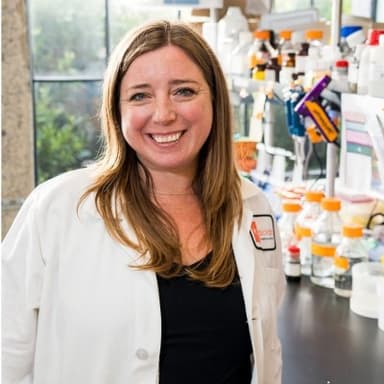
Dr. Christin Glorioso is a neuroscientist, physician, and entrepreneur with 20+ years of research focused on brain aging and dementia prevention. Her commitment to this field is deeply personal. When she was a child, her grandmother developed Alzheimer’s disease in her late 60s, a diagnosis that reshaped the entire family over the seven years that followed.
She earned her BS in Cell and Molecular Biology from the University of Michigan and completed her MD and PhD in Neuroscience through the Carnegie Mellon / University of Pittsburgh Medical Scientist Training Program, where she trained in Dr. Etienne Sibille’s lab. Her doctoral thesis, Between Destiny and Disease: Genetics and Molecular Pathways of CNS Aging, established foundational work on how the molecular aging program of the human brain intersects with neurological disease pathways, and identified a functional polymorphism in the sirtuin 5 gene (SIRT5) that measurably accelerates brain molecular age across four brain regions and multiple independent cohorts.
After completing her doctorate, Dr. Glorioso joined Dr. Leonard Guarente’s laboratory at MIT as a Postdoctoral Associate in Computational Biology, with co-mentorship through MIT’s Computer Science and Artificial Intelligence Laboratory (CSAIL), where she developed expertise in AI and predictive modeling for disease.
During the pandemic she developed the number one ranked US COVID-19 case prediction model in the XPRIZE Pandemic Response Challenge, more accurate than any CDC model. Prior to founding NeuroAge, she also served as Head of AI of the COVIDB initiative at TeachAids and as Chief Strategist of the Bakar Aging Research Institute at UCSF. She taught a brain aging course at MIT and is an invited lecturer at Stanford and other leading research institutions.
Her published scientific work spans the molecular biology of brain aging, sirtuin biology, and Alzheimer’s disease genetics. Key publications include her cross-cohort transcriptome analysis identifying SIRT5 as a modulator of human brain aging rates, a study connecting SIRT6 activity to Parkinson’s disease risk through the mechanism of nicotine-mediated neuroprotection, and a large-scale transcriptomic analysis demonstrating that APOE4 status and chronological age together shape a measurable molecular brain age signature. Her research has been supported by grants from the American Federation for Aging Research (AFAR), the Glenn Foundation for Medical Research, and the National Institute on Aging.
As an APOE4 carrier herself, Dr. Glorioso understands firsthand what it means to face elevated genetic risk for Alzheimer’s disease and to want rigorous, actionable information early enough to act on it. She founded NeuroAge on the conviction that dementia is not an inevitable consequence of aging. It is a biological process that begins decades before symptoms appear and that can, with the right tools, be measured and addressed while intervention is still meaningful.
The NeuroAge platform integrates brain MRI volumetrics, APOE and polygenic risk genotyping, RNA biomarkers, and cognitive performance testing into a single multi-modal assessment, giving patients and clinicians a comprehensive, quantitative picture of brain health. NeuroAge is funded by the Alzheimer’s Drug Discovery Foundation, has active clinical trials underway, and has been recognized as a winner of the NIH National Institute on Aging Startup Challenge and named one of the top 10 companies to watch by Life Science Nation.
Beyond NeuroAge, Dr. Glorioso is committed to accelerating the broader field of longevity medicine. She serves as Founder and Executive Director of Longevity Global, a nonprofit that advances the science and practice of healthy longevity through international conferences and scientific initiatives, including the Younger Biological Age Contest. A former Division 1 college tennis player, she brings the same competitive discipline to her scientific and entrepreneurial work that shaped her early athletic career.
Areas of expertise
Education
Postdoc in Computational Biology
Massachusetts Institute of Technology
2012-2017
Ph.D. in Neuroscience
University of Pittsburgh
2010
M.D.
University of Pittsburgh
2011
B.S. in Cell and Molecular Biology
University of Michigan
2002
Scientific publications
2025
E Jacques, C Herzog, K Ying, A Tomusiak, J Kasamoto, R Sehgal, …
2024
A Chharia, G Jeevan, RA Jha, M Liu, JM Berman, C Glorioso
2024
C Glorioso, F Castiglione, K Oshinubi, A Chharia, J Barhak
2023
J Rufino, C Baquero, D Frey, CA Glorioso, A Ortega, N Reščič, JC Roberts, …
2023
S Natraj, M Bhide, N Yap, M Liu, A Seth, J Berman, C Glorioso
2023
C Baquero
2021
J Álvarez, C Baquero, E Cabana, JP Champati, AF Anta, D Frey, …
2021
P Nandakishore, M Liu, P R, S Gourneni, R Sukumaran, JM Berman, …
2019
CA Glorioso, AR Pfenning, SS Lee, DA Bennett, EL Sibille, M Kellis, …
2018
JW Nicholatos, AB Francisco, CA Bender, T Yeh, FJ Lugay, JE Salazar, …
2016
JQ Taylor, P Kovacik, J Traer, P Zakahi, C Oslowski, AS Widge, …
2011
C Glorioso, S Oh, GG Douillard, E Sibille
2011
C Glorioso, E Sibille
2010
CA Glorioso, S Oh, E Sibille
2010
CA Glorioso
2010
C Glorioso, S Oh, GG Douillard, E Sibille
2007
E Sibille, J Su, S Leman, AM Le Guisquet, Y Ibarguen-Vargas, …
2007
E Sibille, J Su, S Leman, AM Le Guisquet, Y Ibarguen-Vargas, …
2007
CA Glorioso
2006
C Glorioso, M Sabatini, T Unger, T Hashimoto, LM Monteggia, DA Lewis, …
2006
E Sibille, J Su, S Leman, AM Le Guisquet, J Joeyen-Waldorf, C Glorioso, …
AF Anta, C Glorioso
R Jain, U Gupta, S TV, R Sukumaran, C Glorioso