

Omega-3 supplements reverse biological aging clocks (new study)
Steve Horvath and colleagues show that Omega-3s but not Vitamin D or exercise turn back 3 out of 4 epigenetic clocks tested
 Dr. Christin Glorioso, MD PhD4 min read
A new study from Professor Steve Horvath (Altos Labs) that came out in Nature Aging in February of this year showed that taking Omega-3 supplements turned back multiple methylation-based aging clocks by a few months after taking them for 3 years.
Nature News covered the article:
“Clinician-scientist Heike Bischoff-Ferrari and geroscientist Steve Horvath take omega-3 and vitamin D supplements every day to prevent ageing-related health issues. “I do this every morning with my coffee,” says Horvath, who is based at biotechnology company Altos Labs in Cambridge, UK. “I practise what we publish.”
Altos Labs is the Jeff Bezos funded anti-aging moonshot startup with multiple institutes around the world.
I wrote about aging clocks and their utility but in brief they use epigenetic marks on DNA to quantify the rate at which people are aging biologically. The utility of the clocks is controversial because they do not always agree with one another due to the fact that the scientists who created them did so in different ways. Some clocks were trained to predict lifespan (GrimAge), while others used markers of multiple age-related diseases including cholesterol and glucose (PhenoAge), and still others quantified the rate of biological aging (DunedinPace). The result of these different methods is that people are assigned different biological ages, by sometimes as much as twenty years, depending on which clock they use to test themselves. There is no one agreed upon “right clock”.
Testing yourself over time with the same clock and understanding the nuance between clocks is necessary to interpret them correctly.
I also think that using multiple clocks and combining them to gain more confidence is a winning strategy. Most scientists would likely agree that if 10/12 clocks tested showed significant benefit for a drug in a clinical trial, for example, that this would be pretty convincing evidence that the drug was turning back some aspects of biological aging.
From this standpoint, the new paper examining multiple aging clocks in a study of Omega-3 supplementation is fairly convincing evidence.
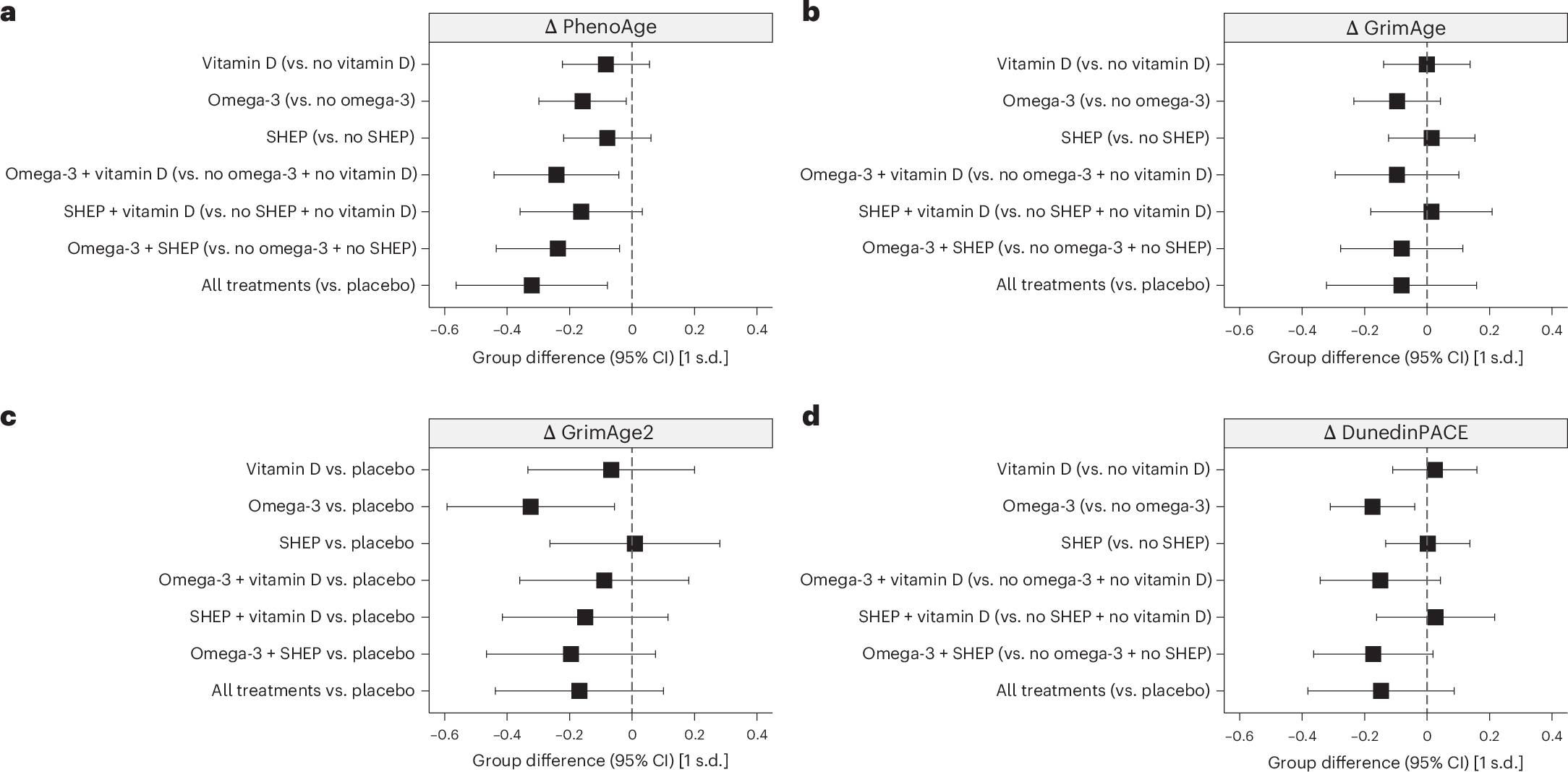
The study reported the results from 777 participants, half of which were free of major chronic diseases, on the effect of vitamin D (2,000 IU per day) and/or omega-3 (1 g per day) and/or a home exercise program on four biological aging clocks- PhenoAge, GrimAge, GrimAge2 and DunedinPACE over 3 years.
Daily omega-3 supplementation reduced the age-acceleration or pace-of-aging values of three of four clocks in their primary analysis- PhenoAge, GrimAge2, and DunedinPACE. Vitamin D supplementation and exercise (3x/week for 30 minutes) were not associated with statistically significant changes in any of the clocks. All of the treatments combined had an additive affect on PhenoAge but not on the other clocks.
How should you get your omega-3s?
Taking omega-3 supplements has been shown to have smaller effects on disease risk (stroke, cardiovascular disease) than eating omega-3s from dietary sources, such as fatty fish, walnuts, and flax seed. Check out my Omega-3 chocolate chip banana bread recipe for a delicious way to consume Omega-3s. If you aren’t sure if you are consuming enough omega-3s, you might want to take a blood test for your levels (available at Quest Diagnostics). I haven’t tried this yet but it is on my short list of diagnostics that I am interested in exploring.


Written by
Dr. Christin Glorioso, MD PhD
Dr. Glorioso is the founder and CEO of NeuroAge Therapeutics. With her background in neuroscience and medicine, she is dedicated to revolutionizing brain health and helping people maintain cognitive vitality.
Learn more about Dr. Glorioso

