

Christin's favorite breakfast
Some key swaps make this breakfast brain healthy in addition to delicious
 Dr. Christin Glorioso, MD PhD6 min read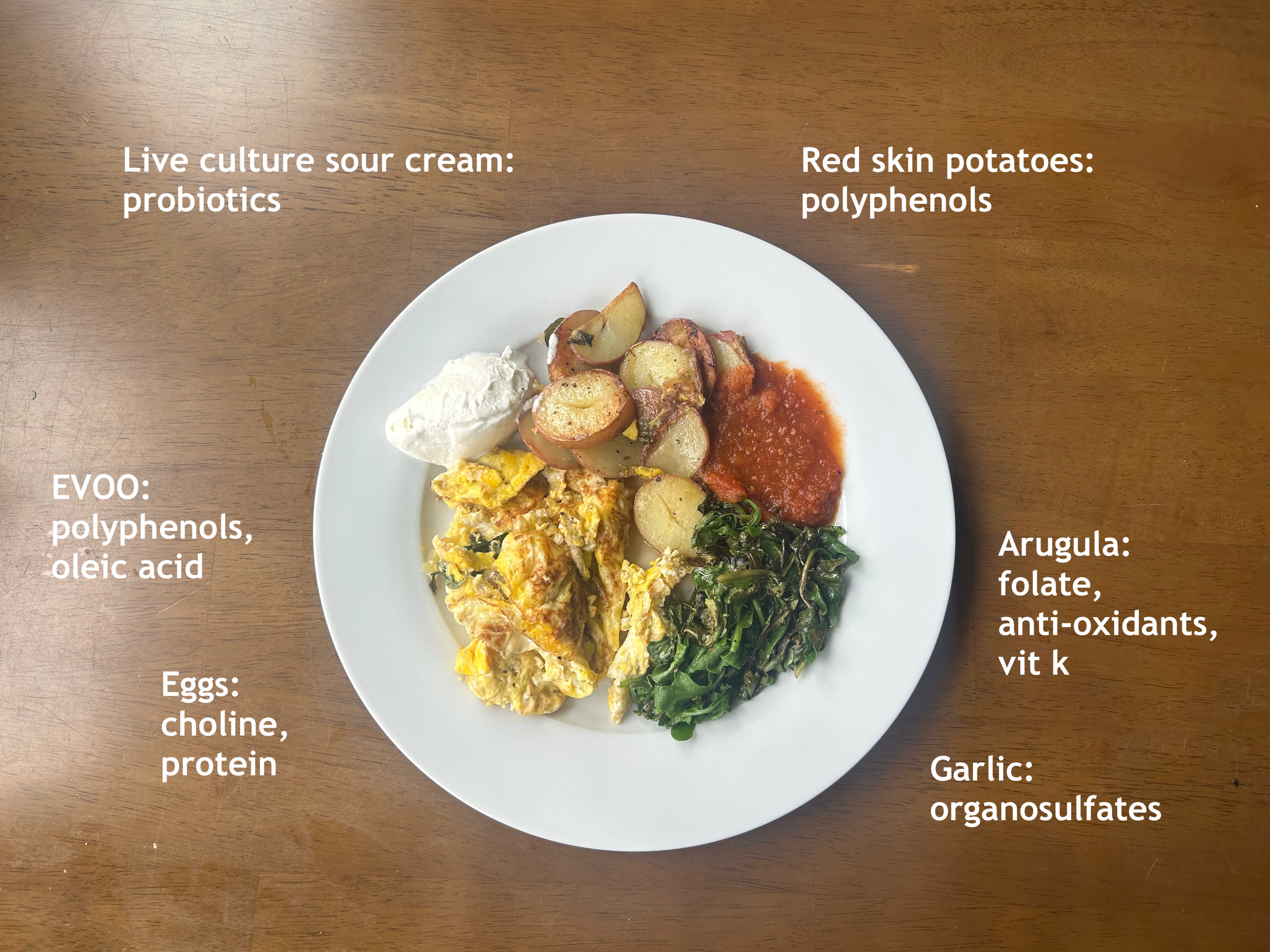
My family is of Italian heritage, so I grew up believing that food should be both delicious and healthy. This breakfast is both. There are some key choices that boost the brain-healthy ingredients while keeping the savory deliciousness of a classic breakfast.
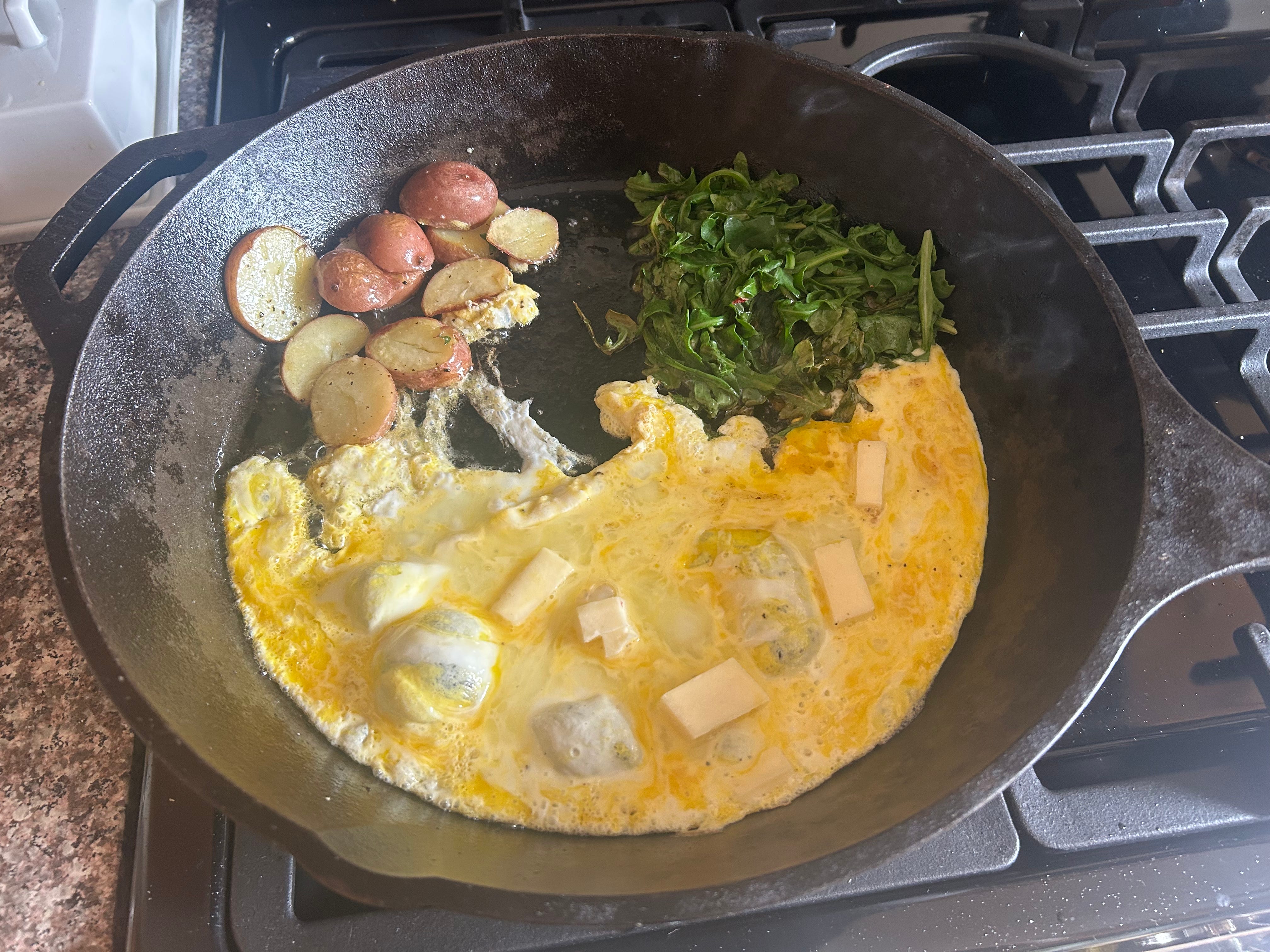
One skillet recipe (15 min prep and cook time):
1. Finely chop two cloves of garlic, let sit on the cutting board for 10 mins.
2. Meanwhile, rinse and poke holes with a fork in two small red-skinned potatoes and microwave them for 1 minute.
3. Slice the potatoes horizontally.
4. Heat 1 tablespoon of EVOO on medium in a cast iron skillet. You can use other types of skillets but avoid those with teflon coating as they leach microplastics, which may be bad for the brain.
5. Add the potato slices to the skillet, season both sides of them with salt and pepper, and brown on both sides.
6. Scoot the potatoes to the far side of the skillet, add a bit more EVOO and two large handfuls of baby arugula, squeeze 1/2 lemon on everything and drop the chopped garlic cloves on top of the arugula. You can substitute other greens like kale or spinach, but arugula pairs the best with the other flavors. Sprinkle salt on the arugula. Sauté it briefly until wilty.
7. Scoot the arugula to the far side next to the potatoes. Add a bit more EVOO.
8. Add two eggs scrambled with a touch of half and half and a few cubes of jack cheese. Season with salt and pepper.
9. Plate everything with salsa and live culture sour cream.
10. Optional brain healthy add ons or swaps that pair beautifully with the flavor palate are cumin black beans and avocado slices.
What makes this recipe healthy for the brain:
1. I skip the butter and sauté everything in extra virgin olive oil, which helps get to that 3 tbsp/day rec that I talked about in my Substack on healthy fats.
EVOO contains:
Polyphenols (antioxidants)
Oleocanthal: Acts as a natural anti-inflammatory agent and power wash for the brain. Studies show it aids in the clearance of β-amyloid plaques and tau proteins associated with neurodegenerative diseases.
Oleuropein & Hydroxytyrosol: Highly potent antioxidants that protect brain cells from oxidative stress and mitochondrial damage. They are shown to support brain cell growth and synaptic function.
Flavonoids (Apigenin & Luteolin): Plant nutrients that help reduce inflammation, minimize oxidative cell damage, and support brain cell growth.
Healthy fats
Oleic Acid: This monounsaturated omega-9 fatty acid promotes blood-brain barrier integrity, enhances memory, and helps protect neurons from degeneration.
2. I skip the bacon and opt for sautéed arugula with garlic instead, which is packed with brain-healthy antioxidants, folate, and organosulfate compounds. It also fulfills the 2 cups a day of vegetables that we recommend at NeuroAge.
Arugula contains:
Folate (Vitamin B₉): Essential for DNA synthesis and neurotransmitter production. High folate intake is linked to improved memory, better processing speeds, and a lower risk of cognitive decline.
Lutein: A powerful carotenoid antioxidant that accumulates in brain tissue, supporting overall cognitive function and protecting the nervous system from oxidative damage.
Isothiocyanates (e.g., Erucin and Sulforaphane): Sulfur-containing compounds that combat neuroinflammation and promote cellular repair by neutralizing free radicals and pro-inflammatory cytokines.
Vitamin K: Plays a key role in brain health by aiding in the synthesis of sphingolipids, a class of fats heavily concentrated in brain cell membranes.
Dietary Nitrates: Arugula is rich in natural nitrates that dilate blood vessels, improving cerebral blood flow and oxygen delivery to the brain.
I add chopped and rested garlic, which contains organosulfur and antioxidant
compounds that support the brain. When garlic is crushed, it forms allicin, which then breaks down into lipid-soluble sulfur compounds (diallyl sulfides) during cooking in oil. These compounds have been shown to combat oxidative stress and reduce neuroinflammation in laboratory and animal studies.
A note on prep: allicin only forms after garlic is crushed or chopped, and the heat of sautéing destroys the enzyme that makes it. Crushing the garlic and letting it sit for about 10 minutes before it hits the pan lets the allicin form first, so more of it (and its beneficial breakdown products) survives cooking.
The brain-relevant compounds in sautéed garlic include:
Allicin: The active compound formed in crushed raw garlic. It acts as an antioxidant that neutralizes reactive oxygen species (ROS). It is reduced by cooking, which is why the crush-and-rest step matters, and much of it converts into the sulfur compounds below.
Diallyl Sulfides (DAS, DADS, DATS): Lipid-soluble sulfur compounds that form as allicin breaks down, and oil-based cooking actually favors their formation. In preclinical work they trigger cellular processes like protein persulfidation, which has been linked to counteracting memory loss and supporting metabolic health.
4. I choose red-skinned potatoes and keep the skin on.
Red potatoes contain:
Anthocyanins: These red and purple pigments function as powerful antioxidants. They help combat oxidative stress and cool inflammation in the brain, which is linked to cognitive decline and neurodegenerative disorders.
Chlorogenic Acid: As the most abundant phenolic acid in potatoes, it partners with anthocyanins to provide a robust shield against cellular damage at the tissue level.
Choline: This essential nutrient is vital for healthy brain development, proper nerve signaling, and optimal muscle function.
Vitamin B6: Red potatoes contain high levels of B6, which is necessary for the synthesis of vital neurotransmitters and plays a direct role in proper brain and nerve function.
5. Add 2 eggs, which give you roughly two-thirds of a woman’s daily choline and about half a man’s, an essential micronutrient that 90% of people don’t get enough of and that’s essential for memory.
6. I choose sour cream with live cultures. Commercial processing and pasteurization typically kill off the beneficial live bacteria in many grocery store brands. Look for labels specifically stating "contains live and active cultures" or source unpasteurized, traditionally fermented products. This gives you a serving of fermented food that’s great for gut health.
Sour cream with live cultures contains:
Live probiotics and psychobiotics
Lactobacillus & Bifidobacterium: Specific strains found in some live cultures (like Lactobacillus plantarum and Lactobacillus fermentum) act as “psychobiotics.” These beneficial bacteria can help restore a healthy gut microbiota, modulating the immune system and producing neurotransmitters like serotonin and gamma-aminobutyric acid (GABA) directly in the gut.
Neuroinflammation reduction: By strengthening the intestinal barrier, live cultures help limit “leaky gut” and the translocation of endotoxins into the bloodstream, which is associated with lower systemic inflammation, in turn linked to depression and cognitive decline.
Bioactive peptides and metabolites
SCFA production: During fermentation, the bacteria metabolize milk constituents into short-chain fatty acids (such as acetate and butyrate). Butyrate serves as a key energy source for gut cells and has been linked to support for brain cell growth and mood regulation.
Bioactive peptides: The microbial breakdown of milk proteins yields bioactive peptides. These short chains of amino acids show antioxidant properties and can aid in blood pressure regulation, reducing vascular stress on the brain.


Written by
Dr. Christin Glorioso, MD PhD
Dr. Glorioso is the founder and CEO of NeuroAge Therapeutics. With her background in neuroscience and medicine, she is dedicated to revolutionizing brain health and helping people maintain cognitive vitality.
Learn more about Dr. Glorioso

