

Why Birth Control and Hormone Replacement Are Not the Same Thing
A recent lawsuit about the contraceptive, Depo-Provera, and brain tumors shines a light on the broader topic
 Dr. Christin Glorioso, MD PhD22 min read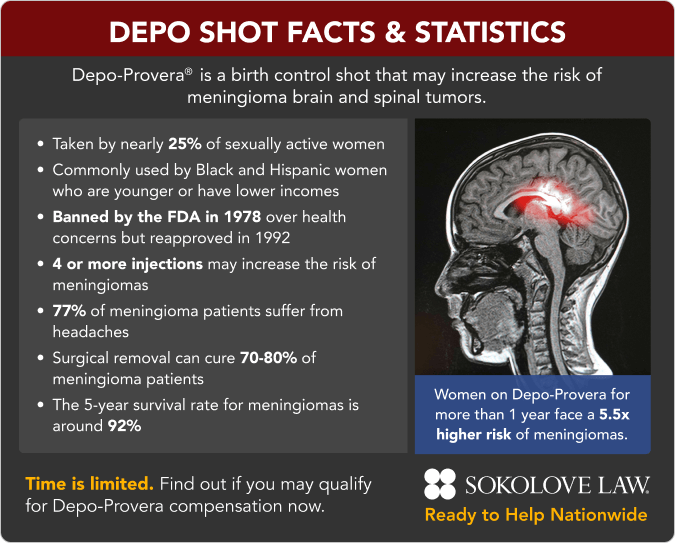
I first heard about the Depo-Provera lawsuit from a commercial on the radio recruiting claimants, the kind that asks whether you or a loved one took a particular drug and was later diagnosed with something serious, then gives a number to call.
In June 2026, Pfizer reached a settlement in the federal litigation over Depo-Provera and brain tumors. Depo-Provera is a contraceptive injection given every three months, used by an estimated 74 million women worldwide. The FDA had added a warning to the label in December 2025 and the European Medicines Agency had already issued a communication to healthcare professionals advising against the drug in anyone with a history of these tumors. The tumors are meningiomas, tumors that grow from the meninges, which are the layers of tissue wrapping the brain and spinal cord. Because they grow from the wrapping rather than from brain tissue itself, most of them are benign. They can still require neurosurgery and cause lasting problems depending on where they sit.
A tumor signal strong enough to change a label and to move a manufacturer toward settlement, however, is not a small finding. These tumors were associated with some progestogens and not others. Progestogen is the umbrella term for progesterone along with the synthetic compounds built to imitate it, and the synthetic ones are called progestins. Progesterone in capsule form, commonly used in hormone replacement therapy, did not show an association with tumors. The progestin in the Depo-Provera injection, medroxyprogesterone acetate, showed the tumor signal. Those two are treated as interchangeable in ordinary conversation and they behave differently in the body. If two progestogens differ enough that one is associated with tumors of the meninges and the other is not, they may also differ in what they do elsewhere, including in the brain.
I have a personal reason for looking into this topic. Several years ago I asked my primary care physician for hormone replacement in perimenopause and was prescribed an oral contraceptive instead. The pill made me feel cognitively “weird”. I was later prescribed HRT by Midi, a telehealth provider, and felt better within days. I will come back to my own story once we go through the biology.
The finding that started the litigation
The brain tumor signal came from a national study published in The BMJ in March 2024 by Dr. Noémie Roland, Dr. Alain Weill and colleagues at EPI-PHARE in France. They used the French national health data system to compare 18,061 women who had brain surgery for a meningioma between 2009 and 2018 against 90,305 women of the same age and region who had not. This design, comparing people who already have a condition against people who do not and then looking backward at what they were exposed to, is called a case-control study.
Three progestogens showed an excess risk in prolonged use of a year or more. The injectable form of medroxyprogesterone acetate produced the largest estimate at 5.55, meaning users appeared roughly five and a half times more likely to have had surgery for one of these tumors.
That estimate came from small numbers. It rested on 9 exposed cases and 11 exposed controls. Statisticians express the resulting uncertainty as a confidence interval, the range of values the data are compatible with, and here it ran from 2.27 to 13.56. An interval that wide means the finding is consistent with a doubling of risk and equally consistent with a twelvefold increase. A larger US study published in JAMA Neurology in 2025 found a relative risk of 2.43 for users of the injection, drawn from a much larger exposed population.
Relative risk and absolute risk are different quantities. Imaging and autopsy studies find a meningioma in roughly 1% to 3% of people, and the large majority of those tumors never cause symptoms or need treatment. The endpoint in the French study was surgery, which is rarer than that. In their follow-up analysis the same group calculated that 67,300 women would need to use desogestrel for more than five years to produce one additional meningioma requiring surgery. The estimated effect of the injection is larger than that. Both act on a lifetime baseline of a few percent at most, and most of that baseline consists of tumors never need to be treated.
On making a claim. This is not a class action, so there is no fund a person signs up for. Each plaintiff files an individual case, usually through an attorney. The terms of the settlement reached in principle have not been made public and were still being presented to plaintiffs as of mid-2026. The court maintains an official page for the litigation, a frequently asked questions page and contact information for plaintiffs’ lead counsel. I am not a lawyer and none of this is legal advice.
Some progestogens carried the signal and others did not
In the same French dataset, progesterone itself showed no excess risk. The same was true of dydrogesterone, another progestogen used in Europe, and of hormonal intrauterine devices releasing levonorgestrel, at any dose. A follow-up study from the same group examined birth control pills and found a small increase with desogestrel after more than five continuous years, along with no excess risk for levonorgestrel at any duration.
The pattern tracks particular synthetic compounds delivered at sustained high exposure.
The meninges respond to progestogens because they carry the receptor
Meningiomas carry progesterone receptors, which are the docking sites a hormone binds to in order to change what a cell does, a finding that goes back to the early 1990s. These tumors also occur roughly two to three times more often in women than in men. A 2025 study worked out a pathway for that sex difference. Sex hormones interact with a protein in the cell membrane called PGRMC1, which in turn controls two proteins that process RNA, the working copies of genes. Once released, those two proteins stabilize the copy that produces the progesterone receptor itself, which then switches on genes controlling cell division. Progestogens turn this pathway on and testosterone turns it off.
Stopping the drug often shrinks the tumor. Evidence that these compounds are doing something rather than a simple association comes from cyproterone acetate, a high-dose progestogen used in Europe. Discontinuation most often produces stabilization or shrinkage. A drug that raises incidence and whose withdrawal reverses existing tumors makes a better case than statistics alone.
Medroxyprogesterone acetate is a different molecule from progesterone
The HRT progesterone sold in capsules is molecularly identical to what the ovary makes. Micronizing it, which is what the label means by micronized progesterone, involves grinding the particles small enough that the compound survives being swallowed, since unmodified progesterone is poorly absorbed from the gut.
Medroxyprogesterone acetate, the compound in Depo-Provera, is a modified version. Two chemical groups were added to keep the liver from destroying it, which is what allows it to work as a pill and as a three-month injection. Those same modifications gave it activity at receptors progesterone mostly leaves alone.
It acts partly like cortisol. Dr. Janet Hapgood and colleagues at the University of Cape Town showed that medroxyprogesterone acetate binds and activates the glucocorticoid receptor, the docking site the stress hormone cortisol uses. Progesterone binds that same receptor about a hundred times more weakly and does close to nothing through it. In cells lining the cervix, the compound switched anti-inflammatory genes on and inflammatory genes off. Removing the glucocorticoid receptor from those cells abolished the effect, which is how the researchers established that the receptor was responsible. In immune cells, it triggered cell suicide the way cortisol and the steroid drug dexamethasone did, while progesterone did not.
Steroid exposure has documented effects on the brain. Glucocorticoids in other clinical settings produce reversible impairment of the kind of memory that depends on the hippocampus, along with disturbed sleep and mood changes that run in both directions and scale with dose. Appetite also rises and fat is deposited centrally, which offers a plausible partial explanation for the weight pattern in women using the Depo-Provera injection, since the gain there is fat mass and abdominal in distribution. Whether any of this happens at contraceptive doses has not been tested.
It also loses a calming byproduct. When progesterone is swallowed, the liver converts a large share of it to allopregnanolone, which acts on the same receptor system that alcohol and benzodiazepines act on. That conversion is why progesterone in capsule form is sedating and is taken at bedtime, something I covered in more detail in an earlier article on sleep. The chemical modifications in medroxyprogesterone acetate block the pathway that produces that byproduct, so the synthetic compound delivers no equivalent.
Depo-Provera lowers a woman’s own estrogen, a finding investigated for its effect on bone but never for its effect on the brain
The injectable form, which pharmacologists call depot medroxyprogesterone acetate because the drug sits in a depot at the injection site and releases slowly, prevents pregnancy by shutting down the signals the pituitary gland sends to the ovary. Ovulation stops, and so does much of the ovary’s production of estradiol, the main estrogen in premenopausal women.
Pharmacokinetic work, meaning studies of how a drug moves through the body over time, found that women using the injection for several years run blood estradiol between 10 and 92 pg/mL, averaging around 40. For comparison, a premenopausal woman not on the injection typically ranges well above that across her cycle. An additional analysis of the randomized ECHO trial compared methods head to head and found that at six months, median estradiol in the injection group was 53% below the copper intrauterine device group. The authors noted that this has implications for psychological and sexual side effects.
Depo-Provera is associated with lower bone density. Low estrogen weakens bone and bone density in users falls by roughly 0.5% to 3.5% after one year and 5.7% to 7.5% after two. The FDA added a boxed warning in 2004, the strongest warning it places on a label. ACOG’s position is that density recovers after stopping, that no good data address later fracture risk and that bone concerns should not restrict prescribing given what unintended pregnancy costs. That tradeoff was reached deliberately and defended openly but is not often discussed with patients.
Estrogen does more than mineralize bone. The regulatory conversation did not extend past bone density to the brain. The injection also supplies no estrogen of any kind to compensate, unlike a combined birth control pill which at least supplies a synthetic one.
One observation has been made repeatedly without being resolved. Hot flashes and vaginal dryness are uncommon in women using the injection despite estradiol levels that would be symptomatic after menopause. The likely reason is that flushing responds to how fast estradiol is changing rather than to how low it is, and the injection produces a slow steady decline rather than the erratic swings of the menopausal transition. If that holds, the absence of symptoms says nothing about whether tissues are receiving enough estrogen, and the bone data indicate that they are not.
The cognitive evidence comes from hormone therapy rather than contraception
The HRT formulation in earlier trials is not the formulation used today. The Women’s Health Initiative Memory Study reported increased dementia risk in women taking conjugated equine estrogens, an estrogen preparation derived from horse urine, combined with medroxyprogesterone acetate. The increase reached statistical significance in the combined arm and not in the arm receiving estrogen alone. Those participants were 65 and older, taking a low oral dose, on average two decades past menopause. A 25-year-old receiving 150 mg by injection every three months is a different exposure in a different patient population.
Later trials using estradiol with micronized progesterone did not reproduce the harm. The Kronos Early Estrogen Prevention Study randomized recently menopausal women to estradiol through the skin or to low-dose oral conjugated estrogens, both paired with oral micronized progesterone at 200 mg for twelve days a month, against placebo. After four years its cognitive substudy found no benefit and no harm across four cognitive domains and a global measure. When the same women were reassessed roughly ten years later, there was still no cognitive effect and no concerning change on brain imaging. The Early versus Late Intervention Trial with Estradiol used oral estradiol with vaginal micronized progesterone and reached the same conclusion, finding no cognitive benefit and no decline whether treatment started within six years of menopause or more than ten years after.
What that does and does not establish. The dementia signal attached to one specific combination given to women well past menopause and it has not appeared with estradiol and micronized progesterone in women treated near menopause. Those same trials found no cognitive benefit either, so they support safety.
The laboratory work offers a mechanism. Dr. Roberta Brinton’s group tested progestogens on neurons from the hippocampus, the brain region central to forming memories. Estrogen, progesterone and a related compound each protected those neurons against a toxic insult, while medroxyprogesterone acetate failed to protect and also blocked the protection estrogen provided when the two were given together. Later work found that the compound suppressed production of an enzyme involved in clearing amyloid beta, the protein fragment that accumulates in Alzheimer’s disease. The authors of that study called for investigation of cognitive outcomes in living animals, which has not happened.
There is a gap in the clinical studies testing whether Depo-Provera is harmful for cognition. A compound that lowers a woman’s own estradiol, supplies no replacement and blocks estrogen’s protective effect on hippocampal neurons in culture has been given to tens of millions of women for decades without anyone measuring what it does to cognition.
Contraception and replacement do opposite things to the same system
A combined birth control pill suppresses female sex hormones. It delivers ethinylestradiol, a synthetic estrogen, along with a potent progestin, in doses sufficient to shut down the signals from the brain that drive the ovary. Follicles, the fluid-filled sacs that hold and mature eggs, stop developing. A woman on the pill has low estradiol of her own because her ovary is quiet. What circulates in its place is ethinylestradiol, a different molecule from estradiol.
As a woman’s own estradiol falls, ovulation stops, and therefore no progesterone from it and no allopregnanolone either. Ovarian androgen output drops and rising carrier protein lowers what remains of it further.
The synthetic estrogen behaves differently in the liver. A chemical group added to ethinylestradiol keeps the liver from breaking it down, which is what allows a daily pill to work. It also means the compound drives liver protein production in a way estradiol does not. A head-to-head trial comparing a pill containing ethinylestradiol against one containing estradiol found significantly larger increases in carrier proteins with the synthetic estrogen, along with significantly larger drops in androgens, the hormone family that includes testosterone. One of those carrier proteins, sex hormone binding globulin, binds hormones in the bloodstream and holds them inactive, so when it rises the free and usable fraction of testosterone and of remaining estradiol falls. The clotting consequence appears in the risk figures, where combined contraceptives carry blood clot risks in the range of 5.4 to 10.2 times baseline depending on the progestin, against roughly 3.9 to 4.0 for oral hormone therapy.
The tumor finding does not transfer to the pill. Medroxyprogesterone acetate is not used in any oral contraceptive, existing for contraception only as the injection. The progestins in commonly prescribed pills are levonorgestrel and norethindrone, and levonorgestrel showed no excess meningioma risk at any duration in the French data. Nomegestrol acetate and cyproterone acetate, used in some European formulations, do carry the signal. The case against handing a perimenopausal woman a contraceptive therefore rests on suppression and on ethinylestradiol rather than on meningioma risk.
Hormone replacement instead raises female sex hormones. It provides estradiol, the same molecule the ovary makes, at doses approximating premenopausal levels and it suppresses nothing. The progestogen component exists to protect the uterine lining. HRT is not a contraceptive.
My own version of this
I was in perimenopause, my sleep was disrupted, and I was feeling low energy. I asked my primary care physician for hormone replacement. She instead prescribed an oral contraceptive.
I felt terrible on it. Not dramatically ill, just cognitively “weird”, and my perimenopause symptoms did not improve. It’s hard to describe what this felt like beyond weird but it wasn’t good. I stopped after a week.
About a month later, once I could get an appointment, I was prescribed HRT (estradiol and progesterone) through Midi Health, a telehealth menopause service. I have no financial relationship with them but I do like them.
It was like a switch flipped. My sleep was fixed almost immediately and my mood brightened within days. I felt like a million bucks, and I have felt that way since. After twenty years studying brain aging I did not expect to be that surprised by my own endocrinology.
What I can and cannot conclude from that. This is N of 1 so a grain of salt is warranted. However there was some additional evidence. When I stopped the hormones for a few days the symptoms came back, and they resolved again when I restarted. Withdrawing a drug and watching the effect reverse is the same logic that makes the cyproterone acetate evidence above persuasive, and it is the design Dr. Peter Schmidt’s group used in the withdrawal study described further down. A symptom that tracks a drug going on and coming off is not easily explained by the natural fluctuation of perimenopause.
The clinical trial data point the same direction. A systematic review and meta-analysis covering nine randomized trials and 388 participants found that micronized progesterone shortened the time taken to fall asleep compared with placebo, by roughly seven minutes, while total sleep time and sleep efficiency, meaning the share of time in bed actually spent asleep, trended favorably without reaching statistical significance. Sleep laboratory work using EEG recordings found that 300 mg at bedtime reduced time spent awake during the night. Those published effects are smaller than what I experienced, so the literature supports the direction of the change rather than its size. The mechanisms above describe the general case and my experience is one observation consistent with them.
Why a woman asking for hormone therapy is often handed a contraceptive
The usual explanations do not hold up to scrutiny.
Off-label prescribing is not an obstacle. Hormone therapy products carry postmenopausal labels, so prescribing them during perimenopause falls outside the approved indication and is called off-label. Off-label prescribing is legal and routine across every field of medicine. Declining to do it here is a choice that is not applied consistently elsewhere.
A perimenopause diagnosis does not require blood test confirmation. NICE guidance in the UK directs clinicians to identify perimenopause without laboratory tests in otherwise healthy people aged 45 or over who have recently developed hot flashes or night sweats along with a change in their cycle. The accompanying quality standard states that hormone levels fluctuate during the transition, that knowing them will not change management and that a clinical diagnosis based on symptoms is what is expected. A clinician who says the diagnosis cannot be confirmed has the logic reversed, because symptoms are what establishes it.
Hormone blood testing has a use and it’s not gatekeeping. The variability in female hormone levels across the cycle is established and it was mapped by serial sampling, meaning repeated measurements across a cycle rather than one draw. The SWAN Daily Hormone Study collected daily urine across a full cycle, annually, in a group of over 800 women. Dr. Nanette Santoro’s review of that work describes a transition that is not a simple decline, with estradiol swinging between high peaks and deep troughs while average levels often stay inside reproductive-age ranges well into the early years. A normal-looking panel therefore does not rule out perimenopause. Sampling at multiple defined points characterizes a pattern that a single draw cannot, and measurement has a clearer role once therapy starts. A 2026 review on tailoring transdermal estradiol dose, meaning estradiol delivered through the skin by patch or gel, concluded that no single dose or blood level suits everyone, that dose is usually adjusted according to symptoms and that blood measurement can support or inform dose decisions in particular situations. Absorption through skin varies between people and a woman still symptomatic on a high patch dose presents a different clinical problem depending on whether her level came back low or adequate.
Contraception and replacement are separable. A woman who still needs contraception can have both, through estradiol combined with a hormonal intrauterine device, or estradiol with cyclic progesterone alongside a non-hormonal method. The intrauterine device prevents pregnancy and protects the uterine lining at the same time, with very little progestin reaching the rest of the body, while the estradiol replaces what the ovary is producing less of. Needing contraception is not a reason to shut the ovary down instead.
Provider reluctance to prescribe HRT has a traceable origin. After the Women’s Health Initiative results were published in 2002, the FDA placed a boxed warning on estrogen-containing therapies and prescribing fell steeply. Clinicians trained in the years that followed were cautioned about HRT. That caution has outlasted the newer studies that don’t show harm, and it never transferred to oral contraceptives, which deliver a more potent estrogen at a higher effective dose than hormone therapy does.
The pattern is consistent with how physicians have been trained. A survey of residents in family medicine, internal medicine and obstetrics and gynecology across 20 US programs found that 20.3% received no menopause lectures at all, that 6.8% felt adequately prepared to manage menopause and that 34.4% would not offer hormone therapy to a symptomatic newly menopausal woman with no contraindications. Fewer than a third of obstetrics and gynecology residency programs have any menopause curriculum at all.
This is an informed consent problem before it is anything else. A woman who asks for hormone replacement and receives a contraceptive has been handed a drug with the opposite mechanism, and this is rarely explained to the patient. Consenting to a treatment requires knowing what it does. Whether the substitution came from bias or from never having been taught the difference, the result for the woman is the same.
The counseling literature describes a similar pattern. Research on contraceptive counseling has found that clinicians tend to downplay reported concerns about side effects and treat patient objections as misconceptions to be corrected.
Estradiol can treat perimenopausal depression, a finding menopause specialists know and psychiatrists mostly do not
Estradiol has been tested for depression in this population and the results are stronger than their visibility suggests.
In a double-blind randomized trial, meaning neither the women nor the researchers knew who was receiving the drug, remission of depression occurred in 68% of perimenopausal women treated with estradiol through the skin against 20% on placebo. A prevention trial randomizing 172 women who were not depressed at baseline found that new depressive symptoms over twelve months occurred in 17.3% on estradiol with progesterone against 32.3% on placebo. Dr. Peter Schmidt’s group ran the reverse experiment, withdrawing estradiol from women who had responded to it, and found that withdrawal triggered symptoms in those with a history of perimenopausal depression while leaving comparison participants unaffected.
The contraception side shows the opposite. A Danish study following more than a million women aged 15 to 34 found that combined oral contraceptives raised the rate of first antidepressant use by about 23%, with close to a doubling among adolescents. It tracked women as they lived rather than assigning them to treatments, so it cannot establish cause, and the average effect is small. A small average across a million women remains compatible with a substantial effect in a sensitive minority and none in everyone else.
Guidelines already cover this. Dr. Pauline Maki and Dr. Susan Kornstein led a panel convened by the North American Menopause Society and the National Network of Depression Centers that published guidelines on perimenopausal depression in 2018, covering hormone therapy directly. The document remains largely invisible outside menopause medicine. The trials are small by psychiatric standards, estradiol is generic and off-label for depression so there are less incentives to find a proper trial, and the finding sits in the space between two specialties where psychiatrists do not prescribe hormones and gynecologists do not treat depression.
What has not been studied
The meningioma signal surfaced in 2024, from a French prescription database, roughly six decades after the drug entered use. It did not come from any long-term safety program designed to look for it.
That timeline describes the surveillance system. Contraceptive trials use pregnancy prevention as the endpoint with a standard safety panel attached. Mood appears as a side effect a participant happens to report rather than something measured on schedule. Cognitive endpoints are not collected. No study follows women who used the injection through their twenties out to cognitive outcomes in their sixties. No trial has compared a birth control pill against estradiol-based therapy in perimenopause on mood or cognition, so the difference that many women describe has no dataset behind it in either direction.
These are answerable questions. A cognitive substudy attached to a contraceptive trial would cost a fraction of the trial. Linking existing prescription registries to later cognitive outcomes is feasible with data that already exist. A randomized comparison of a combined pill against estradiol through the skin in symptomatic perimenopausal women would need a few hundred participants and would settle an argument currently conducted on mechanism and anecdote.
My take
The default needs to change. A woman in perimenopause with symptoms and no medical contraindication should be offered hormone replacement rather than a contraceptive. Birth control has the opposite mechanism of HRT and doesn’t treat the low energy, mood, and sleep disturbances of perimenopause. Additionally, several of the synthetics in birth control carry documented risks to mood, Depo-Provera lowers bone density, and a few of them carry risk of meningioma. These risks are rarely discussed when providers suggest birth control to patients. It is high time that women asking for hormone replacement were given it.


Written by
Dr. Christin Glorioso, MD PhD
Dr. Glorioso is the founder and CEO of NeuroAge Therapeutics. With her background in neuroscience and medicine, she is dedicated to revolutionizing brain health and helping people maintain cognitive vitality.
Learn more about Dr. Glorioso

