

The duckweed smoothie behind the best longevity diet, green mediterranean (new study)
 Dr. Christin Glorioso, MD PhD12 min read
I will be eating Green Mediterranean to try and win the Younger Biological Age Contest and will be recommending it to contest participants. That’s because it has the most evidence for health benefits and moving aging clocks according to a new paper in Nature Medicine. A center piece of that diet is Mankai, a little green floating plant also known as duckweed.
Most foods marketed for longevity have never been tested in a controlled trial. Mankai, a cultivated strain of the aquatic plant Wolffia globosa, is an exception. It was tested in an 18-month randomized study that measured liver fat, brain volume on MRI, cardiometabolic markers, and DNA methylation. The group drinking a daily Mankai shake came out ahead on most of those measures.

Mankai is a duckweed grown as a food crop
The plant. Wolffia globosa is a free-floating aquatic plant with no roots or stems and it is one of the smallest flowering plants on earth.

It has been eaten for generations in parts of Southeast Asia, where it is sometimes called a vegetable meatball because it has an exceptionally high protein content and a complete amino acid profile. Mankai is a strain developed for indoor cultivation in water, selected for a protein content above 45 percent of its dry weight along with fiber, polyphenols (plant compounds with antioxidant activity), iron, plant omega-3 fat, and vitamin B12. It is sold frozen in cubes or dried as a powder and the taste is mild and grassy rather than swampy, which is why it disappears into a smoothie.
The trial gave one group a daily green shake for 18 months
The design. DIRECT PLUS enrolled 294 adults with abdominal obesity or dyslipidemia (high triglycerides together with low HDL cholesterol). The average age was 51 and 88% were men. Everyone received physical activity guidance and a free gym membership and the study ran at a workplace with an on-site dining room where lunch was monitored, which made adherence easier to track than in most nutrition research.
The three groups. One group followed standard healthy dietary guidelines. A second followed a calorie-restricted Mediterranean diet with 28 grams of walnuts a day, adding about 440 mg of polyphenols. The third followed a green Mediterranean diet, which added the same walnuts plus 3 to 4 cups of green tea a day and 100 grams of frozen Mankai cubes blended into a daily green shake, while restricting red and processed meat further. Green tea is another daily habit that I am starting. The green version of the diet delivered roughly 1,240 mg of added polyphenols a day. Because the two Mediterranean arms were matched on calories, the differences between them reflect food quality rather than how much people ate.
Liver fat dropped the most in the green Mediterranean group
The main result. Liver fat was measured directly with magnetic resonance spectroscopy rather than estimated from blood tests. The median reduction in liver fat was 38.9 percent in the green Mediterranean group compared with 19.6 percent in the standard Mediterranean group. At the start, 62 percent of participants had fatty liver disease. After 18 months that had fallen to 31.5 percent in the green group, 47.9 percent in the Mediterranean group, and 54.8 percent in the guidelines group.
What went with it. Greater liver fat loss was independently associated with higher blood folate, changes in gut bacteria, more Mankai and walnut intake, and less red and processed meat. Weight loss was similar across the two Mediterranean groups, which means the extra liver fat loss in the green arm was not explained by weight alone.
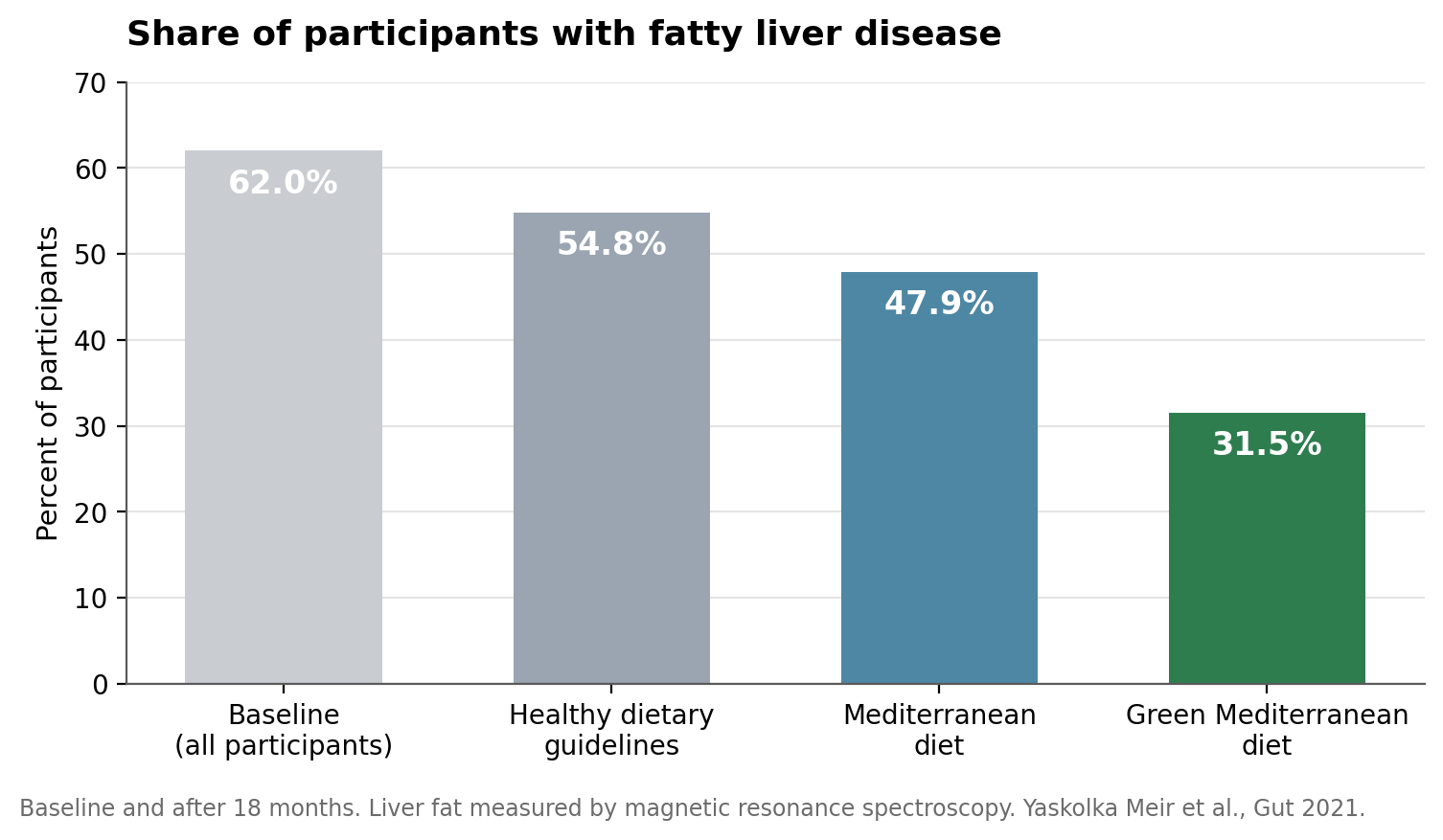
Fatty liver disease was present in 62 percent of participants at the start and in 31.5 percent of the green Mediterranean group at 18 months.
Brain scans showed less age-related shrinkage in participants over 50
The measurements. The brain imaging analysis used two markers. Hippocampal occupancy compares the volume of the hippocampus, the memory structure that shrinks early in Alzheimer’s disease, with the space around it and a falling number indicates tissue loss. Lateral ventricle expansion tracks the fluid-filled spaces in the middle of the brain, which enlarge as surrounding tissue is lost.
The finding. Among participants aged 50 and older, hippocampal occupancy declined by 0.8 percent in the green Mediterranean group compared with 1.3 percent in the guidelines group. Ventricle expansion was 2.3 percent compared with 4.3 percent. These are small absolute differences over 18 months and both Mediterranean groups did better than the guidelines group, with the green version doing best. Improved insulin sensitivity was the single measure most strongly associated with less atrophy. Higher intake of Mankai, green tea, and walnuts also tracked with less hippocampal decline, as did urinary levels of urolithin A and tyrosol, two polyphenol breakdown products that rise when people eat more green plants.
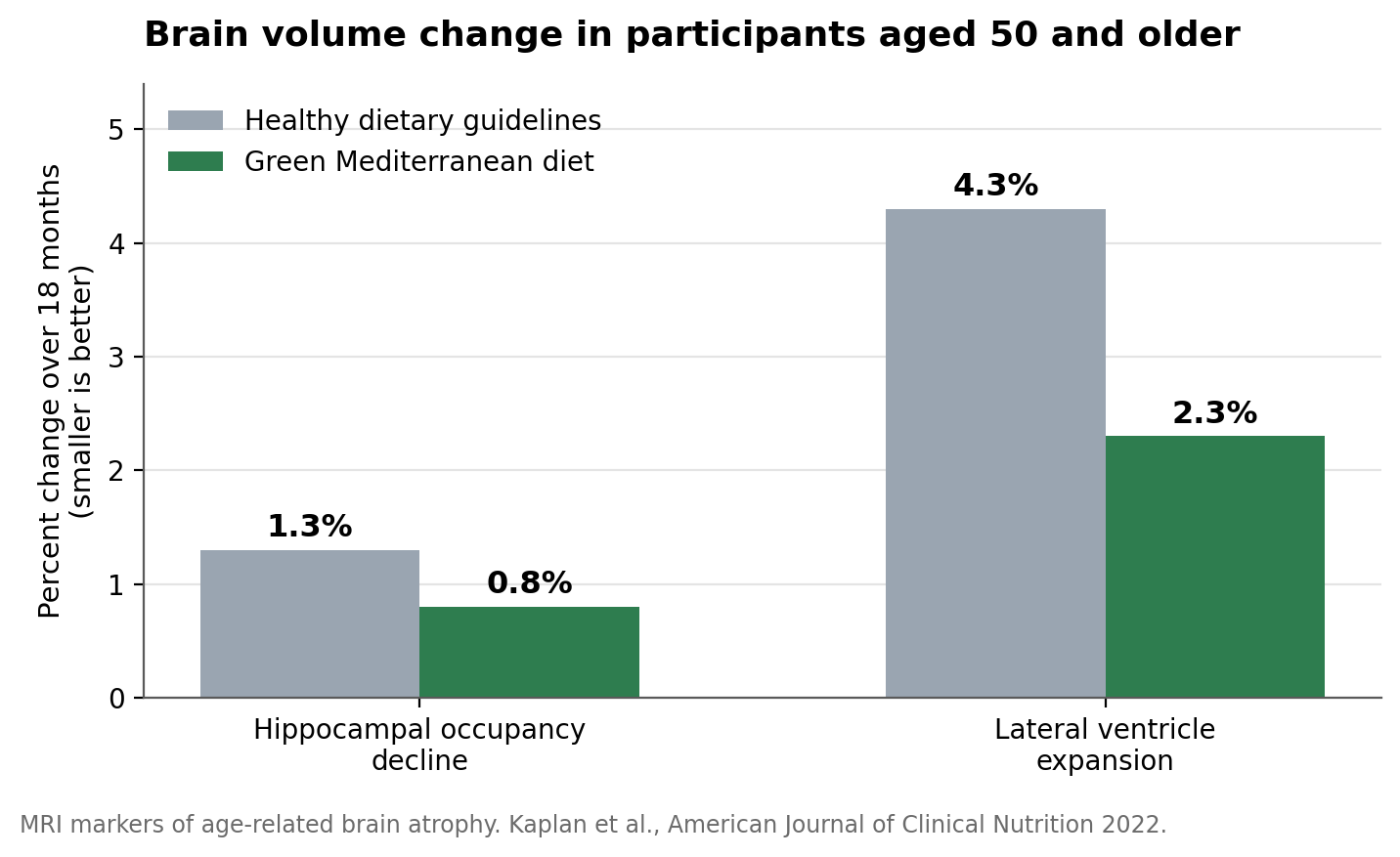
Both markers move in the direction of tissue loss with age, so smaller numbers indicate less shrinkage.
Waist circumference and cardiometabolic markers improved further
The cardiometabolic analysis. In the cardiometabolic results, waist circumference fell by 8.6 cm in the green Mediterranean group, 6.8 cm in the Mediterranean group, and 4.3 cm in the guidelines group. Compared with the guidelines group, the green group also had larger reductions in LDL cholesterol and diastolic blood pressure. Insulin resistance improved more, as did high-sensitivity C-reactive protein, a blood marker of low-grade inflammation. The 10-year Framingham risk score, a standard estimate of the chance of a heart attack or stroke over the next decade, fell further as well.
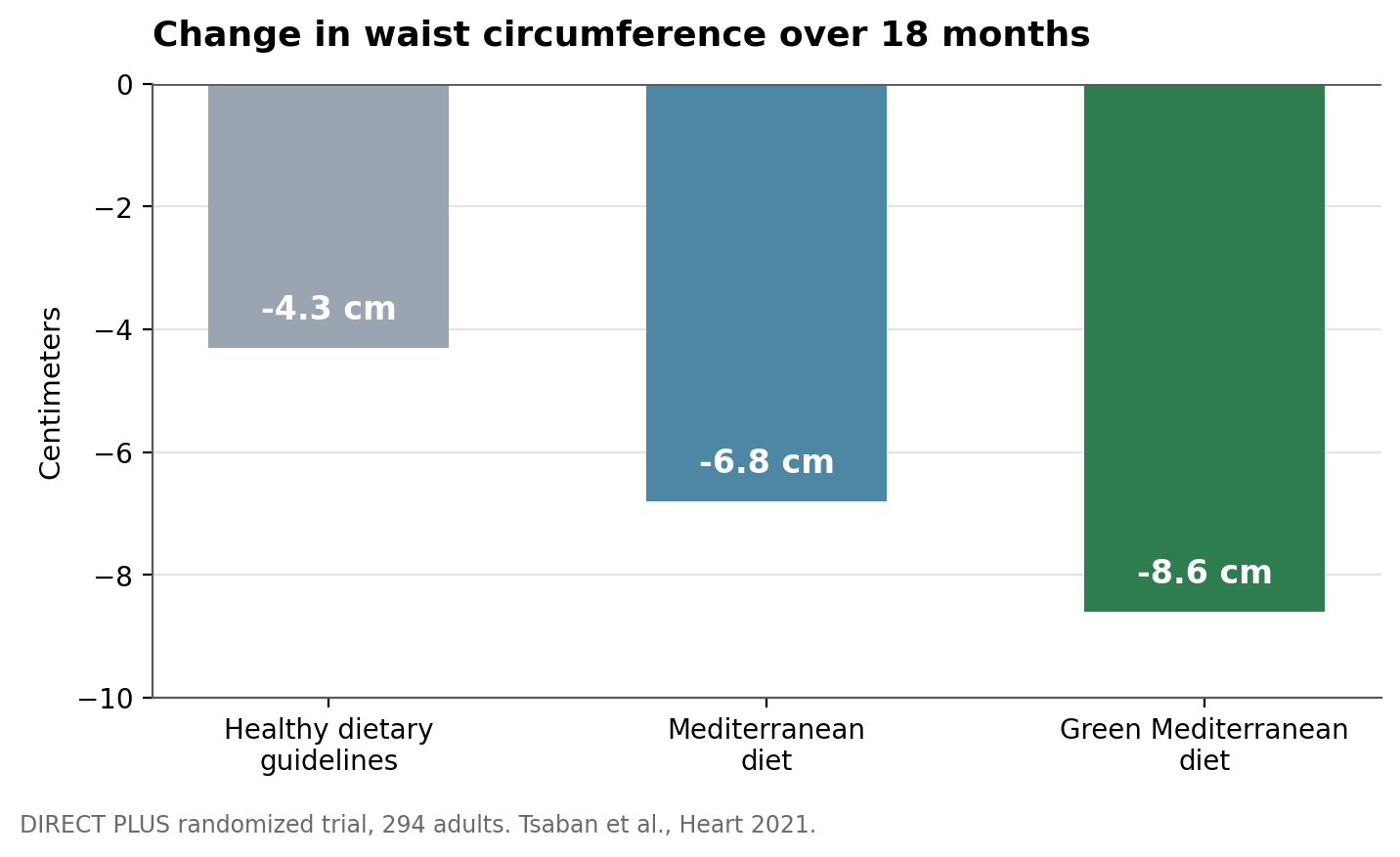
Waist circumference is a measure of abdominal fat, which tracks more closely with metabolic risk than body weight does.
The Mediterranean pattern is one of the more consistent interventions in the epigenetic clock literature
What the epigenetic analysis showed. DNA methylation clocks estimate biological age from chemical tags on DNA that shift in predictable ways over a lifetime. In the epigenetic aging analysis of 256 participants, people who adhered more closely to the green Mediterranean pattern showed less increase on two of the clocks and the two dietary components most associated with that were Mankai and green tea intake. Across both Mediterranean groups combined, measured biological age at 18 months came out about 8.9 months lower than the value predicted from where participants started. The three randomized groups did not differ from one another on any of the six clocks, which means the signal came from how closely people followed the diet rather than from which group they were assigned to.
How the green Mediterranean diet looks alongside other interventions. A Nature Medicine analysis published in August 2026 pooled 51 human intervention studies with before-and-after methylation data and ran the same panel of 16 clocks on every one of them. Seven diets were included, among them the green Mediterranean diet. The authors set two tests for whether a result is real rather than a statistical accident. The biomarkers of a given generation should move in the same direction within a study. A second study of the same intervention should then move the same biomarkers. Two forms of the Mediterranean diet in healthy participants passed both tests by lowering a similar set of second-generation clocks. The authors name the Mediterranean diet and anti-TNF drugs as the two most consistent results across the whole database and they note that dietary interventions show greater consistency across biomarkers than any other category. These are before-and-after comparisons within each intervention group rather than comparisons between randomized groups, which means they answer a different question from the one the original trial asked.
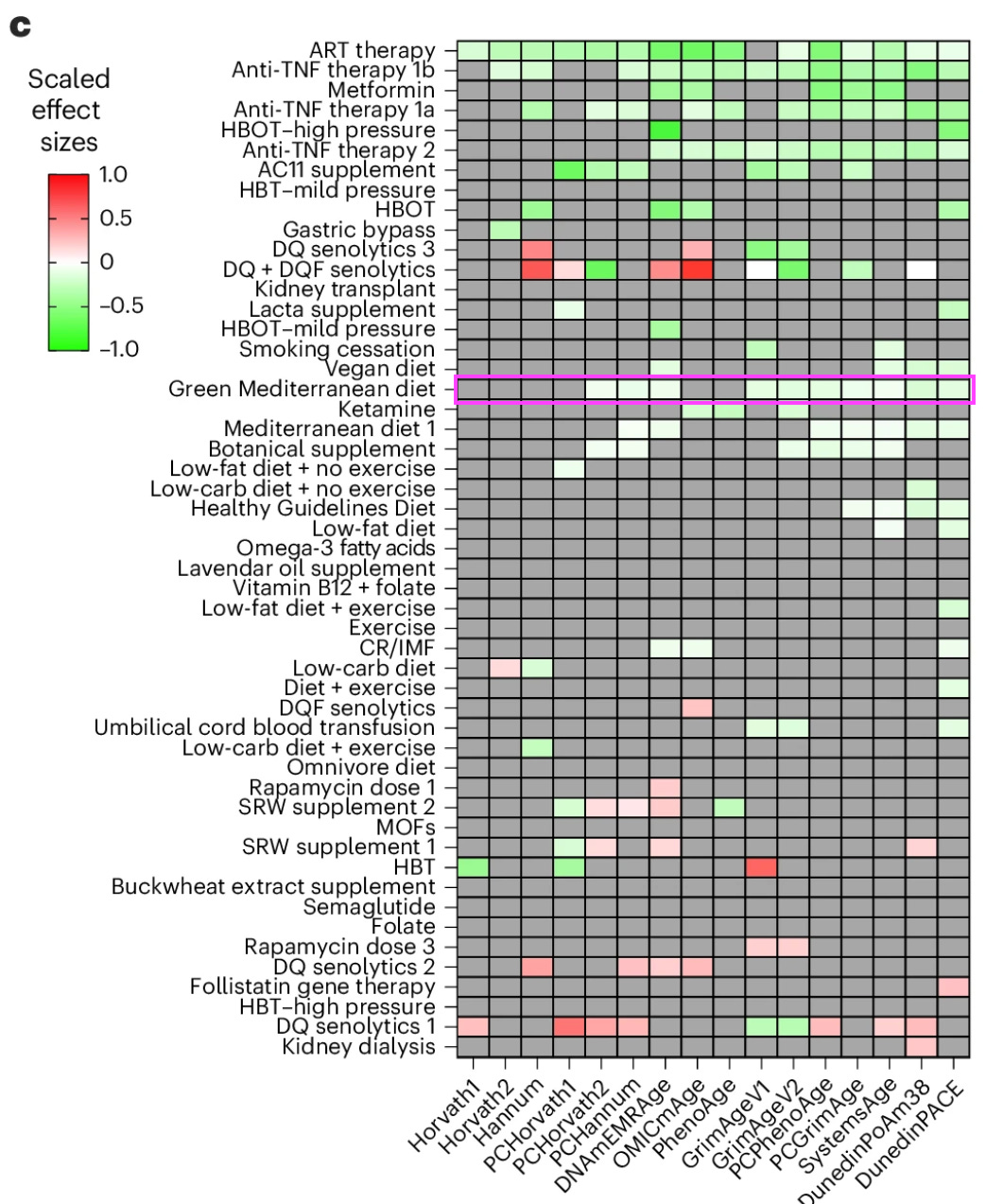
Which clock is measured turns out to matter. The same analysis found that the responsive clocks are the ones built to predict mortality or the pace of aging, with DunedinPACE showing the largest changes and PCGrimAge the strongest statistical evidence. The older clocks built to predict chronological age, including Horvath and Hannum, moved sporadically and mostly reflected random variation in methylation rather than any structured biological signal. The DIRECT PLUS adherence findings used two of those older clocks, which leaves room for a clearer result if the same samples were run on the newer measures. Looking instead at scores for individual organ systems, the musculoskeletal score fell across all seven diets, the metabolic and inflammation scores fell in six of the seven, and a methylation-based stand-in for blood triglycerides moved in six of seven.
What supports the mechanism. A companion analysis of the same participants found distinct DNA methylation patterns in the green group, with folate and vitamin B12 appearing as the drivers, which offers a route by which a diet could shift methylation at all. A separate analysis in Genome Medicine linked the cardiometabolic improvements to shifts in gut bacteria, which fits with what is known about how the gut microbiome responds to plant-heavy eating. An association with adherence is still weaker than a difference between randomized groups, because people who follow a diet closely tend to differ from people who do not in ways a trial cannot fully adjust for.
Mankai has also been studied on its own
Protein. A randomized test-meal trial in 36 men compared Mankai with cheese and with peas at matched protein doses and found the amino acids in Mankai were well absorbed. Mankai contains all nine essential amino acids, which is uncommon among plants.
Omega-3 fat. Duckweed is low in total fat, but the fat it does carry is unusual in its makeup. In a comparison across Wolffia species, polyunsaturated fats made up more than 60 percent of total fat and alpha-linolenic acid, the plant form of omega-3, was the dominant one. That gives duckweed an omega-6 to omega-3 ratio below 1, which is the reverse of the ratio in most Western diets. A separate analysis of farmed and wild watermeal, the common name for the same plant, found alpha-linolenic acid at about 30 percent of all fatty acids across every sample tested, and a nutritional characterization reported a similar figure.
What the omega-3 in duckweed does and does not cover. Alpha-linolenic acid is not the same molecule as the EPA and DHA found in oily fish, which are the forms concentrated in brain cell membranes. The body converts alpha-linolenic acid into those longer-chain forms at low rates. Tracer studies put the conversion at roughly 6 percent to EPA and about 4 percent to DHA in men, and a study in young women found higher rates of about 21 percent to EPA and 9 percent to DHA, a sex difference attributed to estrogen. Duckweed adds to plant omega-3 intake and improves the balance against omega-6 fats and it does not substitute for a direct source of EPA and DHA such as oily fish or an algae-based supplement.
Vitamin B12. Many plants said to contain B12 carry inactive look-alike compounds that do not work in humans. Laboratory analysis in a study of Mankai identified real cobalamin forms with no pseudo-B12 detected and blood B12 rose 15.4 percent in the green Mediterranean group over 18 months compared with 9.9 percent in the Mediterranean group and 5.2 percent in the guidelines group.
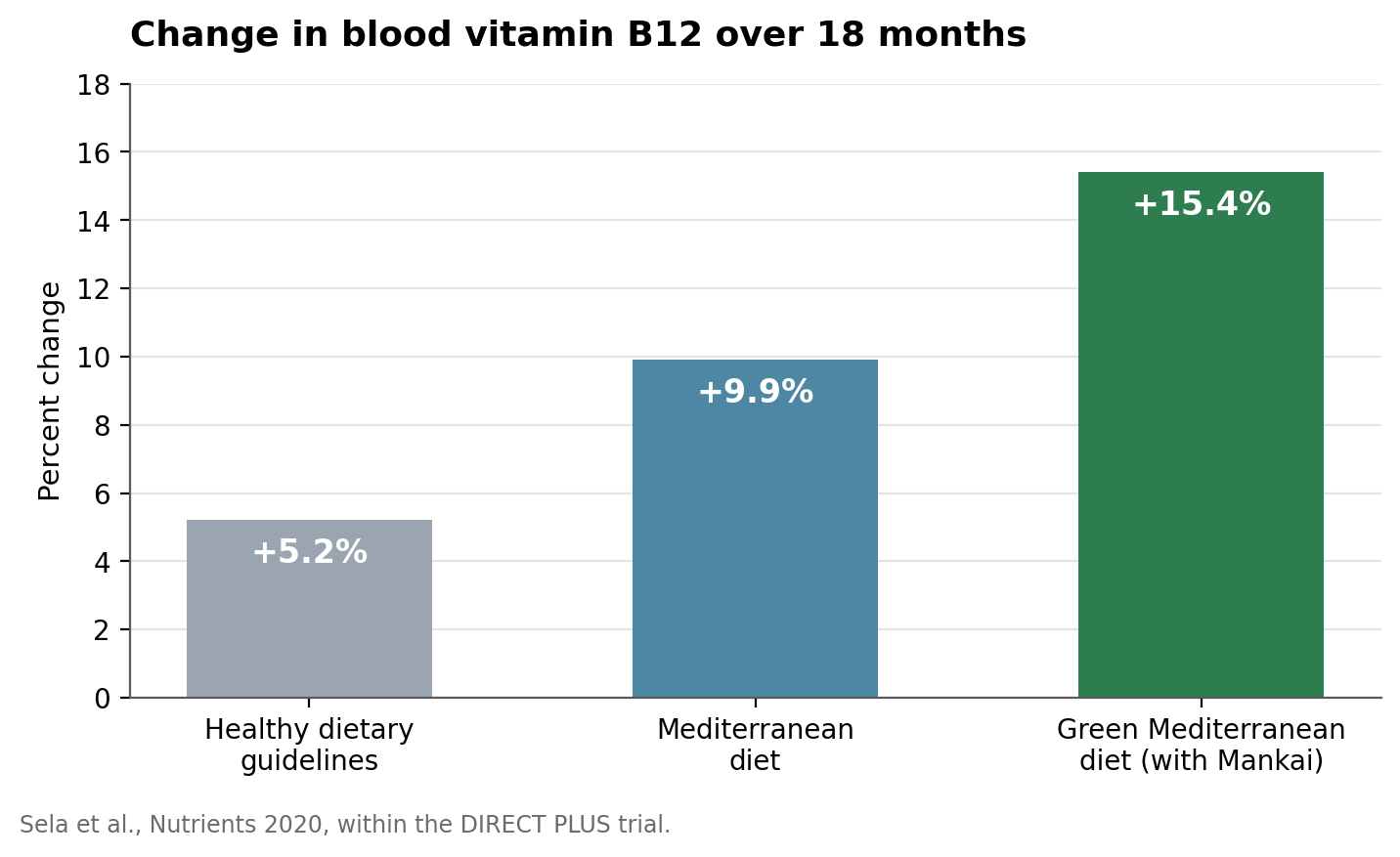
Blood B12 rose most in the group drinking the daily Mankai shake, even though that group ate the least meat.
Iron. Cutting meat usually raises concern about iron. In an iron analysis of the same trial, iron status held steady in the green group despite the lower meat intake and Mankai iron reversed anemia in rats.
Blood sugar. In a crossover trial of 20 adults with abdominal obesity, replacing dinner with a Mankai shake produced a lower glucose peak and a faster return to baseline than an equivalent yogurt shake with matched calories, protein, and carbohydrate. Next-morning fasting glucose was lower as well.
What the trial does not establish
The limits. The participants were 88% men, all of them had abdominal obesity or dyslipidemia, and they ate in a workplace where the study foods were provided free of charge. The results may not transfer directly to women or to people at a healthy weight. The green arm changed several things at once, which means the independent contribution of Mankai cannot be separated from green tea, walnuts, and the reduction in red meat. The endpoints were imaging findings and blood markers rather than lifespan or all-cause mortality and 18 months is short for either. The Mediterranean pattern in general is associated with lower all-cause mortality in long-term observational research and what this trial adds is that a plant-heavier, higher-polyphenol version moved several aging-related measures further than the standard version did.
The Mankai green smoothie
This is the green shake at the center of the diet, made with the 100 grams of frozen Mankai a day that participants drank. The lemon juice adds vitamin C, which improves how well the body takes up plant iron either way, and the kefir provides a fermented base with live cultures.
Ingredients
1 scoop (5 g) Mankai powder, or 100 g frozen Mankai cubes
½ small avocado
1 medium apple, seeds removed
½ cucumber
1 tablespoon lemon juice
3 to 4 fresh mint leaves
1½ cups kefir
1 pitted date, or a handful of frozen mango
Method
Blend everything until smooth, adding water or ice to thin if needed. Makes one serving.
The avocado supplies fat that helps with the absorption of fat-soluble nutrients, in the same family of healthy fats I wrote about in Dietary Fat and the Brain. The apple and date give enough sweetness to balance the tartness of the kefir without pushing the glucose load, which follows the principle I described in Carbs and the Brain.
Where this leaves things
Mankai is one of a small number of plant foods with controlled human data behind it and the trial that used it produced measurable changes in liver fat and in brain imaging over 18 months. Whether those changes translate into fewer cases of dementia or a longer healthspan is an open question that a trial of this size and length was not designed to answer. Larger studies in more varied populations and longer follow-up of the DIRECT PLUS participants will tell us more about how much of the effect belongs to the green shake and how much to the rest of the pattern around it.
For my part, I’m betting on green mediterranean diet and our little duckweed friend to slow my aging and improve my health.


Written by
Dr. Christin Glorioso, MD PhD
Dr. Glorioso is the founder and CEO of NeuroAge Therapeutics. With her background in neuroscience and medicine, she is dedicated to revolutionizing brain health and helping people maintain cognitive vitality.
Learn more about Dr. Glorioso

