

What's Leaching Into Your Beans?
The hidden cost of canned food
 Dr. Christin Glorioso, MD PhD10 min read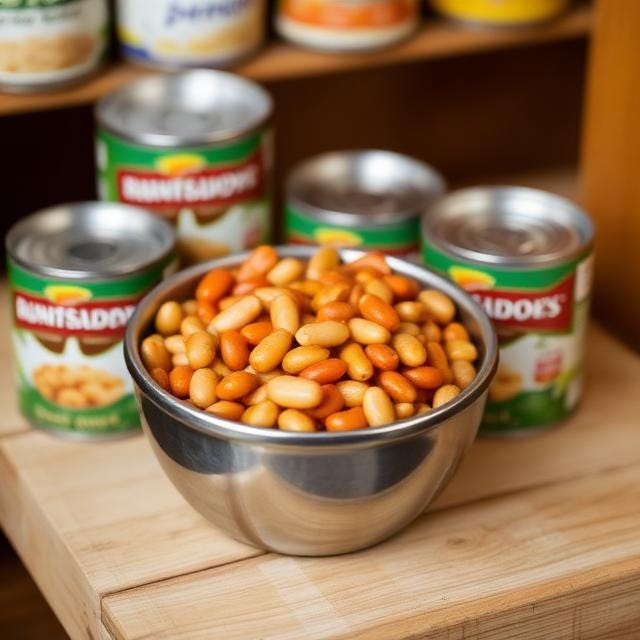
I love to cook and I’m pretty good at it. I grew up in the kitchen with my family, and with my Italian heritage that meant mostly Mediterranean food, which I’m grateful for when it comes to my health. These days, though, running two companies makes it hard to find the time. I’ve been thinking about cooking more often because I want greater control over my ingredients and my exposure to plastics. I want to be sure my meals are made with olive oil instead of butter or ghee, that they are not cooked on Teflon-coated pans, and that they have not been stored in plastic containers.
Beans are fantastic for longevity. They are rich in fiber and protein and provide slow-digesting carbohydrates that do not spike glucose significantly for most people. There’s also a well-documented “second meal effect” where eating beans at one meal lowers the glycemic response to the next meal hours later, likely through colonic fermentation producing short-chain fatty acids that improve insulin sensitivity. You can always confirm that with your CGM if you are curious.
This post is inspired by a question that has been nagging at me. Are the cans that beans come in harming my health? Is it worth switching to the more time-intensive process of soaking and boiling dried beans?
I am thinking about this as I prepare one of my favorite Italian dishes, greens and beans, which is sautéed cannellini beans with escarole in olive oil and garlic. You can add tomatoes and mozzarella to take it up a notch.

Unfortunately, the answer appears to be that yes, canned foods are likely harming my health. And it’s not just bean cans; one of the biggest offenders is something I use even more often, canned tomatoes.
The Can Lining Problem
Every metal food can requires an interior lining to prevent the food from corroding the metal. For decades, that lining was made with epoxy resin containing bisphenol A (BPA), a synthetic estrogen that disrupts hormonal signaling. By 2019, roughly 95% of food cans had transitioned away from BPA-based linings. That sounds like progress.
But the replacements are not necessarily safer. Current can linings are made from acrylic resins, polyester, PVC copolymers, or olefin polymers. A 2016 investigation by six nonprofit organizations (”Buyer Beware”) found that 39% of acrylic linings contained polystyrene, derived from styrene, a probable human carcinogen and endocrine disruptor. Many linings also use formaldehyde as a cross-linking agent. The FDA does not require any of these lining materials to be labeled.
Phthalates Are Everywhere, But Cans Are a Hotspot
In January 2024, Consumer Reports published a study testing 85 brand-name food products for phthalates and bisphenols. Phthalates are plasticizer chemicals that make plastic flexible. The FDA currently authorizes nine different phthalates for use in food packaging and processing equipment. Because they don’t chemically bond to the plastic, they readily migrate into food.
Phthalates were detected in every single product tested except one (Polar seltzer). But concentrations varied widely by category. Note that “prepared meals” referred to in the below table refers to shelf-stable packaged items like canned soups and similar ready-to-eat products in cans or plastic containers, not frozen meals.
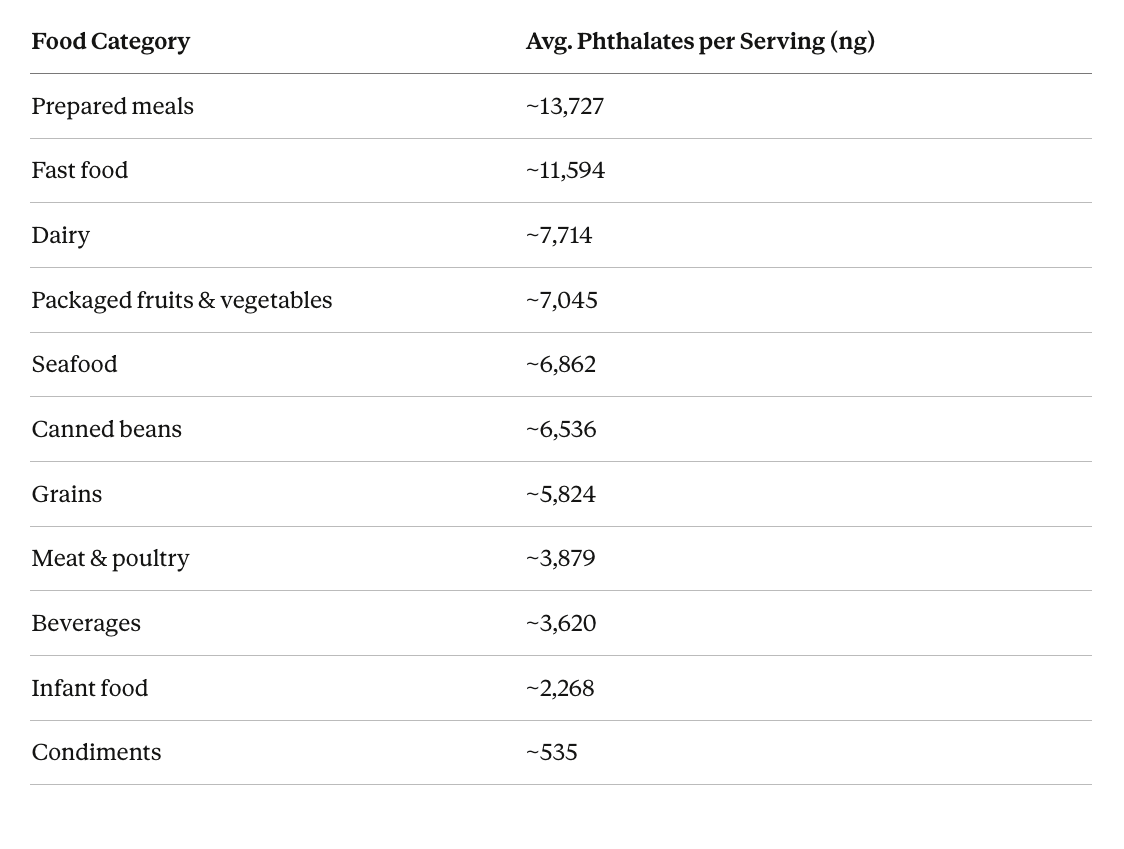
A note on the seafood numbers. Phthalates in seafood are not solely a packaging problem. Fish and shellfish bioaccumulate phthalates directly from polluted ocean water. DEHP concentrations in marine environments have been measured as high as 350 μg/g in some regions. This means even fresh, unpackaged fish carries a phthalate burden before it ever touches a can or processing line. Shellfish and filter feeders are particularly vulnerable because they process large volumes of water.
Packaging doesn’t explain all the results as phthalates enter food through multiple pathways. Plastic tubing and conveyor belts in processing plants, vinyl gloves worn by workers, environmental contamination of soil and water, and heat-processing steps that accelerate leaching all contribute to the final phthalate level in an item. The more processed a food is, and the more steps it has passed through in an industrial supply chain, the more opportunities there are for contamination. This is a strong argument for cooking from scratch when possible.
Microplastics Are Migrating Into Your Food
Beyond chemical leaching, the physical degradation of can linings releases microplastics and nanoplastics directly into food. A systematic review published in June 2025 in NPJ Science of Food confirmed that food packaging is a significant source of microplastic contamination, and that ultraprocessed foods contain substantially more microplastics than minimally processed foods.
A March 2024 study in The New England Journal of Medicine found that individuals with microplastic and nanoplastic particles in their carotid artery tissue were twice as likely to experience a heart attack, stroke, or death from any cause over the next three years. This was the first human study to link tissue-level microplastic burden with hard cardiovascular outcomes.
The Evidence of Harm
Most of what we know about phthalates, BPA, and microplastics in humans comes from observational epidemiological studies. You cannot run a randomized controlled trial deliberately exposing people to phthalates. What strengthens the case for causality is convergence of multiple evidence lines, including extensive animal experiments showing dose-response relationships, in vitro studies demonstrating disruption of specific biological processes, and the biological plausibility from known endocrine-disrupting properties.
Cardiovascular Disease and Mortality
This is where the evidence is strongest. A 2025 study from NYU Langone in Lancet eBioMedicine estimated that DEHP exposure contributed to over 356,000 deaths from heart disease globally in 2018 among adults ages 55 to 64, representing over 13% of cardiovascular mortality in that age group. This is a burden-of-disease modeling study, not a direct measurement of causation, but the underlying observational data is robust, drawn from over 5,000 adults followed through 2015.
The mechanism is not speculative. Animal studies have demonstrated that DEHP triggers an overactive inflammatory response in coronary arteries, accelerating atherosclerotic disease. A prior observational study from the same group tied phthalates to 91,000 to 107,000 premature deaths annually among older Americans, with results holding after controlling for pre-existing heart disease, diabetes, cancer, diet, physical activity, BMI, and exposure to other endocrine disruptors.
Cancer
Phthalates have been classified as Group 2B carcinogens (”possibly carcinogenic”) by the WHO. The mechanistic and animal data is strong, while human epidemiological evidence is growing but mixed.
A September 2025 review in Ecotoxicology and Environmental Safety found that phthalates can activate cancer-promoting genes, hijack hormone signaling, and make tumors both easier to form and harder to treat. In a Danish cohort study of 1.12 million women, high exposure to the phthalate DBP was associated with nearly double the risk of estrogen receptor-positive breast cancer. A study from the Journal of the National Cancer Institute found that childhood phthalate exposure was associated with approximately 20% higher incidence of childhood cancer, with a specific association with osteosarcoma.
Brain and Neurological Effects
A 2025 study in Nature Medicine by the University of New Mexico found that microplastics are bioaccumulating in human brain tissue at increasing rates. I cover that paper in detail in my article, Microplastics and the Brain. Median brain microplastic concentrations rose from 2016 to 2024. Even greater accumulation was observed in brains with documented dementia, with notable deposition in cerebrovascular walls and immune cells.
A 2025 review documented that microplastics can cross the blood-brain barrier, activate microglial cells, reduce synaptic protein levels, disrupt neurotransmitter function, and induce neuroinflammation leading to learning and memory deficits in animal models. The particles trigger inflammatory pathways (TLR/MyD88/NF-κB and NLRP3 inflammasome) and appear to promote aggregation of amyloid-beta and alpha-synuclein, hallmark pathologies of Alzheimer’s and Parkinson’s.
BPA compounds the picture through separate but overlapping mechanisms. A 2023 review in Archives of Toxicology documented that BPA promotes oxidative stress, neuroinflammation, blood-brain barrier dysfunction, and reduced myelination in animal studies. BPA increases BACE1, the enzyme that generates amyloid-beta, while also increasing expression of APP, Aβ 1-42, and phosphorylated tau.
Reproductive and Developmental Effects
This is the area where evidence for causation is arguably strongest, resting on decades of controlled animal experiments corroborated by human epidemiological data. A Washington Post investigation in December 2025 described the evidence as so extensive that many scientists believe phthalates should have been banned two decades ago. The chemicals disrupt testosterone signaling, with exposure linked to lower sperm counts, genital malformations in male infants (”phthalate syndrome”), and fertility problems in both sexes.
Metabolic Disruption
Phthalate and BPA exposure have been consistently associated with insulin resistance, type 2 diabetes, and obesity. One framework describes the BPA-insulin-Alzheimer’s disease axis as “Type 3 Diabetes,” in which environmentally-driven insulin resistance in the brain contributes to neurodegeneration. A 2024 NYU study estimated that phthalate-related disease burden in the United States alone cost $66.7 billion in a single year.
What Makes Some Canned Foods Worse Than Others
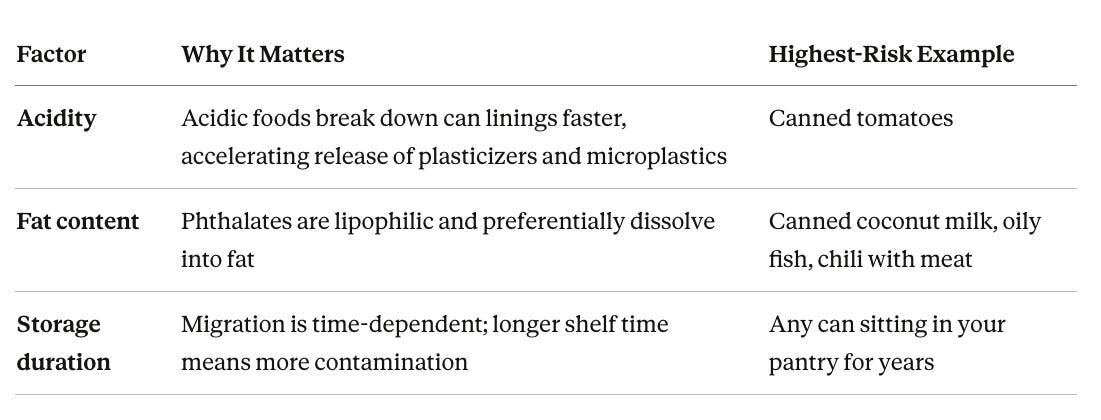
Three factors drive chemical migration from lining to food.
The Dried Bean Advantage
When you cook dried beans at home in stainless steel or ceramic cookware using filtered water, you eliminate virtually every contamination pathway associated with canning, from the lining itself to prolonged contact with plastic-derived materials to industrial processing equipment that introduces additional phthalate exposure.
A pressure cooker handles dried beans in about 30 minutes without pre-soaking. Batch-cook a large quantity, portion into glass containers, and freeze. You now have the same convenience as canned beans without the chemical baggage.
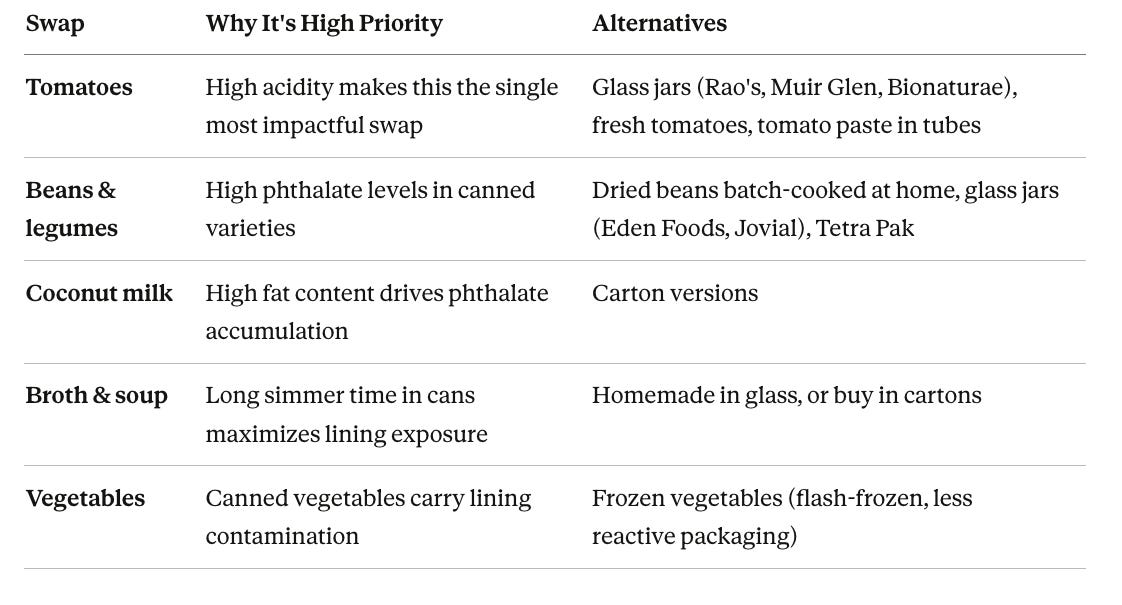
Practical Swaps (Prioritized by Impact)
What About Frozen Meals?
Frozen meals fall somewhere between canned food and cooking from scratch. Low temperatures slow chemical leaching, unlike the heat processing canned foods undergo. But much of the contamination happens before the food reaches its container, during industrial processing with plastic equipment. The bigger problem is that most people microwave these meals in their plastic trays. Heat accelerates chemical leaching, effectively undoing whatever advantage cold storage provided. Even containers labeled “microwave-safe” can release plasticizers when heated.
If you eat frozen meals, one simple move makes a significant difference. Transfer the food to a glass or ceramic dish before heating.
A Note on “BPA-Free” Labels
“BPA-free” on a can does not mean “free of endocrine disruptors.” The replacement chemicals are less studied but not necessarily less harmful. This is a pattern known as “regrettable substitution,” where a known-harmful chemical is replaced with a structurally similar one that hasn’t been tested enough to trigger the same regulatory response. The FDA does not require manufacturers to disclose what materials are used in can linings.
The Bottom Line
If you eat canned beans occasionally, you’re going to be fine. But if you’re someone who is actively optimizing for longevity and brain health, reducing chronic low-level exposure to endocrine disruptors, plasticizers, and microplastics is the kind of intervention that compounds over decades. There is a reason that avoiding environmental toxins is our 9th pillar of healthy brain aging.
The science increasingly supports the idea that cumulative environmental chemical exposure contributes to the inflammatory and metabolic dysfunction that accelerates brain aging. Eliminating unnecessary sources of that exposure, especially ones with easy alternatives, is low-hanging fruit.
What does this mean from a practical perspective? I will be trying to obtain all my ingredients as close to the source as possible to avoid all the contamination with processing and packaging. That means farmers markets, fruit shares, dried beans, and cooking at home. It actually sounds kind of nice.


Written by
Dr. Christin Glorioso, MD PhD
Dr. Glorioso is the founder and CEO of NeuroAge Therapeutics. With her background in neuroscience and medicine, she is dedicated to revolutionizing brain health and helping people maintain cognitive vitality.
Learn more about Dr. Glorioso

