

The Science of VO2 Max and Dementia Prevention
 Dr. Christin Glorioso, MD PhD12 min read
Cardiorespiratory fitness, measured by VO2 max, is one of the strongest modifiable predictors of dementia risk, with high-fit individuals showing 36-88% lower risk of cognitive decline compared to their unfit peers across multiple large cohort studies. This relationship demonstrates a clear dose-response pattern: each 1-MET increase in fitness translates to approximately 16% lower dementia incidence, with benefits continuing even at elite fitness levels and no observed ceiling effect.
The practical implications are substantial. A sedentary individual who improves from the lowest to the highest fitness quintile could theoretically delay dementia onset by 5 to 9.5 years, which is a magnitude of effect exceeding any pharmaceutical intervention currently available.
What Is VO2 Max?
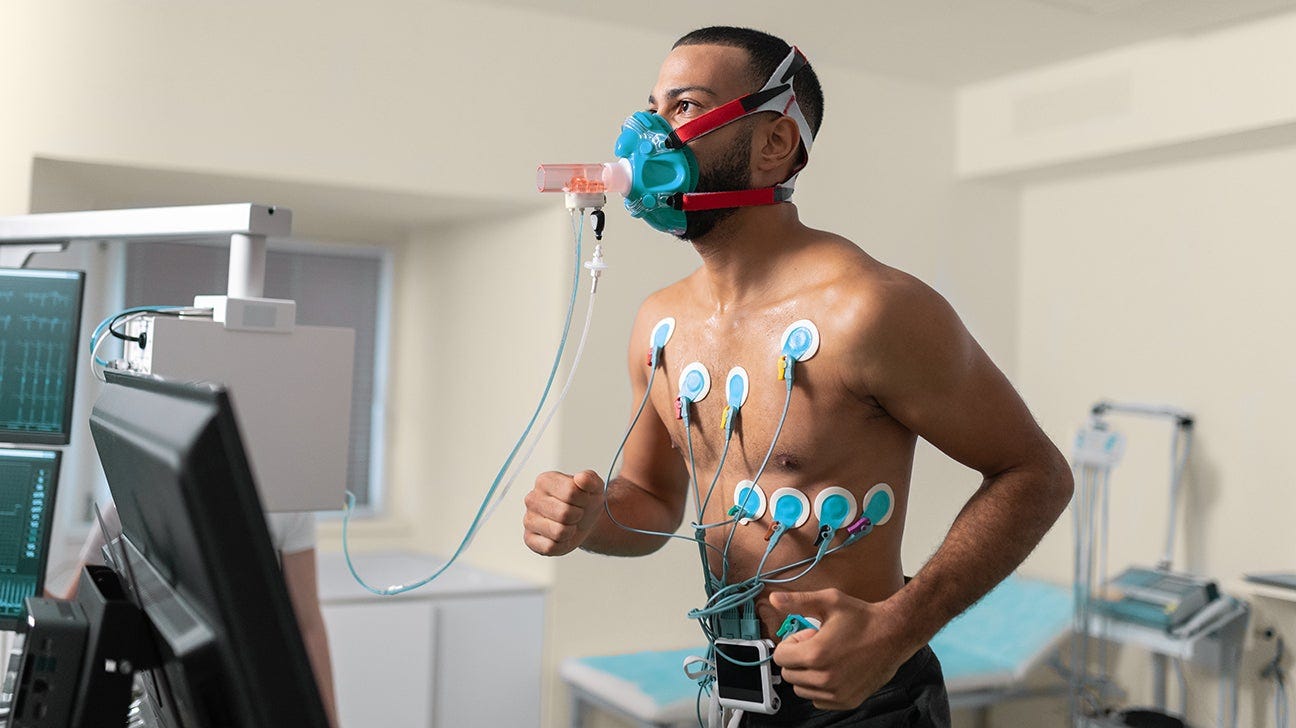
VO2 max represents the maximum rate at which your body can consume oxygen during intense exercise. The term derives from “V” for volume, “O2” for oxygen, and “max” for maximum. It is expressed in milliliters of oxygen consumed per kilogram of body weight per minute (ml/kg/min), allowing comparison across individuals of different sizes.
Think of VO2 max as your body’s engine capacity. Just as a larger engine can burn more fuel and produce more power, a higher VO2 max indicates a greater ability to deliver oxygen from the lungs to the blood, pump oxygenated blood from the heart to working muscles, and extract and utilize that oxygen within muscle cells to generate energy aerobically.
VO2 max reflects the integrated function of multiple organ systems working together: the lungs (oxygen uptake), the heart (cardiac output), the blood vessels (oxygen delivery), and the muscles (oxygen extraction and utilization). This is precisely why it serves as such a powerful marker of overall physiological health—and why it predicts outcomes ranging from athletic performance to longevity to cognitive preservation.
How VO2 Max Relates to Daily Function
While elite athletes may achieve VO2 max values of 70-97 ml/kg/min, the practical significance for most adults lies in functional capacity. A VO2 max of approximately 17.5 ml/kg/min (5 METs) represents the threshold for independent living—the minimum aerobic capacity needed to perform activities of daily living without assistance. Values below this threshold are associated with loss of independence, increased disability, and sharply elevated mortality risk.
Given that VO2 max naturally declines by approximately 10% per decade after age 30 (potentially accelerating to 15% per decade after age 50 without countermeasures), building and maintaining a fitness reserve in midlife becomes a strategic investment in future functional independence and cognitive health.
VO2 Max in Elite Athletes
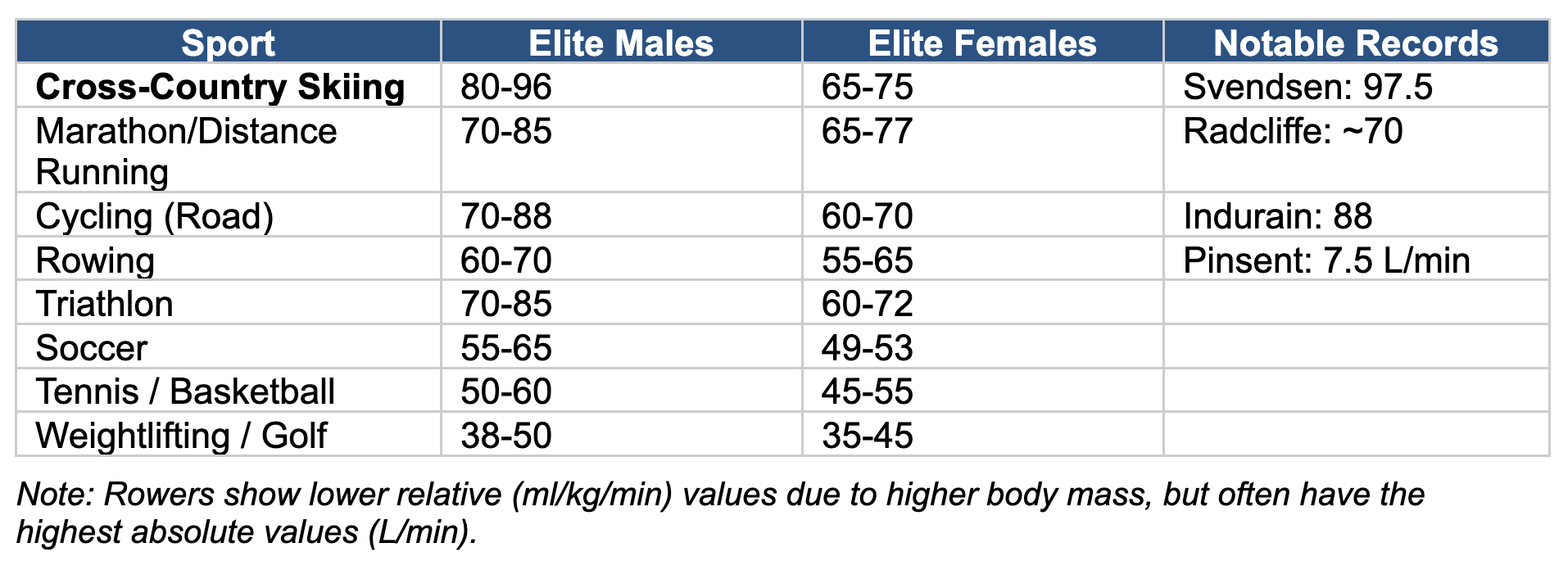
To provide context for interpreting VO2 max values, the following table shows typical ranges for elite athletes across different sports. Cross-country skiers consistently achieve the highest values because the sport demands simultaneous upper and lower body engagement, maximizing total muscle oxygen utilization.
Decades of Epidemiological Research Point to a Consistent Protective Effect
The relationship between cardiorespiratory fitness and dementia risk has been examined in some of the largest and longest-running cohort studies in medicine. The Cooper Center Longitudinal Study followed 19,458 adults for a median of 25 years and found that participants in the highest fitness quintile had a hazard ratio of 0.64 for all-cause dementia, which is a 36% risk reduction compared to those in the lowest quintile.
Perhaps the most striking findings come from Swedish research. A study tracking 191 women from midlife into their ninth decade found that those with high cardiovascular fitness at baseline had an extraordinary 88% lower dementia risk (HR 0.12) compared to women with medium fitness. High fitness delayed dementia onset by an average of 9.5 years and pushed the typical age of diagnosis from 79 to 90 years. (Hörder et al., Neurology 2018)
The HUNT Study from Norway added important evidence about fitness change over time, demonstrating that what matters is not just baseline fitness but maintaining or improving it. Among 30,375 participants followed for nearly two decades, those who improved from unfit to fit categories showed a 48% reduction in incident dementia compared to those who remained persistently unfit. Each 1-MET improvement in estimated fitness was associated with a 16% reduction in dementia incidence. (Lancet Public Health 2019)
The Dose-Response Question: How Fit Is Fit Enough?
Understanding specific fitness thresholds matters enormously for clinical guidance. The Finnish Kuopio Ischaemic Heart Disease Risk Factor Study provides the most granular data, having directly measured VO2 max in 2,031 men followed for 22 years. Men with VO2 max below 23.7 ml/kg/min had nearly double the dementia risk compared to those above 36.5 ml/kg/min. Each standard deviation increase in VO2 max (approximately 3.5 ml/kg/min) corresponded to a 20% decrease in dementia risk. (Age and Ageing 2018)
A critical question for patients seeking to optimize health is whether benefits plateau at a certain fitness level. The evidence strongly suggests no ceiling effect exists. The Cleveland Clinic study of 122,007 patients found that elite performers (above the 97.7th percentile for age) had incrementally lower mortality than merely high performers. (JAMA Network Open 2018)
VO2 Max Risk Stratification by Age and Sex
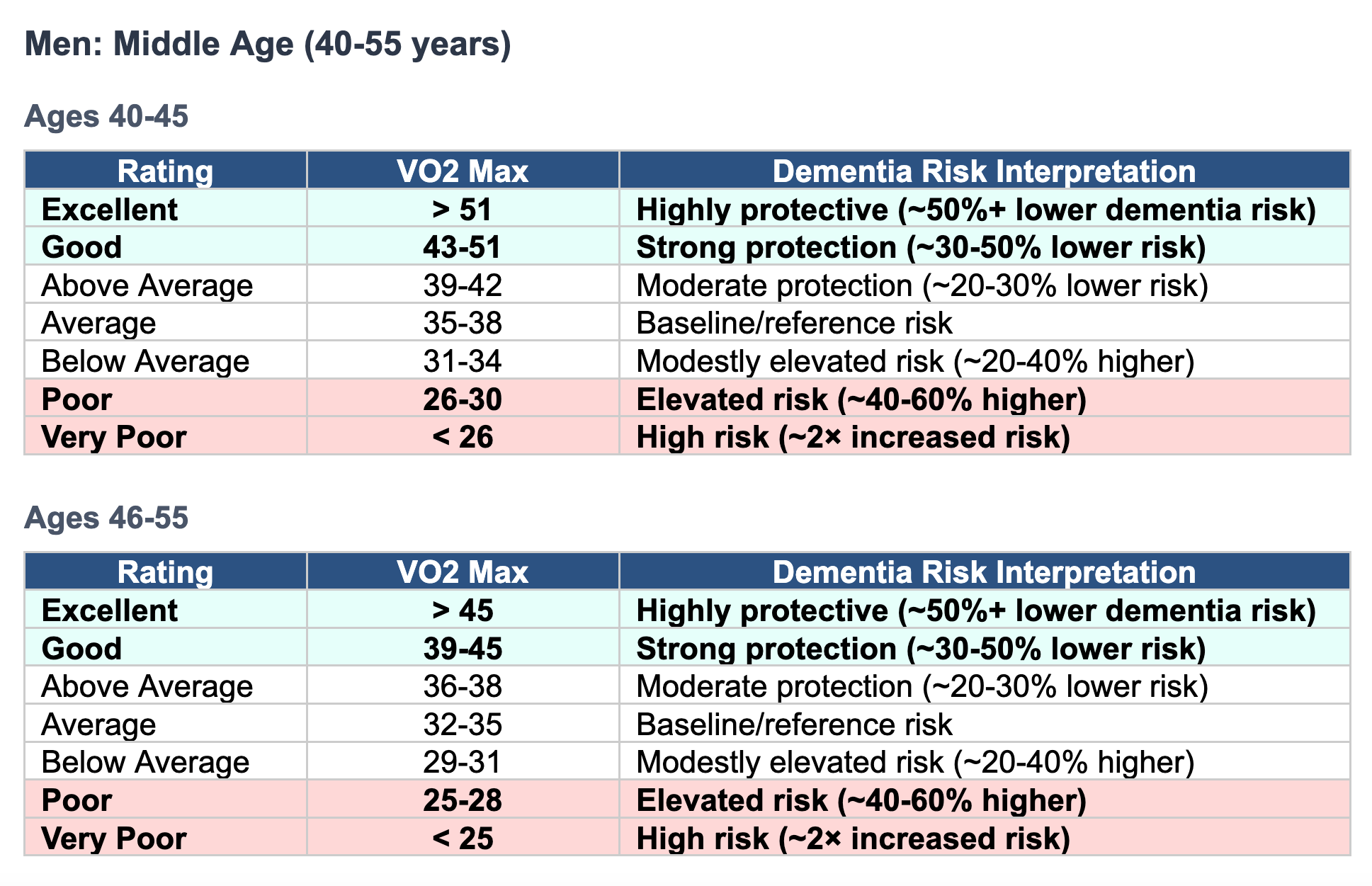
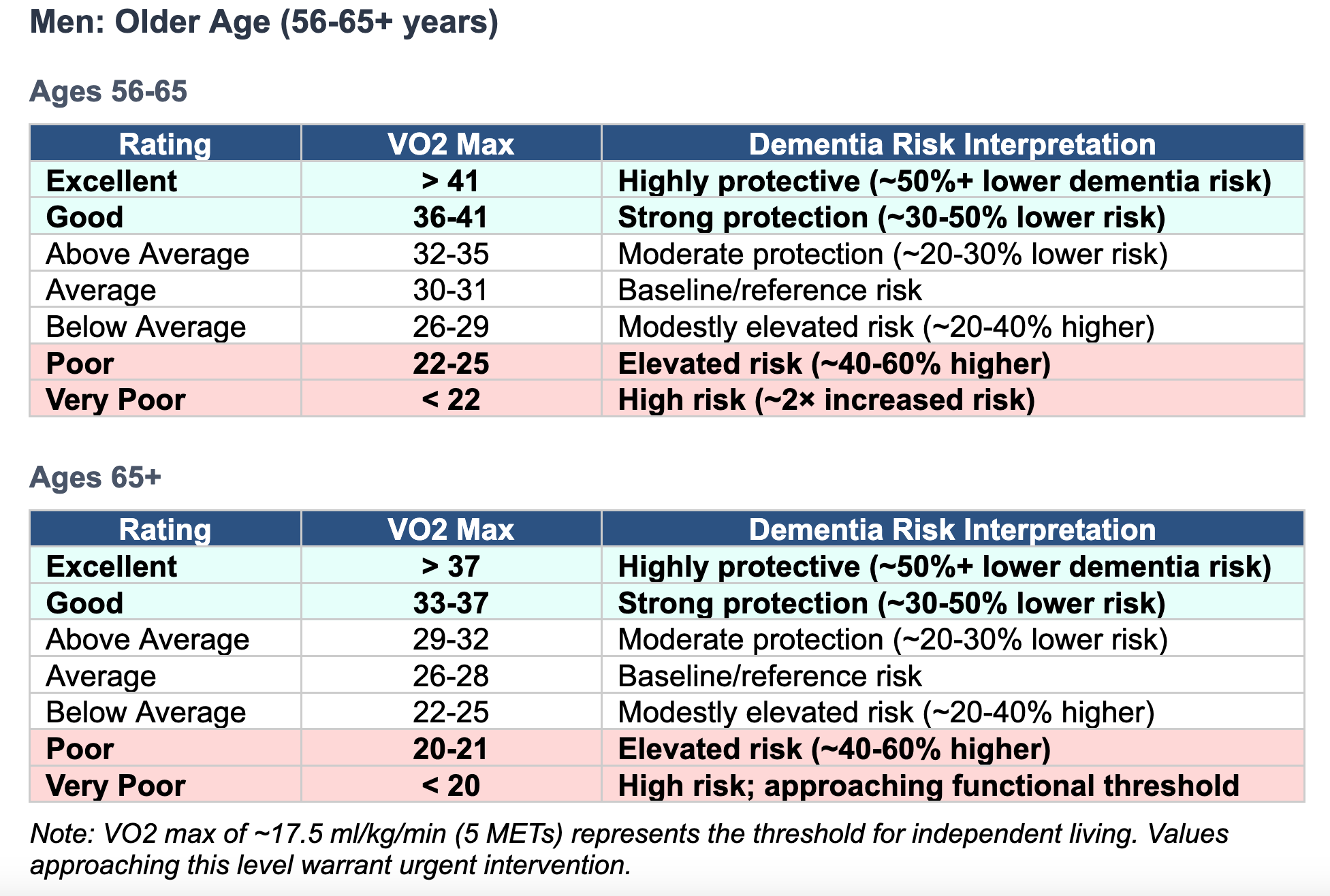
The following tables integrate population norms with dementia risk data to provide actionable thresholds for clinical decision-making. Risk interpretations are derived from the Finnish Kuopio study (men) and Swedish cohort study (women), where each ~3.5 ml/kg/min increase corresponds to approximately 20% lower dementia risk.
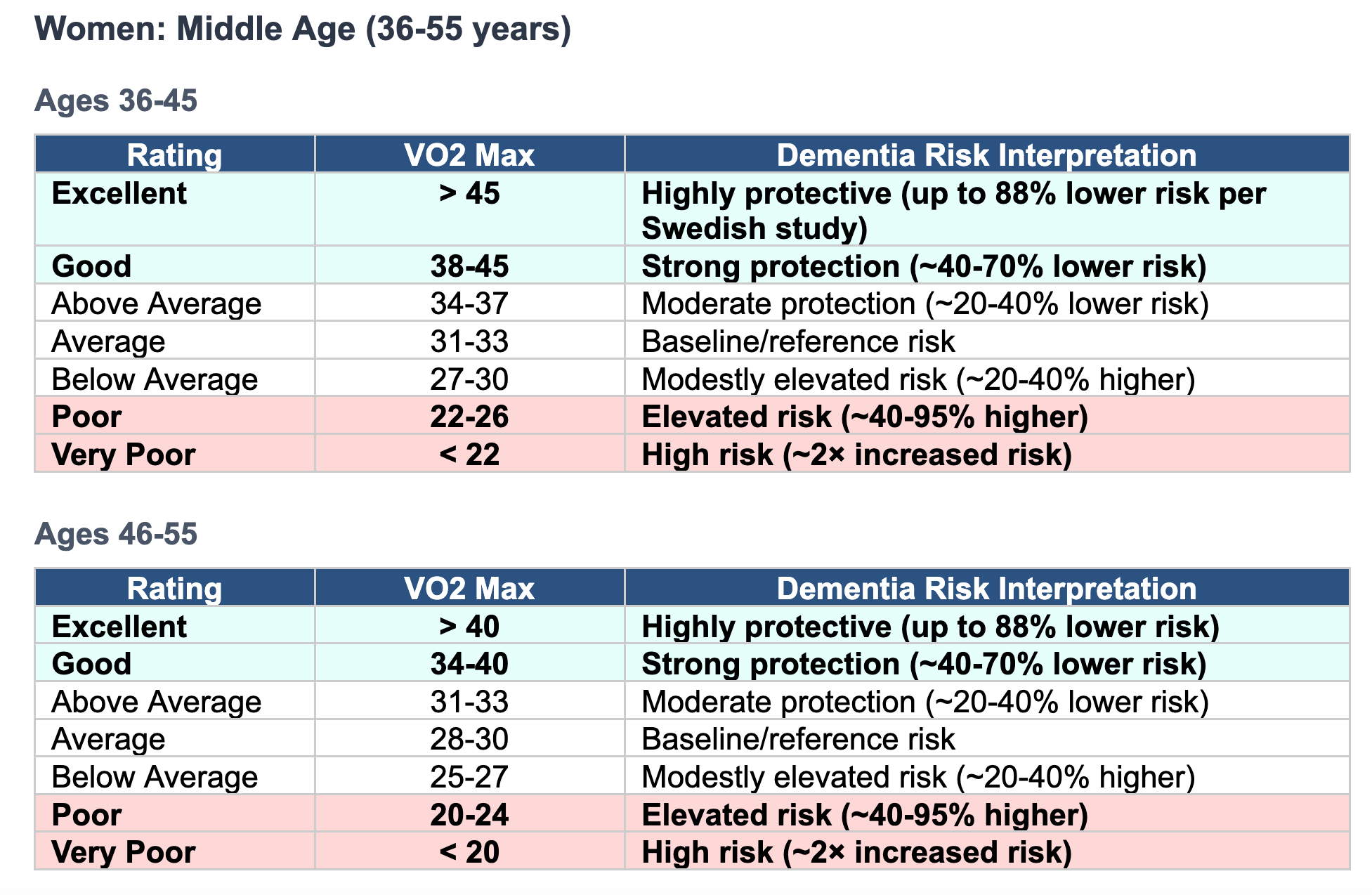
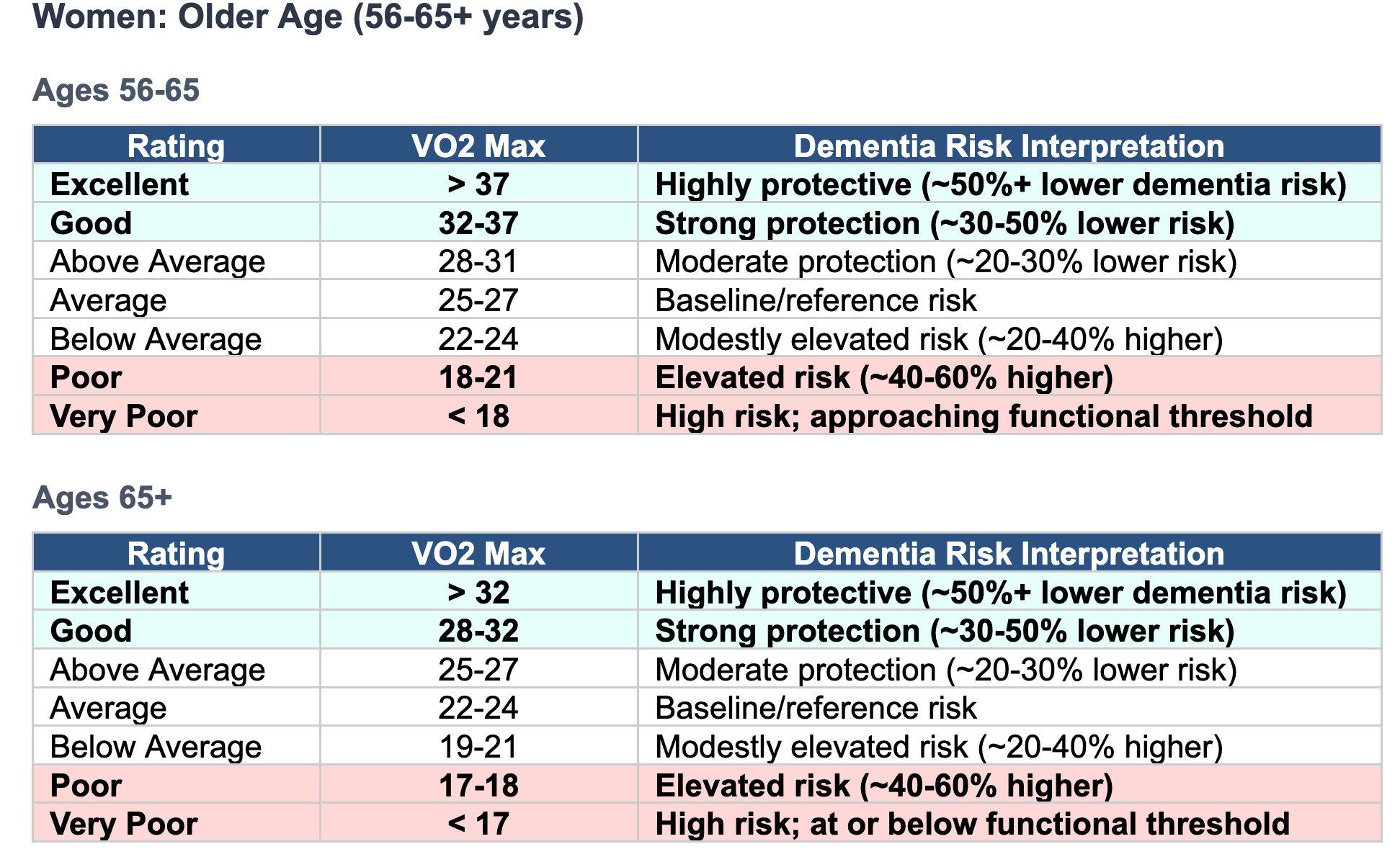
Note: Women’s VO2 max values are typically 10-15% lower than men’s at comparable fitness levels due to differences in hemoglobin concentration, body composition, and cardiac output. Risk interpretations are calibrated accordingly.
How to Interpret These Tables
Target zone: For optimal brain protection, aim for the “Good” or “Excellent” category for your age and sex. This corresponds to the top quartile of fitness for your demographic and is associated with approximately 30-50% lower dementia risk (or up to 88% in the Swedish women’s study).
Critical threshold: Individuals in the “Poor” or “Very Poor” categories face substantially elevated dementia risk and should prioritize fitness improvement as a primary health intervention.
Trajectory matters: The HUNT study showed that improving from “unfit” to “fit” categories produced a 48% dementia risk reduction, even in those who weren’t always fit. It is never too late to benefit from improved cardiorespiratory fitness.
Intervention Trials Reveal What Exercise Can Accomplish
While observational data are compelling, randomized controlled trials provide the strongest evidence for causality. The landmark FINGER trial (Finnish Geriatric Intervention Study to Prevent Cognitive Impairment) represents the highest-quality evidence for multidomain lifestyle intervention. This two-year RCT of 1,260 at-risk older adults combined exercise with dietary modification, cognitive training, and vascular risk management. The intervention group showed 25% greater improvement in overall cognitive performance compared to controls. (FINGER Study)
Professor Kirk Erickson’s 2011 PNAS study provides the most compelling evidence for exercise-induced brain structural change. In 120 older adults randomized to either aerobic walking (3 days weekly, 40 minutes at moderate intensity) or stretching for one year, the aerobic group showed a 2% increase in anterior hippocampal volume—effectively reversing 1-2 years of age-related atrophy. (Erickson et al., PNAS 2011)
The EXERT trial, the largest exercise RCT in mild cognitive impairment, found that both exercise groups maintained stable cognition—remarkable because MCI patients typically show progressive decline. (EXERT Study 2025)
How Training Protocols Determine Fitness Gains
For individuals seeking to improve VO2 max, the evidence provides clear guidance on effective protocols. While both high-intensity interval training (HIIT) and moderate-intensity continuous training (MICT) produce substantial fitness improvements, HIIT shows a consistent advantage of approximately 1.2 ml/kg/min in direct comparisons.
The Norwegian 4×4 Protocol
This protocol has emerged as the gold standard for evidence-based HIIT. The structure involves a 10-minute warm-up at 60-70% of maximum heart rate, followed by four 4-minute intervals at 90-95% of maximum heart rate, with 3 minutes of active recovery between intervals, and a 5-minute cooldown. In the landmark Helgerud study, this protocol produced a 7.2% improvement in VO2 max over just 8 weeks.
Expected Improvements in Absolute Terms
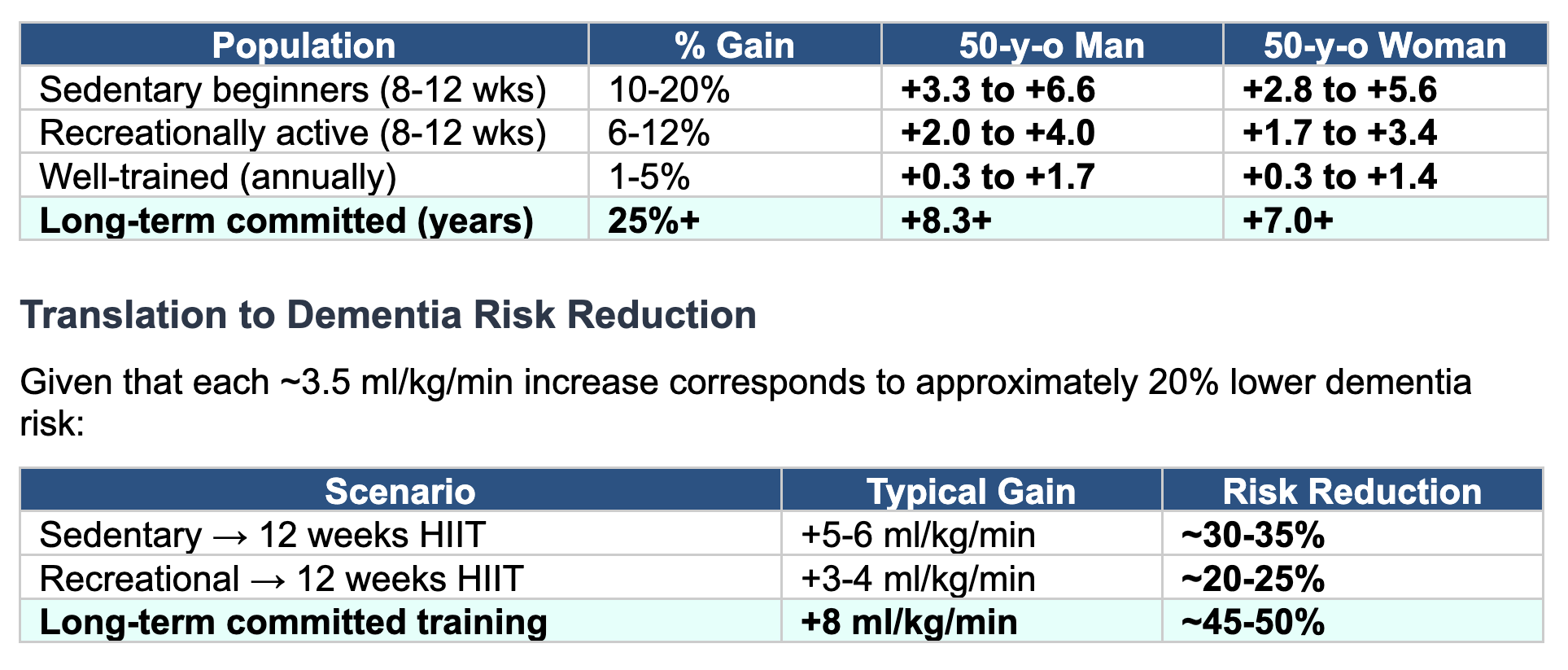
The following table translates percentage improvements into absolute values (ml/kg/min) for typical 50-year-old adults, using average baseline values of 33 ml/kg/min for men and 28 ml/kg/min for women:
Six Mechanistic Pathways Explain How Fitness Protects the Brain
The biological plausibility of the fitness-dementia relationship rests on multiple well-characterized mechanisms:
BDNF (brain-derived neurotrophic factor): This neurotrophin promotes neurogenesis, synaptic plasticity, and neuronal survival. Exercise increases BDNF through activation of glutamate signaling, lactate-mediated pathways, and β-hydroxybutyrate effects. (See: Exercise releases “plant food” for your brain)
Cerebral blood flow enhancement: A one-year aerobic training program produced a 5% increase in global cerebral blood flow alongside a 7% reduction in cerebrovascular resistance.
Adult hippocampal neurogenesis: Voluntary running increases hippocampal neurogenesis 2-3 fold in rodents, with indirect human evidence supporting this mechanism.
Neuroinflammation reduction: Exercise shifts microglia from pro-inflammatory to anti-inflammatory phenotypes and fortifies blood-brain barrier integrity.
Vascular health optimization: Exercise produces 8-10 mmHg reductions in systolic blood pressure and improves lipid profiles.
Metabolic improvements: Enhanced insulin sensitivity addresses the “type 3 diabetes” hypothesis of Alzheimer’s disease.
Measuring VO2 Max: From Gold Standard to Wearable Estimates
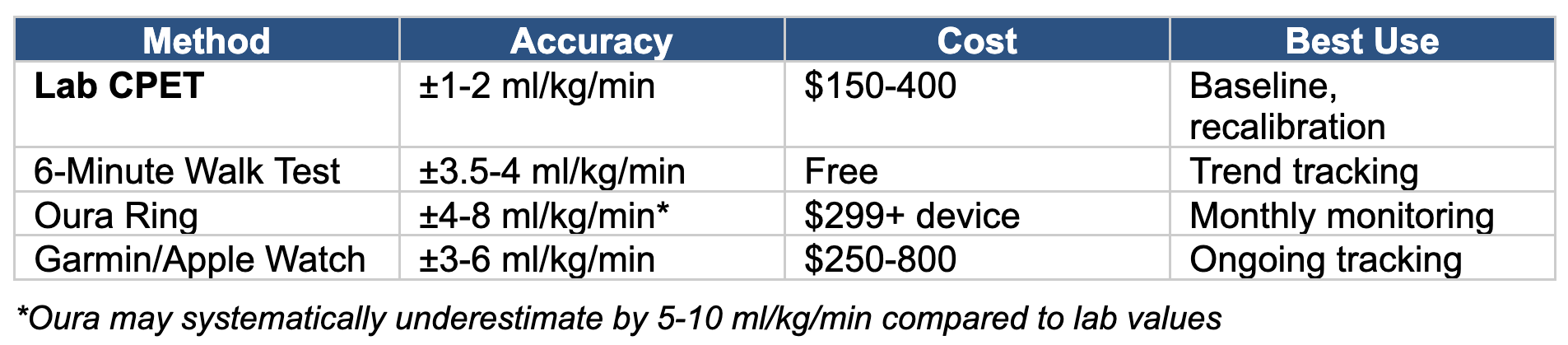
Given the powerful dose-response relationship between cardiorespiratory fitness and dementia risk, accurate measurement of VO2 max becomes clinically important for risk stratification and tracking improvement over time. Testing options span a wide range of accuracy, accessibility, and cost.
Gold Standard: Cardiopulmonary Exercise Testing (CPET)
Laboratory-based maximal exercise testing with direct gas exchange analysis remains the definitive method for measuring VO2 max. During CPET, a participant exercises on a treadmill or cycle ergometer while wearing a mask that measures oxygen consumption and carbon dioxide production breath-by-breath. The test progresses through incrementally increasing intensity until volitional exhaustion, typically lasting 8-12 minutes.
CPET provides VO2 max accuracy within ±1-2 ml/kg/min and simultaneously yields ventilatory thresholds, lactate threshold estimates, and precise heart rate training zones. The primary limitations are cost ($150-400 at sports medicine clinics or university exercise physiology labs), the requirement for maximal exertion, and limited availability outside metropolitan areas.
Field Tests: The 6-Minute Walk Test
The 6-minute walk test (6MWT) has emerged as a practical field assessment with reasonable validity for estimating aerobic capacity. Research demonstrates that the 6MWT is a valid field test for predicting VO2 max with accuracy of approximately 1 MET (3.5 ml/kg/min) in healthy adults. (See: Clinical Rehabilitation 2018)
When 6MWT distance is combined with demographic variables including body weight, sex, resting heart rate, and age, prediction equations can account for approximately 72% of the variance in directly measured VO2 max. However, the standard error of estimate remains substantial at the individual level—approximately 3.8 ml/kg/min or 27% of mean VO2 max—which limits clinical precision for any single person.
Wearable Device Estimates: Oura Ring and Others
Consumer wearables including smartwatches and fitness rings now offer VO2 max estimates. Research indicates that wearable devices tend to underestimate VO2 max by 10-15% on average, though accuracy varies substantially between devices.
The Oura Ring’s “Cardio Capacity” Feature:
The Oura Ring uses a 6-minute walking test protocol to estimate VO2 max. Users walk briskly outdoors while wearing the ring and carrying their phone (for GPS distance measurement), and the algorithm combines walking distance, heart rate response, and user profile data to generate an estimate. (See: Oura Blog)
The methodology is grounded in validated 6MWT research, and Oura has collaborated with exercise physiology researchers at institutions including the Kuopio Research Institute of Exercise Medicine. However, several factors affect accuracy:
• The test requires GPS signal and a straight, level route—conditions not always achievable
• Ring-based heart rate measurement may be less reliable during movement than at rest (where Oura achieves 99.3% accuracy)
• The 6MWT methodology itself has inherent limitations at the individual level (±3.8 ml/kg/min error)
• Comparative data suggests Oura’s estimates may trend lower than other wearables and lab values by 5-10 ml/kg/min
Practical interpretation: If Oura reports a VO2 max of 38 ml/kg/min, the true value could reasonably range from 34-42 ml/kg/min, with some evidence suggesting the upper end may be more likely. For tracking purposes, Oura’s Cardio Capacity feature is best used for longitudinal monitoring rather than absolute fitness classification.
Testing Accuracy Comparison
My Personal VO2 Max Journey
In the last 1.5 years I’ve taken my VO2 max from 33 ml/kg/min to 38 ml/kg/min. That took me from the average to the good category. I tested via the Oura ring 6 minute walk test, which is moderately accurate and likely an underestimate.
How did I increase my VO2 max? Actually, it wasn’t super planned. I did start going to Core Power Yoga Sculpt again, which is a bananas class that is 95 degree yoga with weights and a 3 minute cardio interval that is very hard in the middle. I also do a long set of stairs on the trail run that I do frequently, which is another form of interval training. A couple of times I managed to do Norwegian 4x4s at the track. In general, I easy jog or hike 2-3x/week and go to yoga or yoga sculpt 3x/week and walk a fair amount, which provides a base of lower intensity cardio. On average I exercise about 1.2 hrs/day, 5x/week.
My increase in fitness probably had a big impact on my increased brain volume and most importantly, my hippocampal volume (Read: How I dropped my NeuroAge by 1.2 years).
In 2026 I think I will add weekly 4x4s at the track and increase the number of Yoga Sculpt classes that I go to. My goal is a V02 max> 40 ml/kg/min in 2026 and eventually >45 ml/kg/min for max dementia prevention. I’m pretty sure I can get there. I definitely only feel in medium shape right now compared to my college tennis days or even in my early 30s.
Conclusion: Cardiorespiratory Fitness Deserves Central Priority in Dementia Prevention
The convergence of epidemiological evidence, mechanistic understanding, and intervention trial data establishes cardiorespiratory fitness as arguably the most actionable target for dementia risk reduction. Unlike genetic factors or age itself, VO2 max is modifiable through well-characterized training protocols, with improvements of 10-20% achievable within months for sedentary individuals.
The dose-response relationship—where each increment of fitness provides additional protection without observed ceiling—means that ongoing optimization remains valuable regardless of starting point. For longevity-focused individuals, the prescription is clear: VO2 max should be measured, tracked, and optimized as a vital sign for brain health.


Written by
Dr. Christin Glorioso, MD PhD
Dr. Glorioso is the founder and CEO of NeuroAge Therapeutics. With her background in neuroscience and medicine, she is dedicated to revolutionizing brain health and helping people maintain cognitive vitality.
Learn more about Dr. Glorioso

