

MTHFR genetics, homocysteine levels, folic acid supplementation, and health
What it means for you if you have MTHFR genetic variants
 Dr. Christin Glorioso, MD PhD6 min read
MTHFR (methylenetetrahydrofolate reductase) is a flavoprotein that plays a crucial role in the methylation cycle, which is essential for various bodily functions, including: DNA synthesis and repair, neurotransmitter production, heart health, and immune function.
Specifically, it helps convert 5,10-MTHF (5,10-methylenetetrahydrofolate) to 5-MTHF (5-methyltetrahydrofolate) during the folate cycle (see below figure). This process is essential for the methylation of homocysteine to methionine by methionine synthase with vitamin B12 acting as a coenzyme.
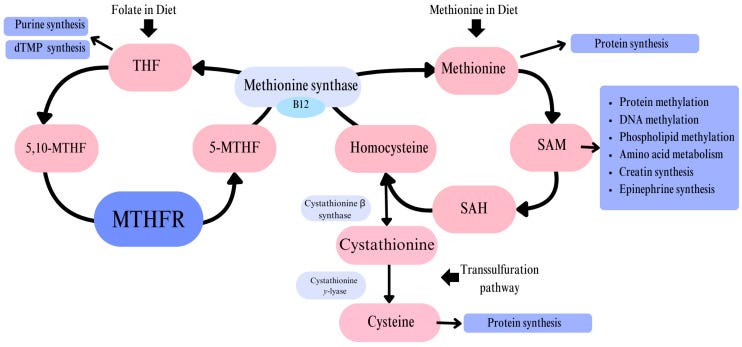
The folate cycle produces products that aid in synthesis of amino acids, purines, deoxythymidine monophosphate (dTMP), creatine, and epinephrine, as well as DNA and protein methylation. Given the wide range of these processes, MTHFR plays a crucial role in cellular metabolism.
Genetic variants in the MTHFR gene can reduce its activity, disrupting the folate cycle and leading to hyperhomocysteinemia. The two most common variants associated with this gene are 667C>T (rs1801133) and 1298A>C (rs1801131). About 40% of people will have at least one of these variants. An individual could have up to 4 deleterious copies of the MTHFR genetic variants (2 from each variant). The more copies you have, the worse the outcomes are for disease risk.
If you’ve had genetic testing with NeuroAge you can see whether you have these MTHFR variants on your genetic resilience dashboard under “medically actionable genes”. Don’t worry too much if you do have these variants, there is a straightforward solution with B-vitamin complex supplementation to reduce homocysteine levels.
A study conducted by Nishio et al. suggests that individuals with two copies of the TT genotype (resulting from the 677C>T polymorphism) have 20% lower folate levels compared to individuals without the polymorphism, despite having the same folate intake. This may be particularly significant during periods of high folate demand, such as pregnancy, lactation, or infancy.
What are the effects of high homocysteine levels?
Elevated homocysteine has been associated with increased risk for a variety of diseases (see the figure below).
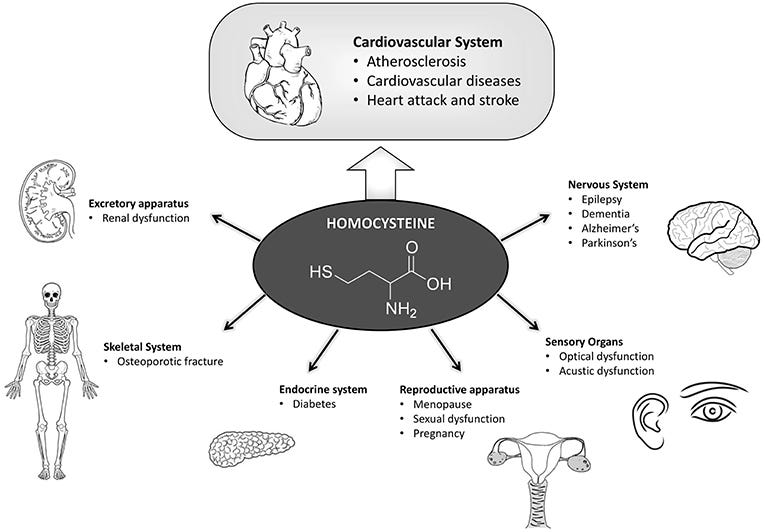
Studies show that up to 40% of patients diagnosed with premature coronary artery disease, vascular disease, or recurrent venous thrombosis have elevated homocysteine levels.
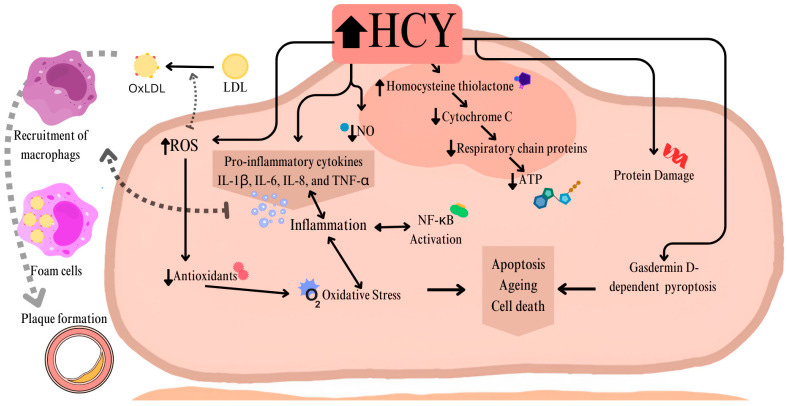
This increased risk is driven by homocysteine’s tendency to create oxidative stress and impair blood vessel dilation by nitric oxide. It also increases inflammation by inducing secretion of pro-inflammatory cytokines (IL-1β, IL-6, IL-8, and TNF-α). These cytokines are linked to reactive oxygen species (ROS) formation and the activation of nuclear factor kappa B (NF-κB). Cytokines recruit immune cells, which become pro-inflammatory and transform into foam cells, contributing to plaque formation.
Many studies have shown an increased risk of stroke in individuals with the MTHFR gene variant. For example, a study by Moti Wala et al. found an association between MTHFR variants and the splitting open of carotid and spinal arteries, which significantly affects the risk of stroke at a young age. A retrospective study by Ahmed et al., involving 4055 patients, showed a correlation between vitamin B12 deficiency (present in folate cycle disorders) and stroke.
Genetic variants that reduce the enzymatic activity of MTHFR cause folate deficiency, which is an independent risk factor for stroke.
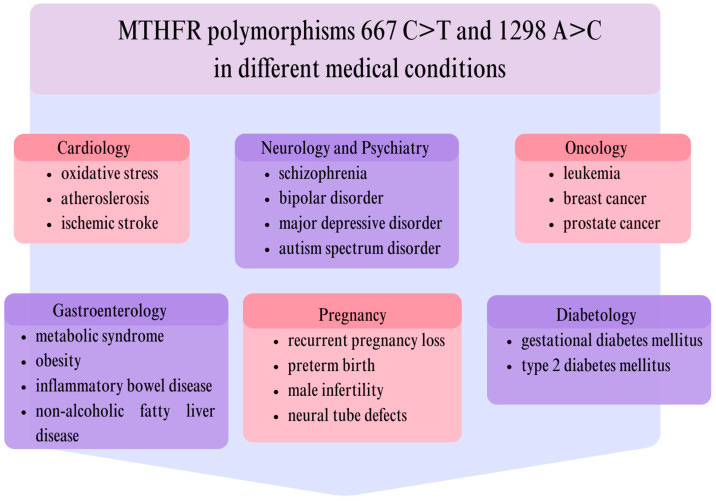
MTHFR variants are also linked to psychiatric disorders and dementia. A meta-analysis found a link between depression and the 677C>T MTHFR variant. Other studies have postulated that folic acid and L-methylfolate have been shown to be effective in treating depression, with L-methylfolate being one of the substances licensed by the FDA for this purpose.
What should you do if you have the MTHFR variants?
Daily supplementation with 0.5-5.0 mg of folic acid can significantly lower plasma Homocysteine levels by about 25%. You can get tested for homocysteine levels and for B vitamin levels through Quest or Labcorp.
A randomized study of 5522 patients 55 years of age or older who had vascular disease or diabetes were assigned to daily treatment either with the combination of 2.5 mg of folic acid, 50 mg of vitamin B6, and 1 mg of vitamin B12 or with placebo for an average of five years. The study showed a 25% reduction in stroke.
A meta‐analysis of 30 randomized controlled trials involving 82,334 participants showed a 10% lower risk of stroke and a 4% lower risk of overall cardiovascular disease with folic acid supplementation. A greater benefit for cardiovascular disease was observed among participants with lower plasma folate levels and without preexisting cardiovascular disease and in studies with larger decreases in homocysteine levels.
Finally, folic acid supplementation improved cognition in patients with cognitive impairment or mild Alzheimer’s Disease on the MMSE Alzheimer’s cognitive test (see figure below).
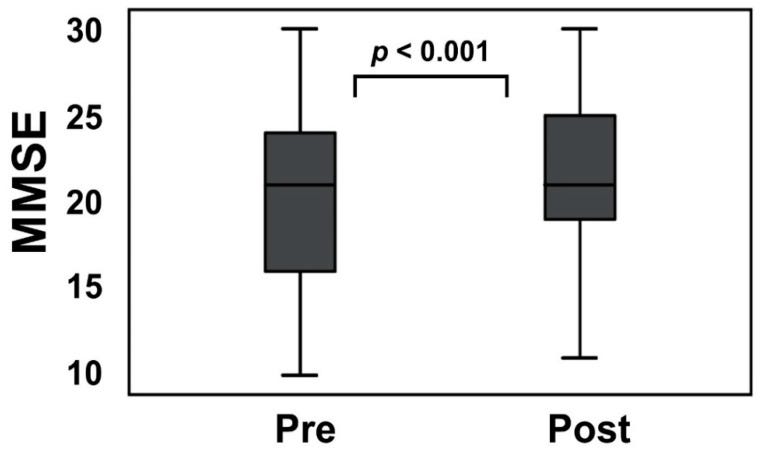
In summary, genetic variants in the MTHFR gene are very common. They lead to high homocysteine levels and folate deficiency, which causes increased risk for stroke, depression, heart disease, and many other conditions. If you do have MTHFR variants, we recommend that you consider testing your homocysteine levels and your folate levels. We also recommend supplementing daily with a B vitamin complex that contains at least 0.8 mg of folic acid.
Eating B vitamin- rich foods, including salmon, oysters, lentils, peas, asparagus, spinach, and mushrooms, is also recommended.

Important: we do not recommend excessive B vitamin supplementation as this can cause toxicity including problems with walking, balance, muscle and bone pain, and numbness. Also doses of folic acid >0.8 mg have not been shown to lower homocysteine levels to a greater extent than 0.8 mg, which is known as a ceiling effect.


Written by
Dr. Christin Glorioso, MD PhD
Dr. Glorioso is the founder and CEO of NeuroAge Therapeutics. With her background in neuroscience and medicine, she is dedicated to revolutionizing brain health and helping people maintain cognitive vitality.
Learn more about Dr. Glorioso

