

Klotho, longevity, and brain health
What we know about Klotho levels, genetic variants, and therapeutics
 Dr. Christin Glorioso, MD PhD5 min read
In Greek mythology, Klotho is the youngest of three fates, and is responsible for spinning the thread of human life. Klotho was said to possess the unique power to revive gods. A power that underscored her authority over life and death that not even Zeus could contest.

In biology, the Klotho gene was named for the Greek fate. The protein that is produced from that gene, as you might imagine, is involved in aging. Some studies suggest that it acts as an "anti-aging" protein. Its deficiency is associated with various aging-related phenotypes, while having it in abundance can extend lifespan and improve cognition in some organisms.
Klotho Mouse Studies
Mice genetically deficient in the Klotho protein have a shortened lifespan, stunted growth, renal disease, hyperphosphatemia, hypercalcemia, vascular calcification, cardiac hypertrophy, hypertension, pulmonary disease, cognitive impairment, multi-organ atrophy and fibrosis (review paper).
A study published in Science Magazine showed that mice genetically engineered to produce more Klotho show a 31% lifespan extension in male mice and a 19% life extension in female mice.
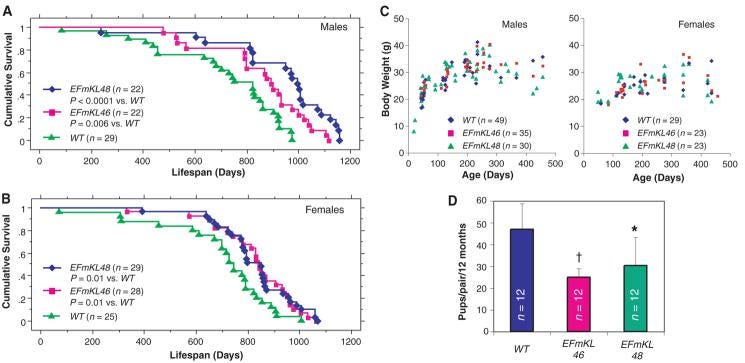
In a separate study, Alzheimer’s mouse models genetically engineered to produce more Klotho showed improved cognition and less toxic amyloid plaques in their brains.
Klotho Human Studies
In humans, Klotho is considered a potential biomarker for healthspan and longevity, with higher blood levels associated with better health outcomes. It has also been linked to neurodegenerative diseases like Alzheimer's and Parkinson's.
A recent study of American adults showed that low serum Klotho levels correlate with a 31% increase in the all-cause death rate.
A meta-analysis, pooling data from 8 studies, involving 6,645 subjects, showed statistically significant better cognitive scores in people with greater Klotho levels (serum, plasma, and expression). They also showed decreased dementia risk.
The Klotho Genetic Variant, KL-VS
About 20% of people have a lucky “bonus” genetic variant that causes them to have higher Klotho levels. This variant is known as KL-VS. KL is the two-letter abbreviation for Klotho and the VS represents shorthand for two protein building blocks, the amino acids Valine and Serine, that are different in people with KL-VS than in people without it.
For reasons that are unclear, people with one copy of KL-VSHET (heterozygotes) have more Klotho and its associated health benefits than people with no copies or people with two copies.
If you have had NeuroAge’s Genetic Resilience analysis, you can find out whether you have the KL-VSHET variant in the new "Longevity Genes” section.
Many studies have investigated whether the KL-VSHET variant confers health benefits and most of them have been positive.
In a study 454 cognitively unimpaired adults, KL-VSHET associated lower levels of brain inflammation and neurodegeneration.
In another study, KL-VSHET associated with lower risk of Alzheimer’s Disease specifically in people with the Alzheimer’s risk variant APOE4 (see below figure). This is what’s known as a gene-gene interaction. This tells us that increasing Klotho levels could be beneficial in people with the APOE4 variant specifically.
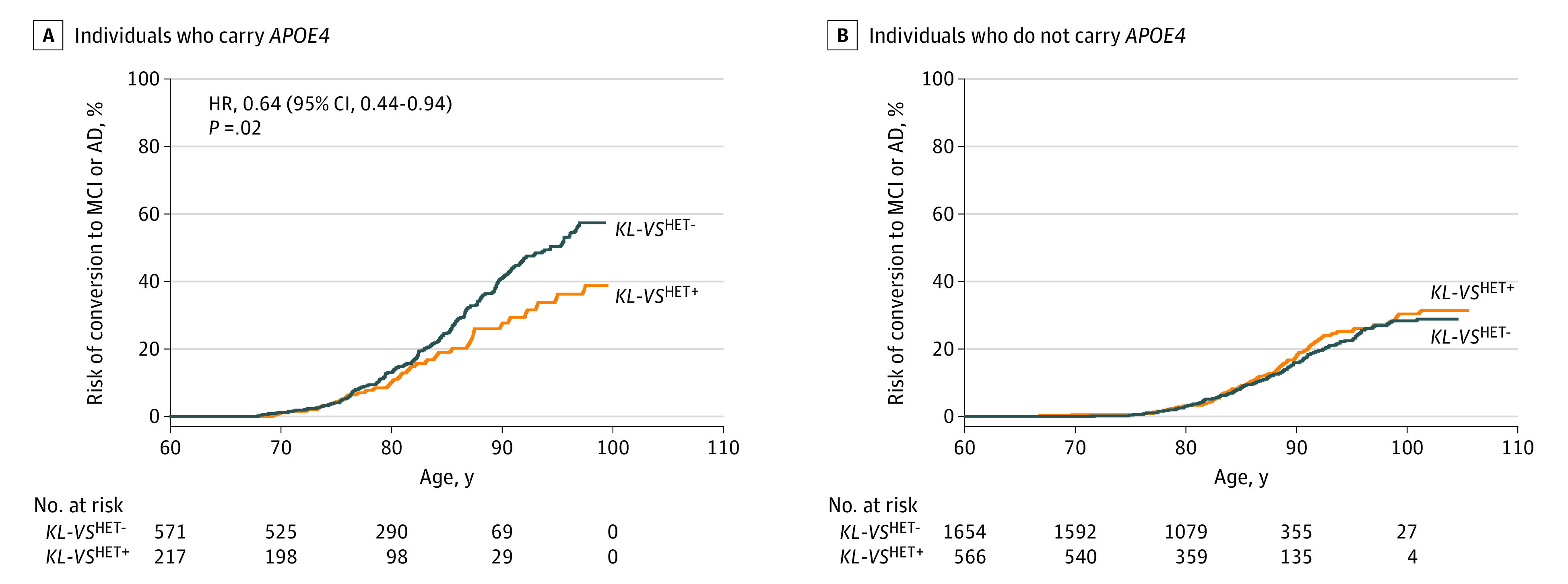
Another study showed that KL-VSHET is associated with lower odds of being positive for the toxic protein Aβ, regardless of whether one is also positive for another toxic Alzheimer’s protein, tau. Researchers also showed lower Tau pathology in KL-VSHET as well as better memory.
These studies suggest that people who test positive for amyloid or p-tau on the new Alzheimer’s blood diagnostics may want to increase their Klotho levels through lifestyle, supplements, or newly emerging therapeutics.
How do you increase your Klotho levels?
1. Exercise
A publication in Scientific Reports showed that in combining 12 studies, comprising 621 participants with ages ranging from 30 to 65 years old, Klotho concentration increased significantly after chronic exercise training (minimum of 12 weeks).
2. Therapeutics
A full table of therapeutics on the market that have evidence for increasing Klotho levels can be found in this review. These include statins, ACE inhibitors, GLP-1RAs, PPAR-y agonists, rapamycin, Vitamin D, Pentoxifylline, and Atrasentan.
Companies and academic groups are creating therapies that either directly inject the klotho peptide or are Klotho gene therapies. A single dose of injected Klotho enhanced cognition in aged nonhuman primates. These therapies are not yet available but will likely become available in the next 5-10 years.
3. Supplements
There are also food and supplements that have some evidence in people or animals for increasing Klotho levels. These include astaxanthin, baicalin, cordycepin, curcumin, ginseng, ligustilide, resveratrol, and tetrahydroxystilbene glucoside.
The potential benefits of the Indian spice, Curcumin, on Alzheimer’s is reviewed here. Curcumin has good evidence for efficacy in mice and researchers are working on analogues of it as therapeutics.
The traditional chinese medicinal compound, Ligustilide (also known as Dong quai), is also of interest. It has evidence for ameliorating pathology and raising Klotho in mice (reviewed here).
Ligustilide is found in the greatest concentrations in the endangered wild celery species, Angelica Sinensis.
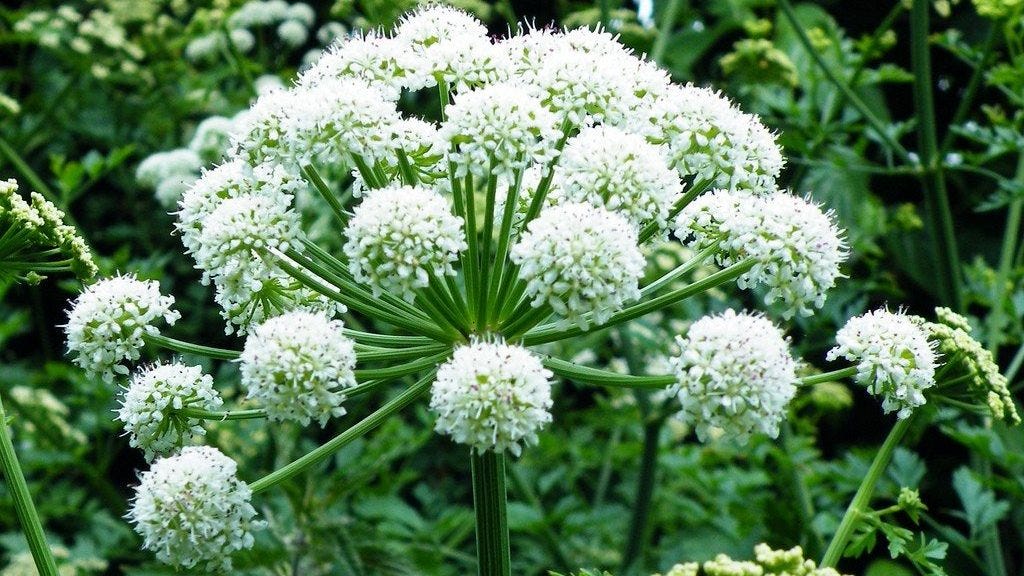
It is also found in dill, lovage, parsley, and Osha root (native to Colorado and Mexico).


Written by
Dr. Christin Glorioso, MD PhD
Dr. Glorioso is the founder and CEO of NeuroAge Therapeutics. With her background in neuroscience and medicine, she is dedicated to revolutionizing brain health and helping people maintain cognitive vitality.
Learn more about Dr. Glorioso

