

Dr. Goodenowe, Plasmalogens, and the Cholesterol “Scam”
What the evidence actually says about this popular supplement scientist
 Dr. Christin Glorioso, MD PhD11 min read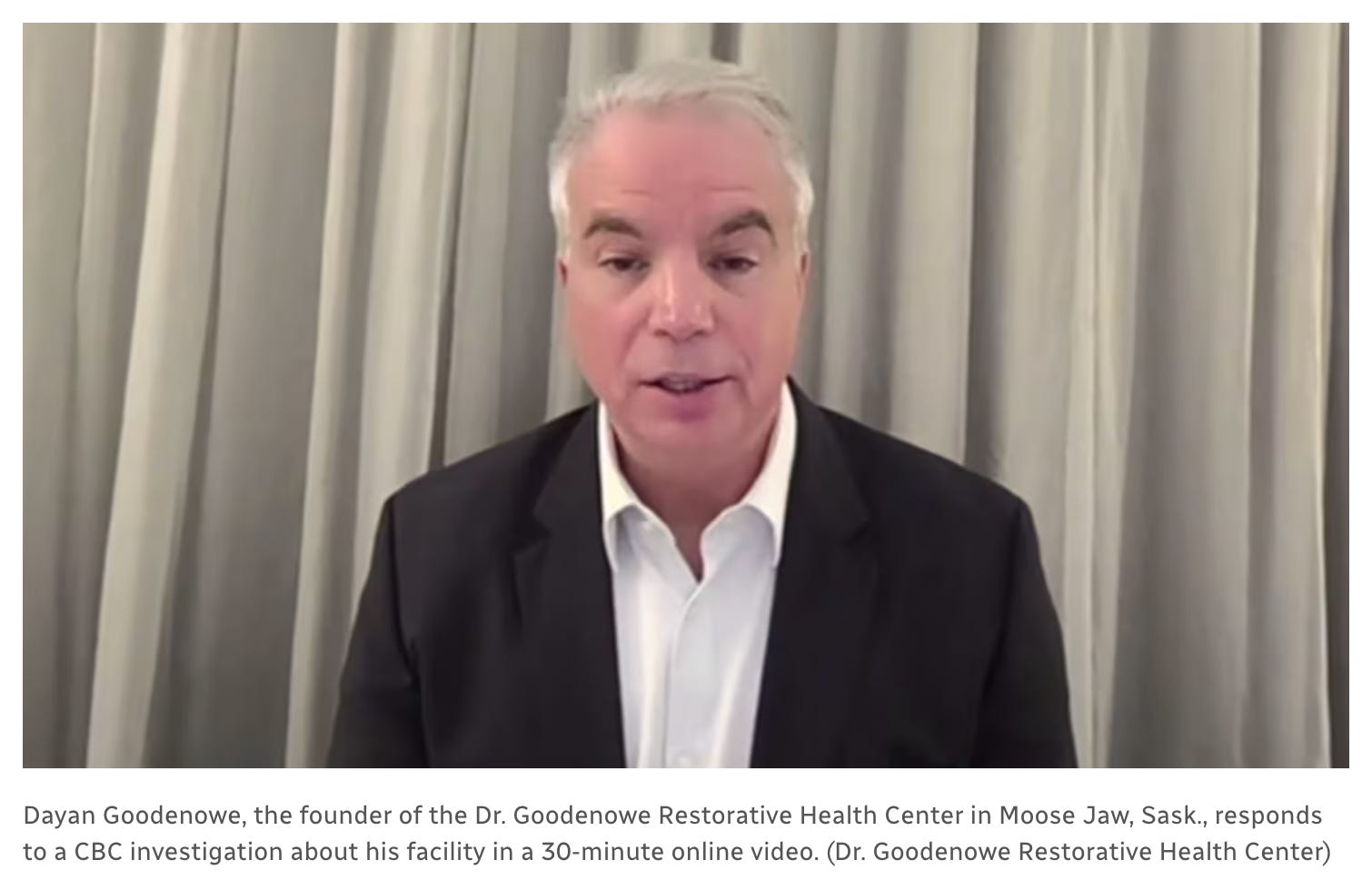
I’ve been getting a lot of questions about Dr. Dayan Goodenowe and his plasmalogen supplements. His podcast appearances are everywhere. His book “Breaking Alzheimer’s” has a devoted following. And his claims about cholesterol are making their way through longevity circles.
So I went to the primary literature. And what I found is a mixed bag with some promising, though very preliminary, evidence for plasmalogens and some disturbing claims that I think is important for anyone interested in brain health to understand.
Who is Dr. Goodenowe?
Dayan Goodenowe has a PhD in biochemistry from the University of Alberta and spent years developing mass spectrometry technology for metabolomics. His research led him to discover that people with Alzheimer’s disease have lower levels of plasmalogens in their blood and brains. This is real and has been confirmed by independent researchers.
He founded Prodrome Sciences in 2017, which sells plasmalogen supplements (around $100-200/month), blood testing, and related products. He also runs the Dr. Goodenowe Restorative Health Center in Moose Jaw, Saskatchewan, where he offers a live-in treatment program for ALS and other neurodegenerative disease patients. This clinic has become the subject of significant controversy, which I’ll get into below.
Here’s my assessment of his main claims.
What Are Plasmalogens and Do They Matter?
Plasmalogens are phospholipids that make up about 18-20% of our cell membranes. They’re particularly concentrated in the brain, heart, and immune cells. The science here is solid. They serve as structural components of membranes, act as antioxidants through their vinyl ether bond, and store important fatty acids like DHA.
Plasmalogen deficiency is real and documented in Alzheimer’s, Parkinson’s, and normal aging. People with severe genetic plasmalogen deficiency (Zellweger syndrome) have profound neurological problems.
The critical question is whether low plasmalogens cause disease or are just a marker of it. This is the difference between “low cholesterol predicts frailty in the elderly” and “low cholesterol causes frailty.” The distinction is critical for whether supplementation can help.
The Clinical Trial Evidence
There’s really only one proper randomized controlled trial of plasmalogen supplementation. The Fujino 2017 study enrolled 328 elderly Japanese patients with MCI or mild Alzheimer’s and gave them either 1 mg/day of scallop-derived plasmalogens or placebo for 24 weeks.
The primary outcome (MMSE cognitive score) was negative, although with a trend towards significance (p=0.07). Some post-hoc subgroup analyses suggested possible benefit in mild AD patients, particularly women under 77, but these are hypothesis-generating, not confirmatory.
Goodenowe’s own 2022 open-label study of 22 cognitively impaired patients showed some improved on a dementia rating scale when their blood plasmalogens increased. But this was unblinded, uncontrolled, small, and conducted by the inventor of the product. It’s preliminary at best.
The Alzheimer’s Drug Discovery Foundation concludes there is “insufficient evidence to recommend plasmalogen supplementation for cognitive impairment.”
Data from Mouse Models
The preclinical evidence is actually more interesting than the clinical trials, and it varies dramatically by indication.
Parkinson’s disease has the strongest data. MPTP studies show Goodenowe’s plasmalogen precursors protected dopamine neurons, with dose-response data and mechanistic understanding. Interestingly, they found a bell-shaped response where higher doses (200 mg/kg) were less effective than moderate doses (50 mg/kg). This is important for anyone considering high-dose supplementation.
Age-related cognitive decline has some data. A 2022 study from Shanghai Jiao Tong University using naturally aged mice showed improved memory, reduced synaptic loss, and decreased neuroinflammation with ascidian-derived plasmalogens. Notably, this research comes from groups independent of Goodenowe’s company, which strengthens the credibility of the aging/cognition findings compared to other indications.
Alzheimer’s disease data is moderate. Most studies used an LPS inflammation model rather than actual transgenic AD mice. The LPS model creates acute inflammation, not the slow progressive neurodegeneration of human AD. Most of this work comes from a single research group in Japan.
ALS has no preclinical data. Despite extensive searching, I could not find a single published study testing plasmalogens in SOD1-G93A or any other ALS mouse model. Hundreds of compounds have been tested in these models. This complete absence of animal data becomes critically important when you consider what Goodenowe is claiming about ALS treatment.
The ALS Claims and Controversy
This is the most concerning part of the story.
Goodenowe operates the Dr. Goodenowe Restorative Health Center in Moose Jaw, Saskatchewan, which has claimed “a 100 per cent success rate in stopping the progression and in restoring function of people with ALS.” In YouTube videos, he has said “stopping the progression of ALS actually isn’t that hard.”
ALS patients pay $75,000 to $84,000 US for a three-month live-in program based on his supplement protocol. The facility employs no nurses or doctors. Goodenowe himself is not a medical doctor. Patients sign a “customer research agreement” describing their participation as “self-directed research to optimize health and wellbeing.”
A CBC investigative series called “Hard to Swallow” documented the experiences of multiple patients and families. Several reported that ALS symptoms continued to worsen during and after the program, despite Goodenowe’s claims that every client “leaves that centre better than they came in.”
One patient, Susie Silvestri, was a 70-year-old American who put her North Carolina home up for sale to afford the $84,000 program. According to her medical records, text messages, and testimony from former Goodenowe employees, her condition deteriorated while at the center. She was eventually transferred to a US hospital where she died in December 2024. A former Goodenowe care worker told CBC that claims of Silvestri’s improvement were “cognitive bias” that “does not reflect her actual condition,” adding “Not only was Susie unable to speak, but her swallowing also worsened over time.”
Goodenowe has acknowledged there are no scientific studies backing up his ALS claims. He points instead to anecdotes and testimonials.
In January 2025, the FDA issued a warning letter stating that Goodenowe’s supplement study failed to file the required Investigational New Drug application, which would have required animal testing data showing the study wouldn’t expose subjects to unnecessary risks. The FDA wrote that this failure “raises significant concerns about the safety and welfare of enrolled subjects” and “raises concerns about the validity and integrity of the data collected.”
Multiple investigations are now underway. The Moose Jaw Police Service launched a criminal investigation after complaints citing “potential fraud, criminal neglect and failure to provide the necessities of life.” The Saskatchewan government asked the College of Physicians and Surgeons and consumer protection authorities to investigate, though the College said it lacks jurisdiction since Goodenowe is not a licensed physician. Goodenowe has sued CBC for defamation and suggested in communications to supporters that the “ALS drug industry” is behind the investigations.
Standard drug development requires demonstrating efficacy in at least one relevant animal model before human trials. There are well-established ALS mouse models (SOD1-G93A, TDP-43, FUS, C9orf72) that have been used to test hundreds of compounds. The complete absence of any published plasmalogen data in any ALS model, combined with claims of “100% success rate” and charging $75,000-84,000 to desperate patients with a terminal disease, represents an extraordinary departure from scientific and ethical norms.
In fairness, there are defenders of Goodenowe who argue the CBC coverage has been one-sided. Tammy Robert, a Saskatchewan-based writer who has known Goodenowe for a decade, points out that the facility employs over 100 local workers who are being unfairly maligned, that ALS patients she interviewed felt they made informed choices, and that Goodenowe's earlier pharmaceutical company was taken from him in 2016 when investors acquired his patents and FDA-designated drug candidates. She argues terminally ill patients have the right to pursue last-chance options and that the fuller context of Goodenowe's scientific contributions has been stripped from the narrative. These are legitimate points about patient autonomy and fairness to workers, though they don't address my core concern, which is the absence of preclinical evidence and the extraordinary nature of the claims being made.
The “Cholesterol Scam” Problem
I have additional concerns about Goodenowe’s public messaging.
He’s produced a video series called “Cholesterol Scam?” and has stated in interviews that “if your oxidative stress markers are low, you can have cholesterol of 300 and it’s not going to hurt you.” He positions his plasmalogens as alternatives to statins for cardiovascular protection.
I’ve written before about optimal cholesterol levels for longevity, and it’s more complicated than “lower is always better.” There IS a genuine “cholesterol paradox” in the elderly where very low cholesterol can be a marker of frailty and predict mortality. I agree with Goodenowe that we shouldn’t be driving everyone’s cholesterol to child-like levels with high-dose statins.
But his claim that cholesterol of 300 is safe if oxidative stress is low dramatically overstates the evidence. The Sardinian Blue Zone Study he might cite actually shows that nonagenarians with total cholesterol above 250 mg/dL did NOT get additional survival benefit, and very high cholesterol in women was linked to shorter survival. A large Pittsburgh study found a U-shaped curve where both very low AND very high LDL increased mortality, with the sweet spot around 100-189 mg/dL.
The paradox research is mostly in people over 60-80 years. For middle-aged adults with cardiovascular risk factors, the evidence for LDL reduction is robust and comes from Mendelian randomization studies, statin trials, and PCSK9 inhibitor data.
Why This Matters for Brain Health
Here’s why the “Cholesterol Scam” framing is so problematic. Cardiovascular disease is a major risk factor for dementia. When my total cholesterol was 270, I started a statin not because of heart attack risk (my 10-year cardiovascular risk was low), but because I was developing white matter hyperintensities on my brain MRI. These are vascular lesions associated with stroke and Alzheimer’s risk.
If Goodenowe’s followers avoid appropriate cardiovascular risk management because they’re taking plasmalogens instead, they may paradoxically increase their dementia risk through vascular mechanisms. This is the opposite of what someone interested in brain longevity should want.
Safety Considerations
The Fujino trial found no significant difference in adverse events between plasmalogen and placebo groups at 1 mg/day for 24 weeks. That’s reassuring for short-term, low-dose use.
But Prodrome products use doses around 900+ mg/day. That’s a 900-fold higher dose than what was tested in the RCT. We simply don’t have safety data at those levels. The bell-shaped dose response in the Parkinson’s mouse models (less benefit at higher doses) suggests more isn’t necessarily better.
Theoretically, because plasmalogens contain polyunsaturated fatty acids, they could be susceptible to lipid peroxidation under conditions of iron overload or oxidative stress. Long-term effects on membrane composition are unknown.
The Bottom Line
Plasmalogens are legitimate molecules of biological interest. The deficiency in neurodegenerative disease is real. Goodenowe did genuine scientific work to identify this. The preclinical data for Parkinson’s and age-related cognitive decline is actually promising.
But the leap from “deficiency is associated with disease” to “supplementation treats disease” requires clinical evidence that doesn’t yet exist. The only RCT showed only a trend for efficacy in its primary endpoint. The cholesterol messaging could lead people to make harmful decisions about cardiovascular risk management.
And the ALS situation is deeply troubling. Claiming a “100% success rate” for a terminal disease, charging $75,000-84,000 to desperate patients, operating without medical staff, and doing all this without any published preclinical data or properly conducted clinical trials is not how legitimate medical research works. The FDA warning, police investigation, and patient testimonies should give anyone pause.
Goodenowe demonstrates a pattern I see too often. Take real scientific complexity, overstate the conclusions, cherry-pick supporting research, use conspiratorial framing (”scam,” “ALS drug industry”) to deflect criticism, and apply findings from specific populations to general recommendations.
If you’re considering plasmalogens for general brain health, know that you’re in uncharted territory. The clinical evidence is weak. The safety data at high doses is absent. The cost is high. And please don’t substitute them for evidence-based cardiovascular risk management. Your brain needs good blood flow.
If you or a loved one has ALS, I understand the desperation that comes with a terminal diagnosis. But please be fully informed before spending your life savings on unproven treatments.
Quick Reference Summary
Plasmalogen deficiency in AD = TRUE (well-documented)
Supplementation treats AD = UNPROVEN (RCT has only a trend towards significance)
Cholesterol paradox in elderly = TRUE (with caveats)
Cholesterol of 300 is safe = FALSE/OVERSTATED
Preclinical PD evidence = Some
Preclinical aging evidence = Some
Preclinical AD evidence = Some
Preclinical ALS evidence = NONE (despite clinical claims)
ALS “100% success rate” claim = UNSUBSTANTIATED (FDA warning, police investigation, patient reports of worsening)
Short-term safety (low dose) = ACCEPTABLE
High-dose/long-term safety = UNKNOWN


Written by
Dr. Christin Glorioso, MD PhD
Dr. Glorioso is the founder and CEO of NeuroAge Therapeutics. With her background in neuroscience and medicine, she is dedicated to revolutionizing brain health and helping people maintain cognitive vitality.
Learn more about Dr. Glorioso

