

Creatine supplementation for brain health?
A review of the science and practical tips
 Dr. Christin Glorioso, MD PhD20 min read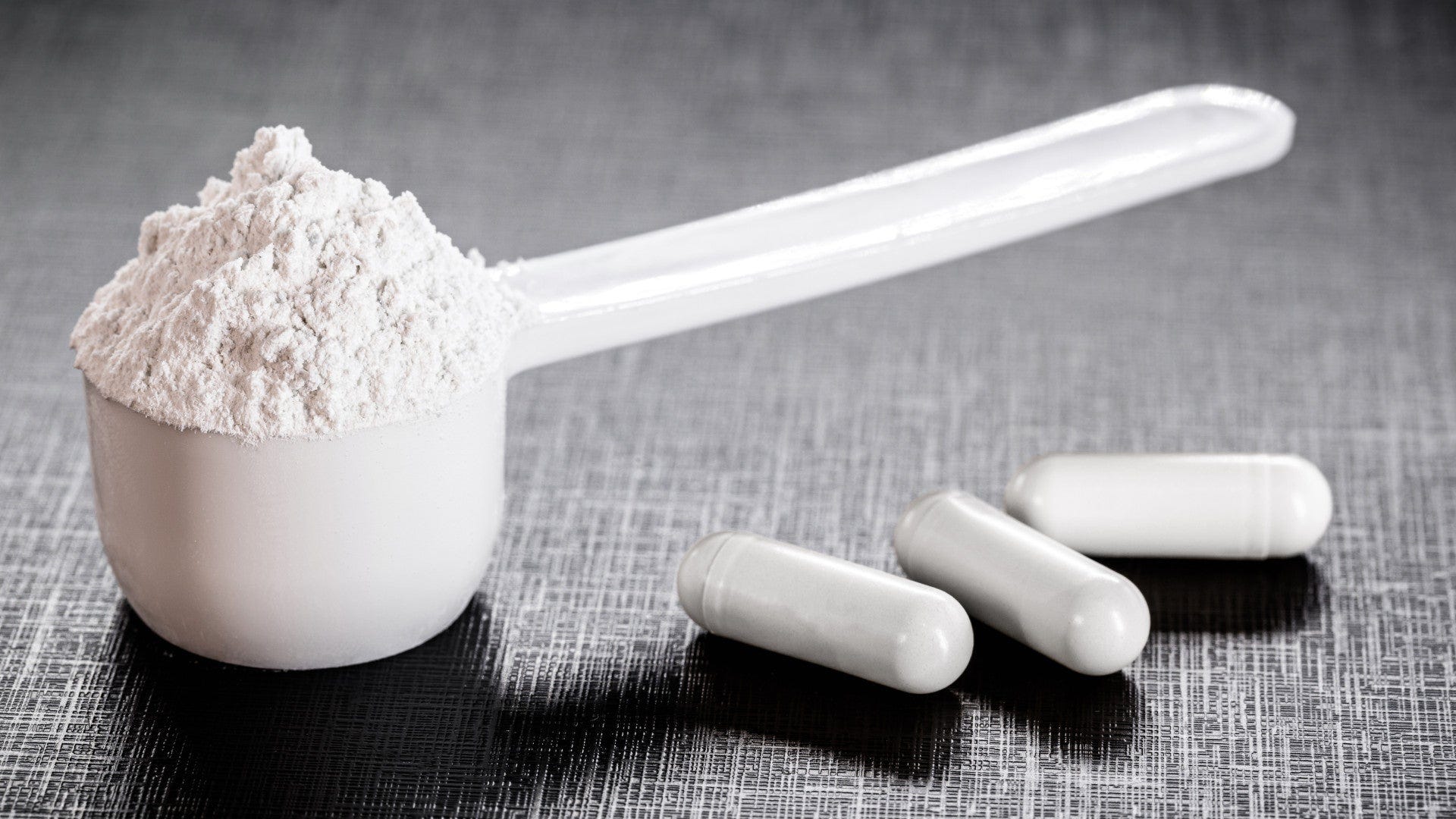
Creatine is having a moment in longevity circles. The supplement has been used by athletes for decades, and over the past few years the research has expanded into cognitive performance, resilience under stress, and dementia prevention.
The trial evidence shows the strongest cognitive signals in older adults and under metabolic stress such as sleep deprivation. The first-ever Alzheimer’s disease pilot trial reported results in 2025, showing measurable increases in brain creatine and improvements on cognitive testing, although notably with no control arm. Large trials in Huntington’s and Parkinson’s disease have been negative. Mouse studies show a modest lifespan extension, and observational data in humans suggest links to lower mortality and slightly younger biological age, though no randomized trial has yet tested creatine against a lifespan or aging clock endpoint.
Overall, these data make me cautiously optimistic that creatine is helpful for brain health. In this piece I walk through the clinical trial evidence, who might benefit most, whether to test baseline creatine levels, recommended dosing and how to take it, side effects and safety, and how to choose a brand.
Why the brain might care about creatine
The brain is about 2% of body weight but consumes roughly 20% of the body’s energy at rest. Cells run on a molecule called ATP, and ATP has to be continuously regenerated because each cell only holds a few seconds’ worth at a time. Creatine is the backup system. Cells store it in a charged-up form called phosphocreatine, and when ATP gets used up faster than it can be made from scratch, phosphocreatine hands over its stored energy to regenerate ATP on the spot. This matters most in tissues where energy demand can spike suddenly, like working muscle and firing neurons.
The brain both makes its own creatine and takes it up from the bloodstream, but the protective lining between blood and brain only lets it through slowly. Muscle saturates quickly with supplementation. The brain, in contrast, may take weeks of daily dosing to show meaningful increases, and the size of that increase is smaller than in muscle. This detail turns out to matter a lot when interpreting trials, because many studies used doses and durations that were probably sufficient for muscle but not for brain.
Rare inherited disorders that block the body’s ability to make or transport creatine produce severe intellectual disability and seizures. These diseases establish that creatine is essential for normal brain function. Whether supplementation can enhance cognition above baseline or protect against decline is a separate and more contested question.
The cognition evidence in healthy adults
The foundational trial is from Dr. Caroline Rae’s group at the University of Sydney in 2003, which gave 5 grams per day for six weeks to 45 young vegetarian adults in a placebo-controlled crossover design. The creatine arm improved on working memory and reasoning tasks with large effect sizes, driving much of the subsequent interest in creatine as a cognitive enhancer. The most important recent replication is the Sandkühler trial in BMC Medicine in 2023, which used the same design in 123 participants and found the working memory effect only bordered significance (p = 0.064), with no benefit on reasoning and no vegetarian-specific advantage.
Three meta-analyses summarize the broader literature. Dr. Konstantinos Avgerinos and colleagues in Experimental Gerontology in 2018 found modest improvements in short-term memory and reasoning across six RCTs, stronger in vegetarians and under stress. Dr. Konstantinos Prokopidis and colleagues in Nutrition Reviews in 2023 pooled eight memory trials and found an effect driven almost entirely by the older adult subgroup. The Xu meta-analysis in Frontiers in Nutrition in 2024 included 16 RCTs and reported improvements in memory and processing speed, though the European Food Safety Authority’s 2024 opinion flagged that pooling non-independent cognitive tests from the same participants inflated apparent sample sizes, and reanalysis left the main effect robust only in older adults.
The reasonable read on healthy young adults is that creatine produces small cognitive improvements at best, more consistent in vegetarians and vegans with lower baseline stores and in stressed or sleep-deprived states.
The sleep deprivation findings
The most novel recent finding comes from Dr. Ali Gordji-Nejad and colleagues at Forschungszentrum Jülich in Scientific Reports in 2024. They gave a single high dose of 0.35 grams per kilogram to 15 healthy subjects during 21 hours of sleep deprivation in a double-blind, placebo-controlled crossover design, with each participant receiving both conditions on separate nights. The creatine arm preserved phosphocreatine and ATP levels in the brain, showed detectable increases in brain creatine on specialized MRI imaging, and outperformed placebo on working memory and processing speed within a few hours. The acute timing was a surprise, since the standard model assumes weeks of supplementation are needed to move brain creatine. The authors proposed that combining high creatine availability in the blood with the increased energy demand of sleep deprivation temporarily opens a window for faster brain uptake.
A 2025 follow-up in Nutrients tested 0.2 grams per kilogram in 29 participants using the same paradigm and reported mitigating effects on logical and numerical tasks, language-related processing speed, and psychomotor vigilance. The effect is attenuation of decrement, not restoration of normal function, and should not substitute for fixing sleep where that is possible. For background on what sleep does for the brain, see my earlier articles on sleep and the brain and how the brain chooses cleaning over cognition during sleep.
The older adult evidence
In older adults, the cognitive effect appears most consistent. The Prokopidis meta-analysis found a meaningful memory benefit in the 66 to 76 year old subgroup compared to essentially no effect in younger participants, plausibly because older adults have lower baseline creatine stores, slower brain energy metabolism, and often less meat in the diet. Several trials have combined creatine with resistance training, much of this work led by Dr. Darren Candow at the University of Regina. Some studies show measurable cognitive improvements when creatine is paired with exercise, though a systematic review by Stares and Bains found no additional cognitive benefit beyond what training alone produced. For the broader case on resistance training as brain protection, see how much muscle do you need to live longer.
The first Alzheimer’s pilot trial
Until 2025 there was no clinical trial data on creatine in Alzheimer’s disease. The Creatine to Augment Bioenergetics in Alzheimer’s (CABA) study, led by Dr. Matthew Taylor at the University of Kansas Medical Center, changed that. CABA was a pilot trial of 20 grams per day for 8 weeks in 20 participants with probable Alzheimer’s dementia. Everyone received creatine (there was no placebo group), and the main goal was to see whether the protocol was workable, with secondary measurements of brain creatine, memory and attention, and blood markers.
The results were promising within the limits of the design. Compliance was excellent, blood creatine rose at 4 and 8 weeks, and brain creatine increased by 11% on MRI imaging, a meaningful change for a tissue that usually resists supplementation. Cognitive scores improved on tests of overall cognition, working memory, reading recognition, and attention. The limits are real though. Twenty participants, no placebo group, 8 weeks of treatment, and no expected measurable progression of Alzheimer’s over that short window mean the cognitive gains cannot be attributed to slowing of the disease itself with any confidence. Practice effects on repeated cognitive testing are also a known source of apparent improvement in small trials. But the 11% rise in brain creatine is a biological signal that does not depend on cognitive testing, and the combination of a workable protocol, safety, and early efficacy hints is enough to justify the larger randomized trial the investigators are planning.
The neurodegeneration trials that did not work
The broader history of creatine in clinical neurology is a series of disappointments that should temper enthusiasm. The CREST-E trial in Huntington’s disease, led by Dr. Steven Hersch, randomized 553 participants to up to 40 grams per day or placebo and was stopped early when an interim analysis showed it could not realistically meet its goal of slowing functional decline. The NET-PD LS-1 trial in Parkinson’s disease, led by Dr. Karl Kieburtz and published in JAMA in 2015, randomized 1,741 patients with early Parkinson’s to 10 grams per day or placebo over at least 5 years and found no slowing of clinical progression. Pilot trials in ALS (amyotrophic lateral sclerosis) have also been negative.
The pattern across these programs is consistent. Animal models suggested creatine would protect neurons, but the effect did not translate to slowing the progression of established neurodegenerative disease in humans. The CABA investigators argue the Alzheimer’s setting may differ because the energy problems creatine targets appear earlier in the Alzheimer’s cascade, and because their 20 g per day dose is higher than what some earlier trials used. Whether that reasoning holds up in a larger randomized trial is an open empirical question.
What the evidence says about dementia prevention
The direct evidence for creatine as a dementia prevention intervention is thinner than the treatment literature. Observational work using the National Health and Nutrition Examination Survey has associated higher dietary creatine intake with better cognitive test scores in adults over 60, and with lower prevalence of depression in a separate NHANES analysis. These are observational findings that track people over time or take a single snapshot of the population, and they cannot establish cause and effect. Dietary creatine intake correlates with meat consumption, which correlates with a long list of other exposures.
There are no long-term randomized trials of creatine supplementation tracking dementia incidence. The closest evidence comes from the older adult cognition trials, which run weeks to months and measure cognitive test scores rather than clinical dementia. None has followed a prevention cohort long enough to see dementia diagnoses accumulate.
For someone interested in preventing cognitive decline, the creatine evidence sits alongside a set of better-characterized interventions. Aerobic fitness, resistance training, sleep quality, blood pressure control, and dietary patterns each have stronger long-term prospective evidence for dementia prevention than any supplement. I have written about several of these in separate articles, including VO2 max and dementia prevention, muscle mass and strength for brain health, and the glymphatic system’s role in overnight clearance of toxic proteins. Creatine is a plausible adjunct to these foundations rather than a substitute for them.
The aging clock evidence
Two recent observational papers by Dr. Sergej Ostojic and colleagues looked at dietary creatine against epigenetic aging clocks (blood tests that estimate biological age from patterns on DNA) and long-term mortality. A 2025 NHANES analysis in Lifestyle Genomics by Dr. Ostojic and Dr. Ivana Kavecan found that higher dietary creatine intake was linked to a slightly younger biological age on two aging clocks (GrimAgeMort and GrimAge2Mort) in 4,983 adults aged 50 and older. The association was statistically significant but the correlation was very small, the kind of signal that reaches significance mostly because of sample size rather than biological effect. A companion paper in Applied Physiology, Nutrition, and Metabolism found that consuming at least 1 gram per day of dietary creatine was associated with 15% lower all-cause mortality over roughly 20 years of follow-up. These findings point in the right direction but the effect sizes are modest, the exposure was measured from a single diet recall, and no randomized trial has yet tested creatine supplementation against an aging clock outcome. For now, aging clock evidence is not part of the case for creatine supplementation.
The mouse lifespan data
The closest thing to direct lifespan evidence is a 2008 mouse study from Dr. Andreas Bender and colleagues at the Helmholtz Zentrum München, published in Neurobiology of Aging. The investigators fed 162 aged mice a diet containing 1% creatine or standard chow and tracked how long they lived in good health. The creatine-fed mice had a 9% longer healthy lifespan, performed better on memory and exploration tests, and showed less accumulation of lipofuscin, the brown pigment that builds up in aging neurons. A 9% lifespan extension is a respectable effect size for an aging intervention in mice, within the range seen with other compounds being studied for longevity. The caveat is that mouse findings often do not translate cleanly to humans, and no randomized human trial has ever tested creatine against a lifespan endpoint.
Who might benefit most
The trial evidence points to three groups with the most to gain from creatine supplementation for brain health or cognitive endpoints.
Vegetarians and vegans. Since creatine is found almost exclusively in meat and fish, people on plant-based diets have 10 to 30% lower baseline muscle creatine stores and lower blood creatine, as reviewed in a 2020 systematic review in the International Journal of Environmental Research and Public Health. The Rae study that produced the original large cognitive effect was conducted exclusively in vegetarians, and both the Avgerinos and Prokopidis meta-analyses found stronger effects in this group. An important nuance is that brain creatine concentrations appear similar between vegetarians and people who eat meat in the few brain imaging studies that have compared them, so the cognitive response in vegetarians may involve more than just topping up a low brain pool.
Older adults. The Prokopidis meta-analysis found the clearest memory benefit in the 66 to 76 year old subgroup. The body’s own creatine production declines with age, dietary intake often drops in older adults, and brain energy metabolism narrows. On the current evidence, older adults are the group with the strongest case for adding creatine.
People with restricted sleep or cognitive demand under stress. The Gordji-Nejad trials suggest meaningful benefit during acute sleep deprivation, which maps onto real-world situations like shift work, new parenthood, and crunch periods at work. The effect is attenuation of decrement rather than restoration of rested function, so it should not substitute for fixing sleep where that is possible.
Should you test your baseline creatine levels?
Direct serum creatine testing (the molecule itself, not the waste product) is offered by a few consumer lab services, most notably Walk-In Lab, which lets you order online without a doctor’s referral for roughly $60 to $80 and get results from a blood draw at a local lab within about a week. Most other direct-to-consumer services (Personalabs, Request A Test) and standard annual blood panels ordered by a doctor measure creatinine rather than creatine. Comprehensive consumer testing platforms like Function Health also include creatinine and cystatin C for kidney function assessment, but as best I can tell do not include serum creatine as a biomarker in their standard membership, so a Function panel will not tell you your creatine level directly.
Those two look like the same word but are not the same thing. Creatine is the molecule we have been discussing throughout this article, the one stored in muscle and brain that recharges ATP. Creatinine is the waste breakdown product that the kidneys continuously clear from the blood. Creatinine is routinely measured to estimate kidney function (as part of the eGFR calculation), not creatine status. Creatinine does not meaningfully tell you whether your creatine stores are adequate. In fact, creatine supplementation itself raises serum creatinine modestly without any kidney damage, which is one reason creatinine is a poor proxy for creatine nutrition.
Even direct serum creatine testing has limits for deciding whether to supplement:
Blood creatine levels do not reliably predict who responds cognitively to supplementation
Brain creatine is regulated by transporters at the blood-brain barrier and does not closely track blood levels, which is why vegetarians and people who eat meat have similar brain creatine concentrations despite different blood levels
The decision of whether to supplement is usually better guided by whether you fall into one of the groups above (vegetarian or vegan, older adult, chronically sleep-restricted)
A practical approach for most people is to try 5 g per day for 6 to 8 weeks and retest cognitive performance rather than blood levels. Tools like NeuroAge’s cognitive testing are designed for this kind of before-and-after tracking.
Recommended dosing
Practical dosing:
Healthy adults for general brain health: 5 g per day of creatine monohydrate, taken continuously
Older adults or those targeting cognitive endpoints: 10 g per day is a defensible higher dose
Loading phase (optional): 20 g per day for 5 to 7 days to reach muscle saturation faster, then drop to 3 to 5 g per day maintenance
Trial doses (not for daily use):
CABA Alzheimer’s pilot used 20 g per day
Older adult memory trials used 2 to 20 g per day
Sleep deprivation studies used a single 0.35 g per kg dose
How to take it. Creatine monohydrate comes as a fine, mostly tasteless white powder. The standard practice is to stir a 5 g scoop (about a level teaspoon) into water, juice, coffee, a smoothie, or a shake. It does not fully dissolve in cold liquid and some settling at the bottom is normal. Capsules and flavored chews are also available and work just as well, though they usually cost more per gram. For a 20 g dose (as in the Alzheimer’s pilot trial), most people split it into two daily servings to reduce gastrointestinal side effects.
A fair question is why 5 grams per day is the starting dose when the body’s actual daily requirement is only about 2 grams, half of which the liver and kidneys produce on their own from three amino acids (arginine, glycine, and methionine). A meat eater typically gets the other ~1 gram from food, and everything runs fine. The 5 to 20 gram doses used in trials are not replacing a deficiency. They are pharmacologic doses designed to push muscle and brain creatine stores above their normal baseline, on the theory that more is better for performance or cognition. Whether that theory holds up depends on the outcome being studied, which is what the trial literature above addresses.
As for our ancestors, Dr. John Brosnan and Dr. Margaret Brosnan have argued that Paleolithic humans probably consumed considerably more creatine than modern humans. The reasoning is indirect but reasonable. Anthropologists have estimated Paleolithic meat intake using skeletal isotope analysis of ancient human remains, archaeological evidence of hunting, and dietary patterns of contemporary hunter-gatherer populations, and these estimates put meat intake substantially higher than in modern Western diets. Since creatine concentration in meat is known from direct measurement, multiplying estimated meat intake by measured creatine content gives a rough indirect estimate of ancestral creatine consumption. The Brosnans also point to populations on traditional meat-heavy diets today, including Greenland and Alaskan Inuit, who have been measured to take in much more creatine than the average Western diet provides. The average modern American consumes about 0.7 grams per day of dietary creatine, based on NHANES data. The Brosnans do not give a precise numerical estimate of Paleolithic intake in their paper. What the comparison makes clear is that the modern Western diet is at the low end of the historical range of human creatine intake, and the 5 gram supplement dose is higher than anything a typical Western diet delivers. The 20 gram trial doses are higher still, well beyond what any human diet has historically provided.
Getting equivalent creatine from food alone is difficult. Beef and salmon each contain roughly 2 grams of creatine per raw pound, chicken about 0.5 grams per pound, and herring is the richest source at 3 to 4.5 grams per pound. Cooking at high heat (grilling, frying) destroys 30 to 50% of the creatine. To get 5 grams per day from food, someone would need to eat roughly 2 to 2.5 pounds of raw-weight beef or salmon, or closer to 1.5 pounds of herring, daily. This is why even people who eat meat regularly often supplement if they want the doses used in the brain health trials.
Practical notes:
Timing within the day does not matter much, but consistency does
Taking creatine with a meal may reduce gastrointestinal side effects
Brain creatine saturation is slow, so allow several weeks before judging effect
Side effects and safety profile
The most comprehensive analysis to date is a 2025 review by Dr. Richard Kreider and colleagues in the Journal of the International Society of Sports Nutrition, which pooled side effects across 685 trials covering 12,839 creatine-treated and 13,452 placebo-treated participants. Key findings:
Overall side effect rates: no different from placebo (13.7% vs 13.2%)
Mild excesses on creatine: gastrointestinal symptoms, muscle cramping
No signal for: kidney injury, liver injury, elevated blood pressure, sleep disturbance, or blood clots
Water-related weight gain: 1 to 2 kg in the first few weeks is common and reflects water retention in muscle rather than fat
On the two concerns that persist in popular discussion:
Kidney damage. Unfounded in healthy adults. Caution is reasonable in preexisting kidney disease because the standard lab marker used to estimate kidney function (serum creatinine, the waste breakdown product, not creatine itself) rises modestly with supplementation without reflecting actual damage.
Hair loss. Unfounded. A 2025 randomized controlled trial by Lak and colleagues directly measured DHT (the hormone linked to male-pattern baldness) and hair follicle measurements in 38 men after 12 weeks of 5 grams per day creatine and found no differences.
Choosing a brand
What to look for:
Creatine monohydrate, the form used in essentially all of the clinical trials. Novel forms (creatine HCl, buffered creatine, creatine ethyl ester, creatine nitrate) do not have evidence of superiority and cost more.
Third-party certification to verify label accuracy and screen for contaminants. The two main certifications are NSF Certified for Sport and Informed Sport or Informed Choice.
Creapure label (optional but a plus), which indicates the raw material was produced by AlzChem in Germany to European purity standards. Creapure is the reference-standard raw material used in much of the published research.
Brands that meet both standards (NSF Certified for Sport plus Creapure raw material) include Momentous, Thorne, and Bulk Supplements Creapure. Several other brands meet one or both of these standards. Look for a third-party certification rather than optimizing for the lowest price.
Where this leaves me
The clinical trial evidence for creatine and brain health supports a narrow set of conclusions:
In healthy young adults, cognitive effects are small and inconsistent
In vegetarians and under sleep deprivation, effects are more robust, with a new acute high-dose mechanism
In older adults, memory benefits are modest but consistent enough across trials to take seriously
In clinical Alzheimer’s disease, one small pilot trial showed feasibility, brain creatine uptake, and preliminary cognitive improvement
In established Huntington’s and Parkinson’s disease, the large trials were negative
For dementia prevention and lifespan, there is no direct RCT evidence in humans
The case for creatine rests on plausible biology, modest cognitive trial data in older adults, a safety profile that holds up across hundreds of trials, and minimal cost. For most healthy young adults, that is enough to include it in a brain health protocol alongside better-established interventions like exercise, sleep, and cardiovascular risk management, but not enough to place it at the top of the prevention stack. For older adults, vegetarians, vegans, and people with documented low creatine intake or serum levels, the case is stronger, and creatine moves closer to the front of the list. At NeuroAge, we recommend creatine for clients whose cognitive testing shows room for improvement, not as a blanket recommendation for everyone. I am not personally taking creatine but could conceivably experiment with it in the future.


Written by
Dr. Christin Glorioso, MD PhD
Dr. Glorioso is the founder and CEO of NeuroAge Therapeutics. With her background in neuroscience and medicine, she is dedicated to revolutionizing brain health and helping people maintain cognitive vitality.
Learn more about Dr. Glorioso

