


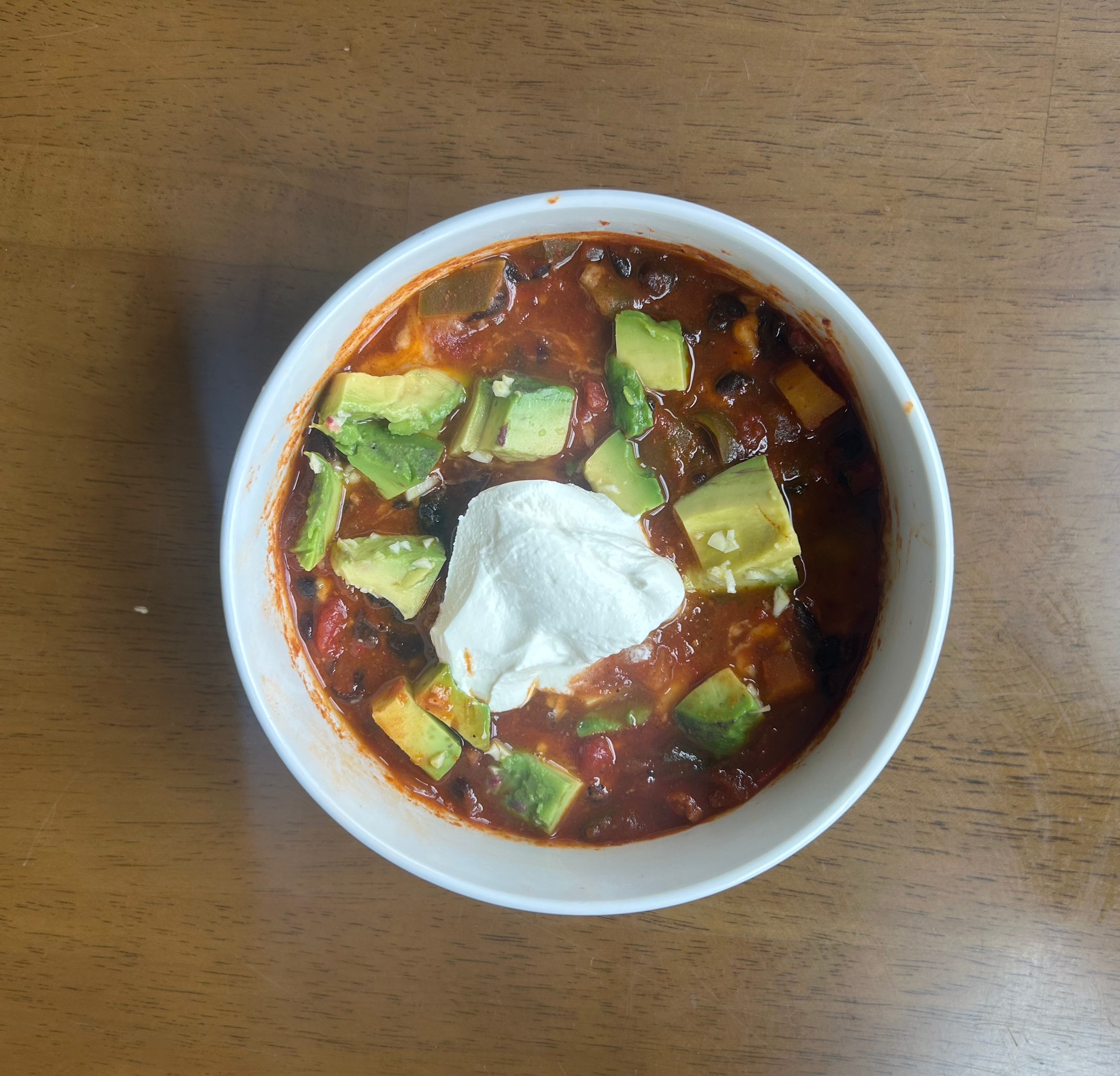
Some key swaps make this pot of chili brain healthy in addition to delicious
It is built around beans, colorful vegetables, and spices, with a few choices that raise the brain-healthy value while keeping the warm, savory comfort of a classic chili.
How healthy it is and how many plants it counts:
A strong everyday main dish. The base is legumes plus a range of vegetables, which is one of the dietary patterns most consistently linked to longevity. It has plant protein, monounsaturated fat from the olive oil and avocado, a fermented food with live cultures, no added sugar, no refined grain, and no processed meat.
Eight distinct plants in one pot. For the goal of 30 different plants a week, which is about variety for the optimal gut microbiome health, this recipe contributes onion, garlic, bell peppers, carrots, black beans, tomatoes, spinach, and avocado. That is more than a quarter of a weekly 30 from a single meal, and the cumin, chili, and black pepper add a little more. By volume a topped bowl is roughly 2 to 3 vegetable servings plus a serving of legumes, which on its own covers the 2 cups of vegetables a day that we recommend at NeuroAge. Using a mix of beans or adding a second green such as kale or chard raises the plant count further.
Nutrition facts for one 1.5 cup serving:
The batch makes about 7 servings of 1.5 cups each (roughly 10 to 11 cups of chili before toppings). These numbers are estimates and shift a little with the exact size of your tomato jars, produce, and cheese. The percentages are of the FDA Daily Value, based on a 2,000-calorie day.
The chili itself, per 1.5 cup serving:
Calories: about 255 (13% of a 2,000-calorie day)
Protein: about 11 g (22%)
Fat: about 7 g (9%)
Carbohydrate: about 39 g (14%)
Fiber: about 13 g (46%)
Sodium: about 400 mg (17%)
Add the toppings as served (about 1 ounce melted jack cheese, 1.5 tablespoons live culture sour cream, and 1 small diced avocado):
Calories: about 565 (28% of a 2,000-calorie day)
Protein: about 21 g (42%)
Fat: about 35 g (45%)
Carbohydrate: about 48 g (17%)
Fiber: about 20 g (71%)
Sodium: about 565 mg (25%)
Notable vitamins and minerals, per topped serving (as served):
These come mostly from the beans, tomatoes, and vegetables, with the avocado and cheese adding to potassium, calcium, and healthy fat. Values are estimates rounded to the nearest 5%.
Vitamin K: about 85% (from the spinach and olive oil)
Vitamin A: about 45% (from the carrots, peppers, and spinach)
Folate (Vitamin B9): about 45% (from the beans and greens)
Potassium: about 30%, roughly 1,490 mg
Magnesium: about 30%
Vitamin C: about 30% (higher before cooking, since heat reduces it)
Vitamin B6: about 25%
Manganese: about 25%
Copper: about 20%
Calcium: about 20% (mostly from the cheese)
Vitamin E: about 20% (from the olive oil and avocado)
Iron: about 18% (plant iron from the beans and spinach)
Zinc: about 15%
Choline: about 13%, roughly 70 mg (mostly from the beans, with the avocado adding more)
The standout number is fiber. A single topped bowl delivers around 20 grams, which is most of a day’s target for many adults, and it comes packaged with plant protein from the beans.
Shopping list:
This covers the full batch of about 7 servings. The toppings scale with how many bowls you plan to dress, so the amounts below assume you top all 7.
Produce
1 Vidalia onion
1 head of garlic (2 cloves for the pot, plus 1 clove per avocado you top)
2 bell peppers
3 carrots
1 bag of baby spinach, about 5 ounces
Up to 7 small avocados, or fewer if you top only some of the bowls
1 to 2 lemons, for a squeeze over each avocado
Pantry and dry goods
Dried black beans, about 1.5 cups dry to yield the 4 cups cooked
2 jars of diced tomatoes, about 18 ounces each
Extra virgin olive oil (you need 3 tablespoons)
Chili powder
Chipotle chili powder
Cumin
Salt
Black peppercorns for grinding
Dairy
Monterey jack cheese, about 7 ounces for the batch
Live culture sour cream, one small tub, look for “contains live and active cultures” on the label
One pot recipe (20 min prep, 1 hr cook):
Finely chop two cloves of garlic and let them sit on the cutting board for about 10 minutes before cooking. Chopping garlic forms allicin, a sulfur compound, and letting it rest lets more of it develop before the heat of the pan reduces it.
Chop one Vidalia onion and sauté it in 2 tablespoons of olive oil over medium heat with the minced garlic until soft and fragrant.
Add 1 tablespoon chili powder, 1 teaspoon cumin, 1 teaspoon salt, and a few grinds of freshly ground black pepper and stir to coat the onion so the spices bloom in the oil.
Add two bell peppers chopped into 1 inch squares.
Add three carrots, peeled and chopped into rounds. Sauté until the vegetables are barely soft.
Add 4 cups of cooked black beans. I use beans cooked from dry rather than canned to avoid the chemicals that can leach from can linings, which I covered in my article on what’s leaching into your beans. Dried beans take longer, so I cook a large batch ahead of time and freeze them in glass jars in 4 cup and smaller portions. They keep for months and are ready for a variety of applications, from this chili to soups, salads, tacos, and quick grain bowls.
Add two jars of diced tomatoes, again choosing jarred over canned. Canned tomatoes are one of the bigger offenders for leaching because of their acidity and heat processing, as I described in that same article.
Add another tablespoon of olive oil and 1 tablespoon of chipotle chili powder, or to taste, since this is the heat.
Bring to a boil, then turn the heat to low, cover, and cook for about 1 hour, until all of the vegetables are soft.
Add one bag of baby spinach and cook until wilted and soft.
Serve with melted jack cheese on top and 1.5 tablespoons of live culture sour cream. For the avocado, I chop one clove of fresh garlic and add it, a little salt, and a squeeze of fresh lemon to the top of a small avocado before dicing it into the bowl. The raw garlic adds allicin that the cooked garlic in the pot loses to the heat, and the lemon brightens the whole bowl at the finish.
This Substack is reader-supported. To receive new posts and support my work, consider becoming a free or paid subscriber.
What makes this recipe healthy for the brain:
1. The base is 4 cups of black beans, which carry the fiber, plant protein, and slow carbohydrates.
Black beans contain:
Fiber: A serving of this chili provides a large share of the daily fiber target. Fiber feeds the gut bacteria that produce short-chain fatty acids, and it slows the rise in blood sugar after a meal, which supports steadier energy for the brain.
Plant protein: Beans supply amino acids without the saturated fat that comes with a meat-based chili.
Folate (Vitamin B9): Involved in DNA synthesis and the production of neurotransmitters. Adequate folate is linked to better memory and processing speed and a lower risk of cognitive decline.
Magnesium: A cofactor for hundreds of enzyme reactions, including those that support nerve signaling and energy metabolism in brain cells.
Anthocyanins: The dark pigments in black beans are plant antioxidants that help reduce oxidative stress in tissue.
Choline: Beans add to your daily choline, an essential nutrient for memory that most people do not get enough of.
2. I cook everything in extra virgin olive oil, which helps toward the 3 tablespoons a day I described in my article on healthy fats.
Extra virgin olive oil contains:
Oleocanthal: A polyphenol that acts as an anti-inflammatory agent and has been studied for its role in helping clear the β-amyloid and tau proteins associated with neurodegeneration.
Oleuropein and hydroxytyrosol: Antioxidants that help protect brain cells from oxidative stress and support their function.
Oleic acid: A monounsaturated omega-9 fat that supports blood-brain barrier integrity and helps protect neurons.
The fat in the olive oil, along with the avocado on top, also does something for the rest of the meal. The carotenoids in the peppers, carrots, tomatoes, and spinach, and the fat-soluble vitamins A, E, and K, are absorbed well only in the presence of fat. Cooking the vegetables in olive oil raises how much of these your body takes up, which is also why simmering the tomatoes in oil increases the lycopene you absorb.
3. I season with cumin, the spice at the core of chili flavor, which also carries antioxidant compounds.
Cumin contains:
Cuminaldehyde and terpene antioxidants: The compounds behind cumin’s aroma also act as antioxidants. Most of the research on them is in the laboratory and in animals rather than large human trials, so the culinary amount here is modest and mainly there for flavor and to add to the plant variety of the meal.
Iron: Cumin seed is dense in iron by weight. The teaspoon used here is small, so it is a minor contribution, but it adds to the plant iron from the beans and spinach.
4. The bell peppers and carrots add color, which reflects a range of plant antioxidants.
These vegetables contain:
Carotenoids (beta-carotene and lutein): Fat-soluble antioxidants that accumulate in tissue, including the brain, and are cooked here alongside olive oil, which aids their absorption.
Vitamin C: An antioxidant that supports the regeneration of other antioxidants and plays a role in neurotransmitter synthesis.
Fiber and slow carbohydrates: Adding to the steady energy release of the beans.
5. The tomatoes bring lycopene, an antioxidant that cooking makes more available.
Tomatoes contain:
Lycopene: A carotenoid antioxidant. Cooking tomatoes in oil increases the amount your body can absorb, so a simmered tomato base delivers more of it than raw tomatoes would.
Potassium: A mineral that supports healthy blood pressure, which in turn protects the small blood vessels that supply the brain.
6. I stir in a bag of baby spinach at the end, which adds a serving of leafy greens toward the 2 cups a day of vegetables that we recommend at NeuroAge.
Spinach contains:
Folate (Vitamin B9): Reinforcing the folate already provided by the beans.
Lutein: A carotenoid that accumulates in brain tissue and is associated with cognitive function.
Vitamin K: Involved in the synthesis of sphingolipids, a class of fats concentrated in brain cell membranes.
Nitrates: Natural compounds in leafy greens that help dilate blood vessels and improve blood flow to the brain.
7. I finish each bowl with live culture sour cream for a serving of fermented food that supports gut health, a topic I covered in my article on the gut microbiome. Look for a label that states “contains live and active cultures,” since standard processing removes the beneficial bacteria.
Live culture sour cream contains:
Lactobacillus and Bifidobacterium: Beneficial bacteria that help maintain a healthy gut community, which produces neurotransmitters such as serotonin and GABA in the gut and helps limit the inflammation associated with cognitive decline.
Short-chain fatty acids: Produced during fermentation, including butyrate, which serves as an energy source for gut cells and has been studied for its support of brain cell growth and mood.
8. I top each bowl with a diced avocado dressed with fresh garlic, salt, and a squeeze of lemon, for healthy fat that also helps the fat-soluble antioxidants in the chili absorb.
Avocado contains:
Monounsaturated fat: The same family of fat as olive oil, supporting the absorption of the carotenoids in the peppers, carrots, tomatoes, and spinach.
Lutein: Adding to the carotenoid content of the meal.
Fiber and potassium: Bringing the fiber in a topped bowl to around 20 grams and supporting healthy blood pressure.
The raw garlic added at this stage brings allicin that the sautéed garlic in the pot loses to the heat, and the lemon adds a little vitamin C along with the brightness.


Written by
Dr. Christin Glorioso, MD PhD
Dr. Glorioso is the founder and CEO of NeuroAge Therapeutics. With her background in neuroscience and medicine, she is dedicated to revolutionizing brain health and helping people maintain cognitive vitality.
Learn more about Dr. Glorioso

