

What I’m doing to become younger
My baseline and protocol for the next 6 months
 Dr. Christin Glorioso, MD PhD10 min read
I’ve been in the longevity field for more than 20 years since I started studying human brain aging in the MD/PhD program at the University of Pittsburgh. I have a family history of Alzheimer’s and a genetic risk factor (1 APOE4 allele), which inspired my studies. However, I didn’t formally try to prolong my own longevity and decrease my brain age until recently.
I am a former D1 tennis player and lifelong exerciser and I have been interested in health and fitness for as long as I can remember.
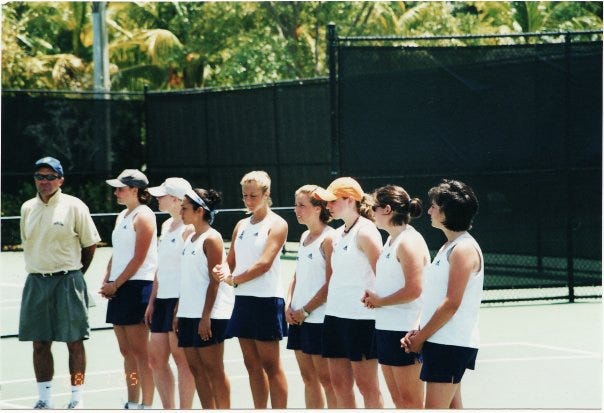
I took a bit of left turn during the Pandemic, however, and was not as healthy as I would have liked to have been.
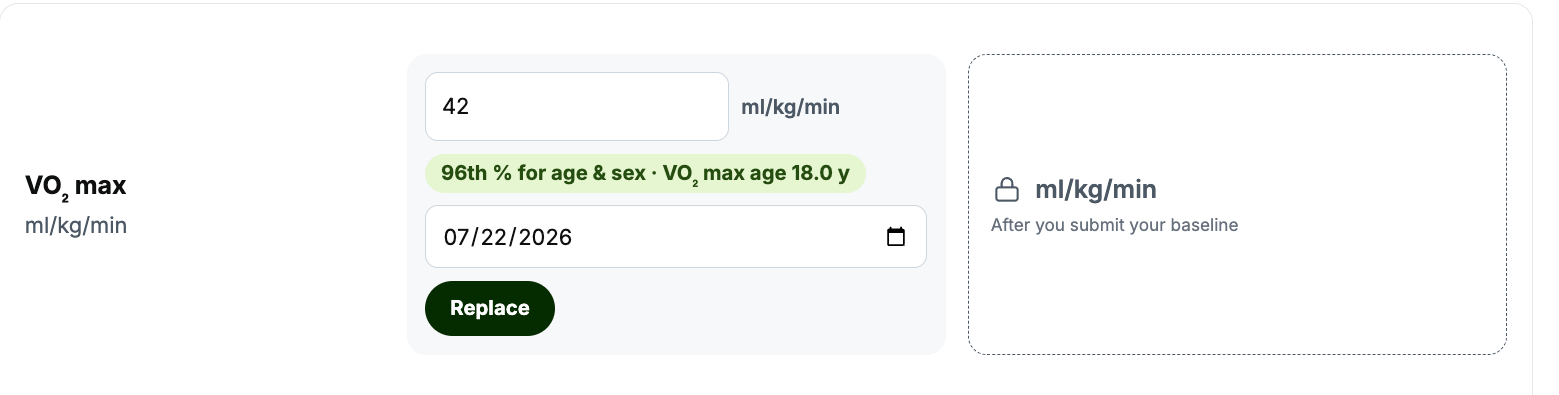
Since 2022 I’ve started explicitly working on my own longevity and brain health using the new tools and diagnostics available, including our own at NeuroAge. It’s been working. I’ve decreased my Oura heart age to -8 yrs, my Function Health age to -10 yrs, my HRV has gone up year over year, my resting heart rate and blood pressure down, my VO2 max has gone from 33 (average) to 42 (elite), and I feel better than I can ever remember feeling.
Today I am writing this post on a Saturday morning and I feel buzzy and bright and inspired, like I could get up and have a dance party. This feeling, in of itself, is worth everything I am doing to get there.
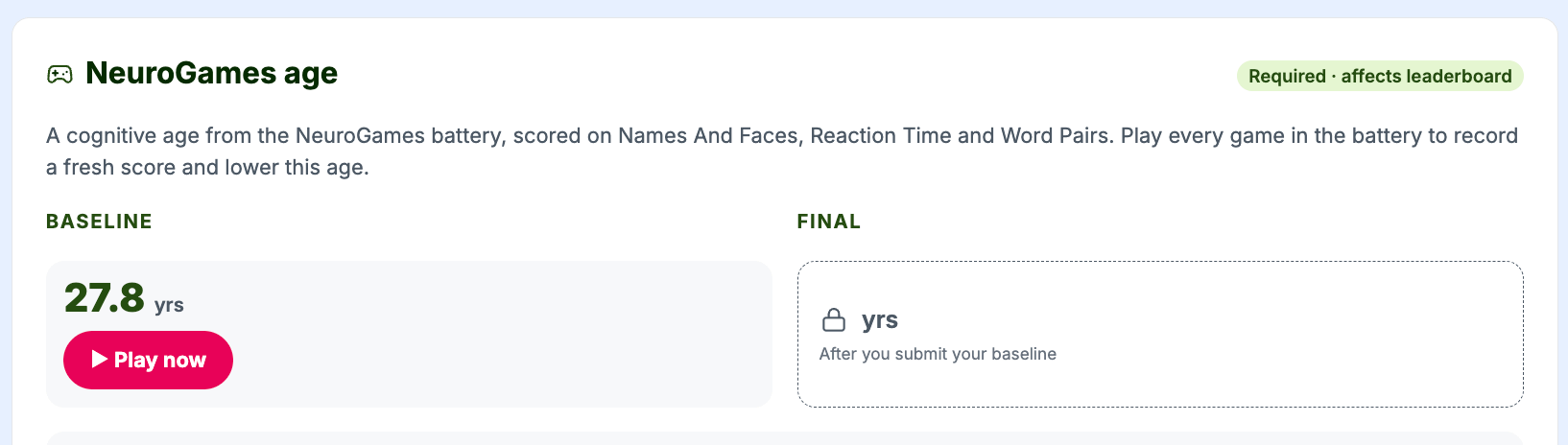
Most important to me, my brain age is about 7 years younger than I am chronologically and my hippocampus has gotten bigger in the last few years (that’s part of the brain that shrinks in Alzheimer’s). That means, according to my previous research at MIT, if I live to be 85, I am on track to avoid Alzheimer’s. My brain is getting bigger even though I have a genetic risk factor for dementia. Knowing that I don’t have to worry about my own Alzheimer’s for the next 40 years is a huge relief to me and illustrates why these tracking tools are helpful. By the time that I am 85, I think are going to have stellar treatment options if not a cure for dementia.
All that said, being the competitive person that I am, I can still do better!
This article describes where I am starting in the Younger Biological Age Competition and what I’m doing to try and win. My not-so-secret secret plan is to get everyone in the world to be my longevity buddy… because things are more fun with friends. Also Younger is a public health project and lowering people’s biological age by even one year would have a massive positive impact on health and save the US economy $7T/year.
I think it’s pretty unlikely that I will actually win Younger because there are definitely people in better longevity shape out there than me, but I am going to try, for science and my own health maxxing. If I do win, of course, I will donate the prize.
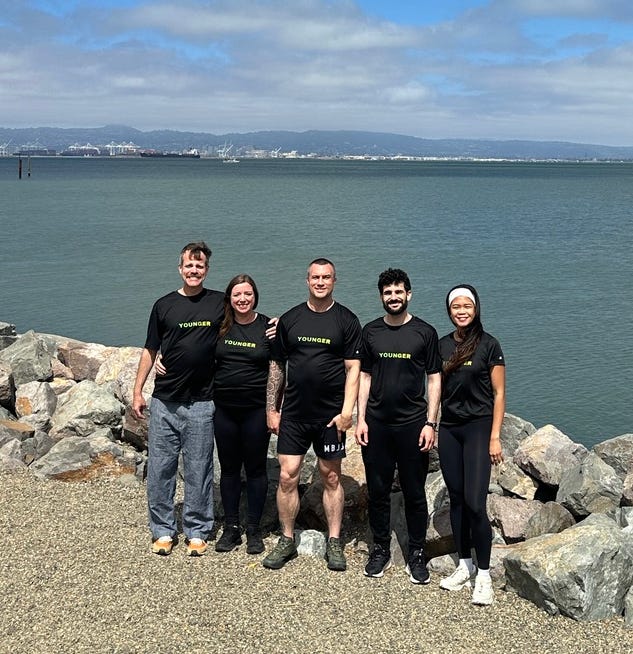
My Baseline (and the new Younger Dashboard!)
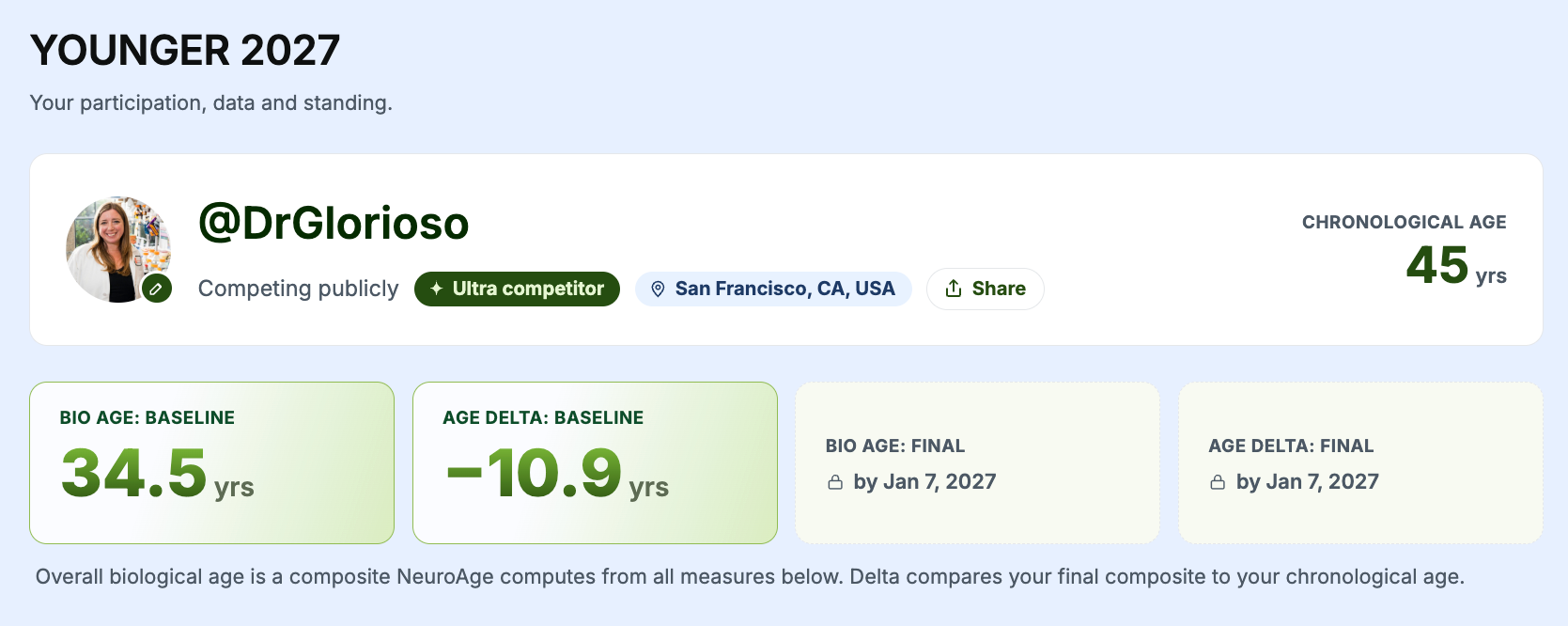
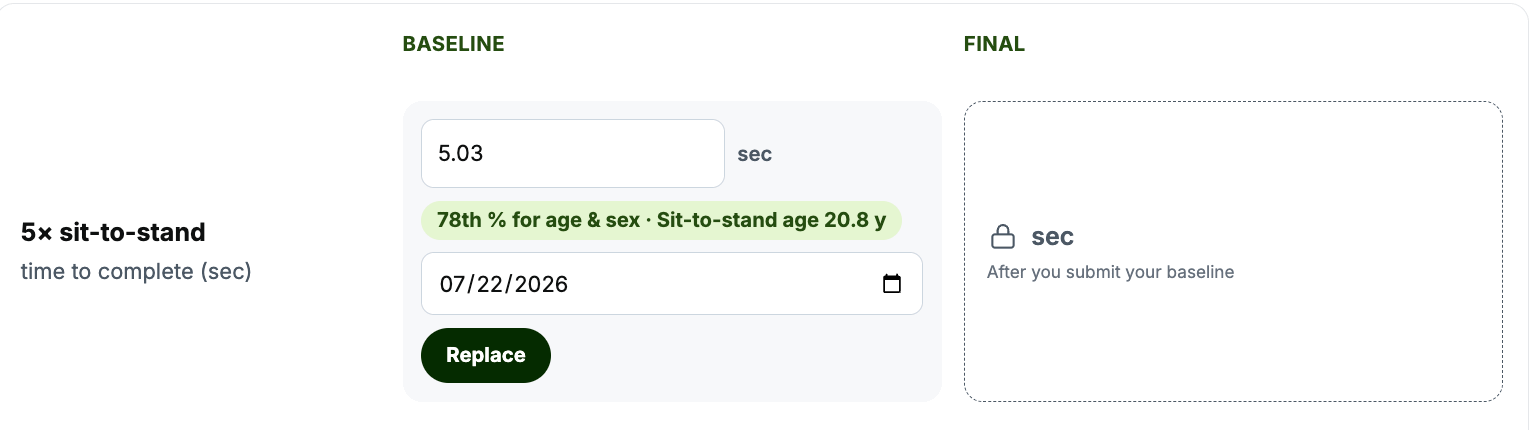
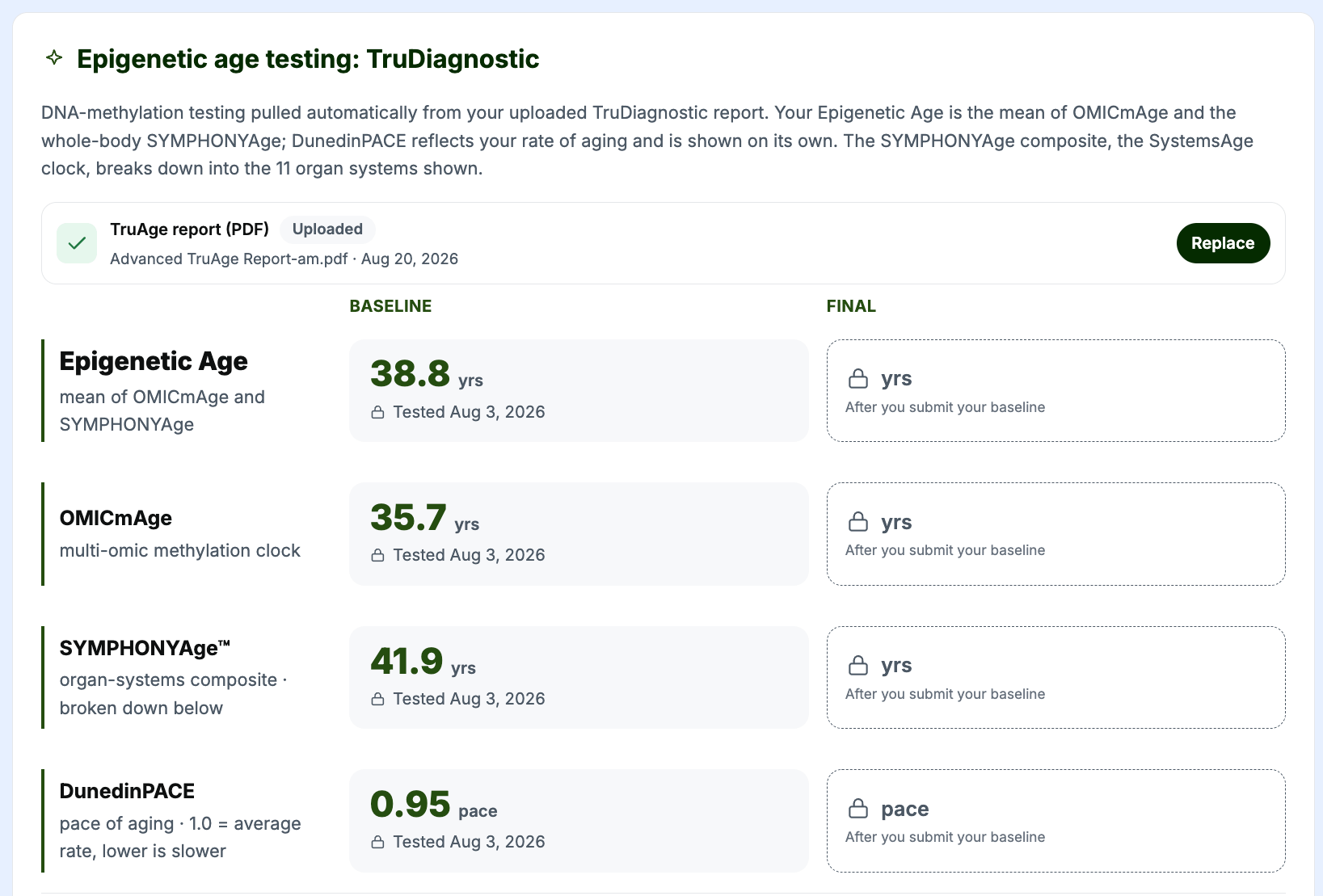
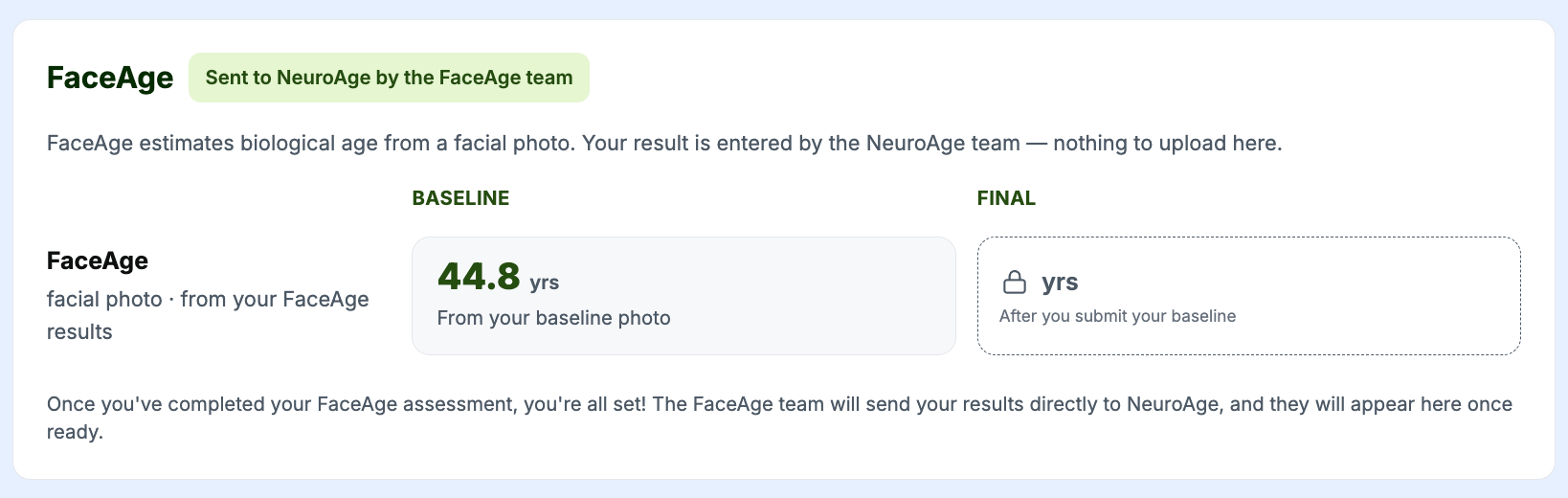
The results are in! Let’s see how I’m doing. I am pretty happy that I am starting out about 11 years younger biologically than my chronological age. This is a simple average of four categories of testing: my brain age (cognitive testing), functional age (VO2 max, sit-to-stand, grip strength), FaceAge (Harvard’s selfie age), and epigenetic age (TruDiagnostic’s clocks).


My protocol over the last 4 years
Over the last 3 or 4 years, almost all of my health and longevity metrics have improved. I follow the NeuroAge nine pillars of health brain aging and use the NeuroAge app to track my lifestyle daily (it’s in beta and will be available for the contest). Below are my lifestyle quiz results broken out by pillar. You can take the quiz yourself after creating a free account.
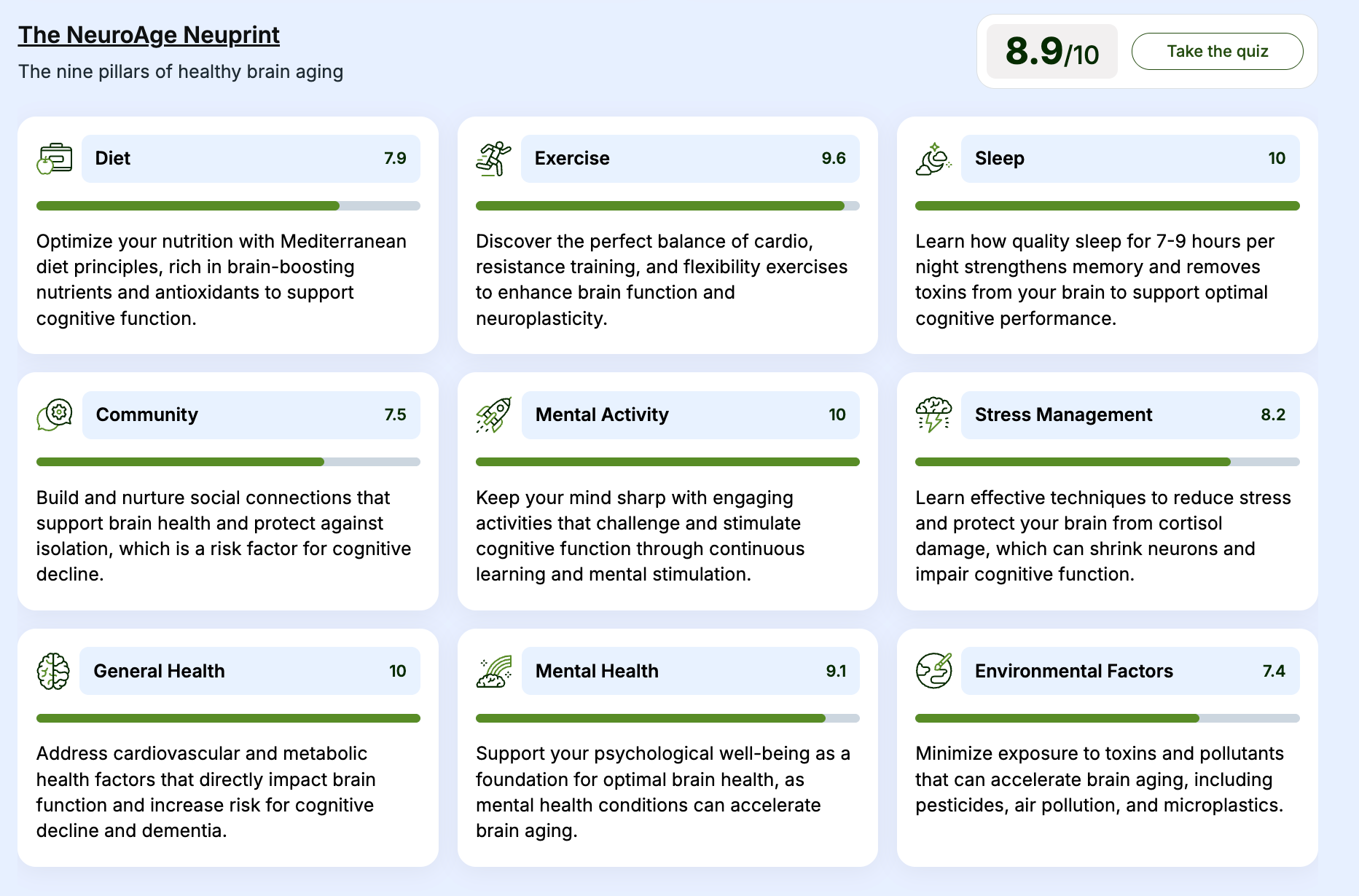
This has been my protocol up until the Younger Contest:
Medications
-Rosuvastatin 5mg (a low dose statin for cholesterol, my APOE4 allele increases cholesterol)
-HRT- estrogen cream, progesterone capsule, testosterone cream
-Semaglutide microdose to small dose ~1x/month- 0.2-0.5 mg. This just takes the edge of the food noise while hopefully not having the cosmetic side effects.Supplements
-Multi-vitamin (USP seal of approval). I take this for the Vitamin D and the B complex mostly.Diet
- Intermittent Fasting: 12/12 (I don’t eat before 12pm or after 12 am)
- I eat a version of the mediterranean diet that is high fruit and veggie and low in sweets and fried and processed foods
- I did eat a couple of squares of dark chocolate per night and ice cream or other dessert about 1x/week
- moderate protein (about 80g/day), low red meat (1x per week)-I do eat dairy and cheese- see my article on dietary fat and the brain on why cheese isn’t the villain that most people think it is.
- aim for one berry smoothie with kefir per day, for the polyphenols and the live cultures for microbiome
- <7 alcoholic drinks per week, mostly wine
- 4-5 cups of coffee per dayExercise
- 4 to 5 days a week of 1.5 hrs of a mix of jogging, hiking, stairs, yoga, and resistance training with Ian.Sleep
- consistently high sleep score, averaging 7.5 hrs (HRT fixed my sleep)Community
-I see friends, go on dates, or do a social activity about 2-3x/week
-I do group exercise classes
-I speak with long distance friends and family a few hours a week on zoom or the phoneMental Activity
-I’m the CEO of two companies and doing research so this one I’ve got covered. I am solving hard problems and working creatively all day long.Stress management
- Baseline I’m pretty good at multi-tasking and stress management. Medical school and MD/PhD is good training for this. That said, starting a company is the highest stress thing that I’ve ever done.
- I have gotten much better at managing the stress of my startups. Morning sunshine and meditation, yoga, and just getting used to the fire for four years has made me more impervious. Sometimes I still feel a rising panic but it’s gotten better. Also, all of the the pillars are interconnected and when I’m well rested and exercised and eating right, the same stressful event has less of an impact on how I feel.General Health
- My blood pressure, lipids, A1C, glucose, fasting insulin and almost every measure on Function Health testing are in the normal range.
- The measures that I am still working on are:
1. Inflammation- my CRP is a little high at 1.2.
2. Omega 3 index is a little low- mostly because I haven’t supplemented yet and am still trying to get there with seafood, flax, and walnuts.
3. White matter hyperintensities- I have more than the average person my age. This may be related to the inflammation.
4. Cardiac calcium- high for my age, might be related also to inflammation and to my formerly high cholesterol.Mental Health
- I’m currently pretty happy and not experiencing excessive anxiety or other mental health issues
- I consume a lot of podcasts and read a lot of books on neuroscience, therapy, and mental health. I’m interested in this as a neuroscientist.
- I’d like to find a good therapist to work through grief (I lost my brother during the pandemic) but haven’t made the time for it yet.Environmental Factors
- I don’t use plastic in the house and try not to use it out
-I replaced my teflon coated pans with steel and cast iron
-I replaced my plastic tupperware with glass
- I filter my water
- I eat organic and rinse my produce
- I have an air filter but don’t use it much since the air quality is consistently good in my apartment
- I still haven’t tested for mold- this is on the list of things I’d like to do
What I am improving about my lifestyle for Younger
This will be the strictest protocol for myself yet.
1. Diet
- increasing the amount of fish
- giving up alcohol all together- this one will be the hardest change, I am
culturally Italian and love a glass of wine with dinner. It’s been 10 days since I
gave up alcohol. So far so good.
- giving up fried and processed food all together
- only cooking fats are olive oil and avocado oil (no butter, no ghee, no coconut oil)
- giving up sweets and sweetened anything all together including dark
chocolate. This will also be hard, particularly the chocolate. I may replace with
ceremonial cacao lattes.
- no red meat
- cooking more with friends ala the Younger Cookbook (contestants will be
getting this in the mail)
2. Exercise
- going from 4-5x/week→ 6x/week. Going from 1x/week resistance training to
2X/week
- longevity workout class with Ian and friends 2x/week→ interval cardio (for VO2
max), box jumps, squats, and leg press (for sit-to-stand), pull-ups, deadhangs,
and farmer carries (for grip strength).
goals:
- 1 pull up
- headstand
- 8 minute mile (helps with VO2 max and just seems like a reasonable thing
to be able to do). My current mile time is probably about 9.5; it was 6.5 in
high school.
3. Community
- increase from 1 hr/day 4 days a week to 6+ days a week. See my article on
community to learn why this is optimal.
4. Environmental Factors
- I haven’t paid attention to my skin really at all and this apparently shows in my
FaceAge.
- I bought some Korean mineral sunscreen and will be applying it religiously
- I bought some retinol skin cream
- I am eagerly awaiting the dermatologist Younger webinar to find out what else
that I need to do to make my face younger.
- I haven’t yet done mold testing or any of the functional health testing on body
toxins. I probably will at some point during the contest.
5. Mental Activity
- Adding brain training 10 minutes/day using the NeuroAge training game that is
inspired by a game with clinical trial evidence to lower risk of dementia by ~30%
10 years later. It should improve my NeuroGames scores on all the testing.
I am excited to compete alongside some of you!
You can enter the Younger Competition anytime between now and January 18th.


Written by
Dr. Christin Glorioso, MD PhD
Dr. Glorioso is the founder and CEO of NeuroAge Therapeutics. With her background in neuroscience and medicine, she is dedicated to revolutionizing brain health and helping people maintain cognitive vitality.
Learn more about Dr. Glorioso

