

Upstream biology
Focus on neuroinflammation, mitochondrial stress, and related pathways rather than a structural imaging readout.
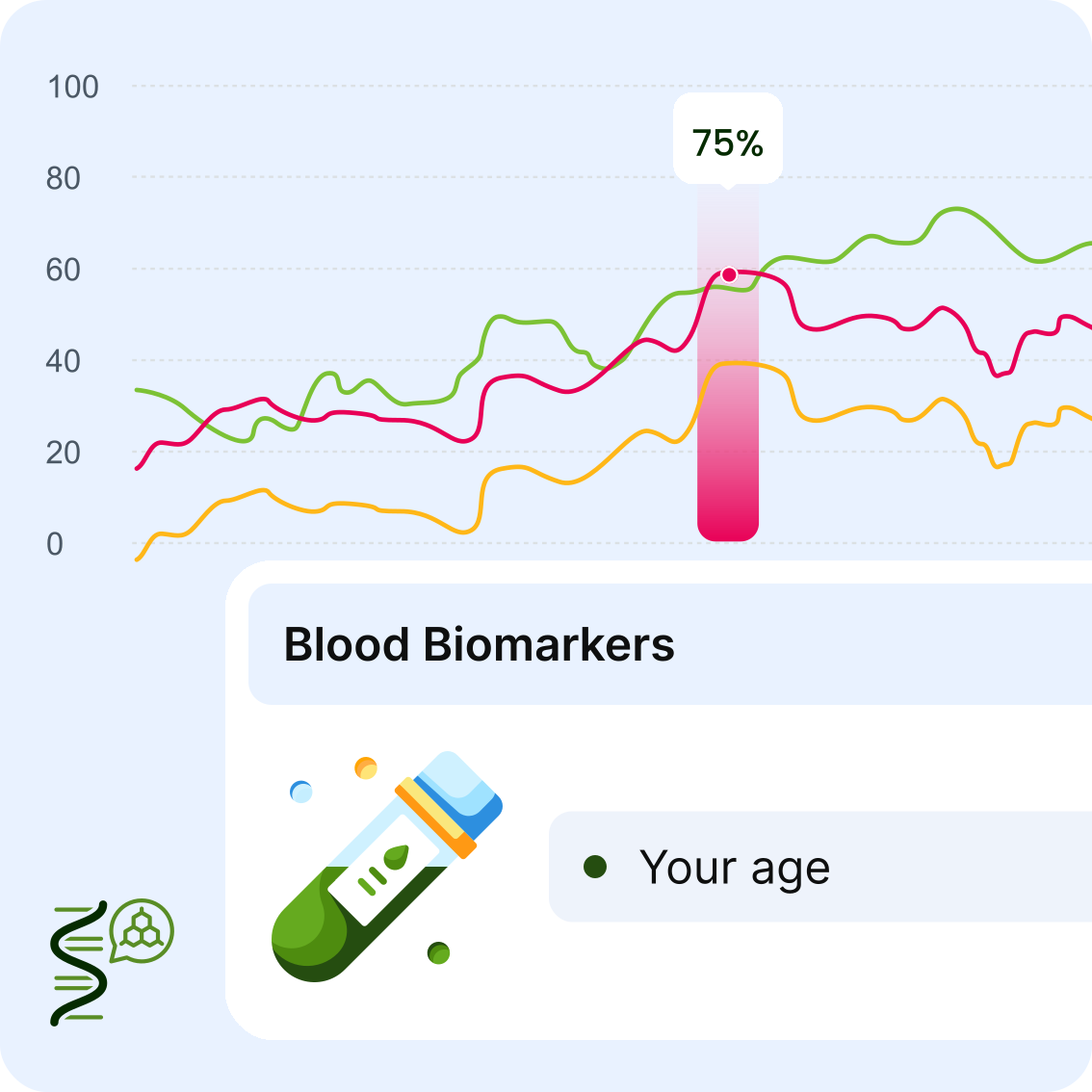
The Blood Biomarkers Test focuses on broader brain-aging biology, using molecular signals linked to neuroinflammation, mitochondrial function, and cellular stress to help you track upstream change over time and receive personalized recommendations.
This product focuses on broader biological aging signals, not Alzheimer's-specific amyloid and tau pathology, with personalized recommendations tied to your biomarker profile.


This product is about broader biological processes that influence brain aging, not a single pathology pathway.
RNA biomarkers can provide a blood-based view of gene-expression patterns linked to neuroinflammation, mitochondrial function, and cellular stress responses.
Because these signals can respond to lifestyle and environmental change, the Blood Biomarkers Test is especially useful for people who want a trackable biological readout and personalized recommendations rather than an inherited-risk or imaging product alone.
Focus on neuroinflammation, mitochondrial stress, and related pathways rather than a structural imaging readout.
Use repeat testing to see whether interventions appear to be shifting the biology you care about.
Pair molecular biology with MRI, NeuroGames, or genetics for broader context when needed.
The Blood Biomarkers Test fits clients who want to measure change in living biology over time.
Use blood-based biology as an objective complement to lifestyle experiments and prevention work.
Start with blood-based insight if you want a lower-friction biological product before imaging.
Repeat testing over time to see whether biological signals appear to be moving.
Use this test when you want a broader view of brain-aging biology from blood.
NeuroAge's FAQ describes RNA biomarkers as blood-based gene-expression patterns that reflect how the brain is aging right now, including signals related to neuroinflammation, mitochondrial function, and cellular stress. Because RNA expression responds to lifestyle and environment, these markers can change over time.
That is what makes this Blood Biomarkers Test different from AD-Detect. The Blood Biomarkers Test is about broader biological aging processes upstream of symptoms, while AD-Detect is specifically centered on Alzheimer's pathology markers such as amyloid and phosphorylated tau.
The dashboard is meant to make repeated blood-based testing easier to review and compare.
See broader biomarker patterns in one place.
Use repeat testing to compare biology over time.
Bring molecular findings into coaching or multimodal planning, with personalized recommendations connected to the pathways your results highlight.

What NeuroAge customers are saying across imaging, testing, and coaching.
I live my life profoundly between my ears - I enjoy learning and thinking and reading and writing and making things. The prospect of losing those abilities, and losing the memories that they have created, frightens me.If you have a family history like mine, this assessment can help you better understand your risk of Alzheimer's and how you're doing so far. It can give you the incentive you need to manage your risk more thoughtfully.
 Mike Olson
NeuroAge Therapeutics is an amazing and best in class company led by the very best Co-founder and CEO.I have been impressed since day one. They produce positive results and guidance. I unequivocally recommend NeuroAge Therapeutics.
 Carol DiBattiste
I've worked with NeuroAge for several years across their full platform - including MRI analysis, genetics, blood biomarkers, cognitive tests and personalized coaching on the key pillars of healthy brain aging.What sets them apart is the integration: a holistic view of where my brain health stands today, drawing together all the available data and tracked over time, combined with a practical framework for what to do about it. The focus is squarely on prevention and the insights are specific, actionable and evidence-based.For anyone serious about the cutting edge of preventive brain health, I can't recommend NeuroAge highly enough.
 Jamie Garis
The most comprehensive brain health assessment I've ever done — and it may have saved my life.NeuroAge caught a brain aneurysm that Prenuvo missed entirely on THREE scans. That alone made the whole experience worth it. But what really sets NeuroAge apart is the depth of what they actually measure — this isn't just a scan.My assessment combined a brain MRI analyzed across 25 regions, cognitive testing through their NeuroGames platform, blood biomarkers, and whole genome sequencing. Everything feeds into a single NeuroAge score. Mine came back 6 years younger than my chronological age, which puts me in the 80th percentile — but more importantly, I now know exactly which areas to work on (thalamus, white matter, hippocampus) and have a personalized, evidence-based plan to address them.The genetic component is where it gets really interesting — I learned about medically actionable variants that affect how I metabolize certain medications, including a VKORC1 variant relevant to blood thinners and a CYP2C19 variant affecting a range of common drugs. That's information I'll carry to every doctor's appointment.The reporting is thorough, the recommendations are backed by citations, and the level of personalization is unlike anything I've experienced in conventional medicine. If you're serious about proactive brain health, this is where to start.
 Laurie Zugay
In January I attended the R42 Healthcare Retreat at the Ritz Carlton in Half Moon Bay. Multiple tests were included in the price. The brilliant, Alzheimer trailblazer, Christin Glorioso, M.D. was in charge of coordinating the brain MRI's and other cognitive tests for the retreat through her company, NeuroAge Therapeutics. She founded, to prevent and treat Alzheimer's which had decimated her family. She flagged my brain MRI as abnormal and possible NPH. NPH is a rare condition that affects balance, cognitive decline and urinary incontinence aka “wet, wobbly and wacky.” She contacted me and strongly suggested that I consult with a neurologist and assured me that it was treatable which was a massive relief. But for Dr. Glorioso this rare, treatable condition would have never been found.Thank you Christin for alerting me and staying with me while I went through the testing (including a spinal tap to relieve the pressure in my brain) to confirm the diagnosis. This is a rare condition and never would have been discovered but for the brain MRI and the determination of Dr. Glorioso.
 Marisa McGinnis
It measures blood-based biomarker signals linked to broader brain-aging biology, including neuroinflammation, mitochondrial function, and cellular stress responses.
This product focuses on broader biological aging processes. AD-Detect is the more Alzheimer's-specific blood product and emphasizes amyloid and phosphorylated tau pathology markers.
Yes. The Blood Biomarkers Test is especially useful when repeated, because the broader biology it measures may shift with lifestyle, environment, or intervention.
No. It can be used alone, but many people get the clearest picture by combining blood biology with cognition, MRI, genetics, or coaching.
Use a blood-based molecular readout to follow upstream biology, monitor change over time, and act on personalized recommendations.